Money Confessions: What Women Really Think About Time, Guilt, and Financial Freedom
APPLE PODCASTS | YOUTUBE | SPOTIFY
Money Confessions for Working Moms: The Questions We’re Afraid to Ask
Let’s just start here:
Money feels heavier than it should.
Not because you’re irresponsible.
Not because you’re doing it wrong.
But because no one ever really taught us how to think about it in the context of a full, complicated, adult life.
A career.
Kids.
A partner.
A house.
Decisions stacked on decisions.
So a few weeks ago, I asked you to send me your real questions about money.
Not the polished ones.
Not the “I should already know this” ones.
The real ones.
And you delivered.
Over 100 Questions… and a Pattern Emerged
We got more than 100 submissions. And while the details were different, the themes were surprisingly consistent:
- “We make good money… so why does it still feel tight?”
- “How much should we actually be saving?”
- “Are we behind?”
- “Should we be doing more?”
- “Why do I feel guilty spending money… even when we have it?”
And underneath all of those?
Uncertainty.
Pressure.
And a quiet fear that you’re the only one who doesn’t have it figured out.
You’re not.
So Let’s Talk About It (For Real)
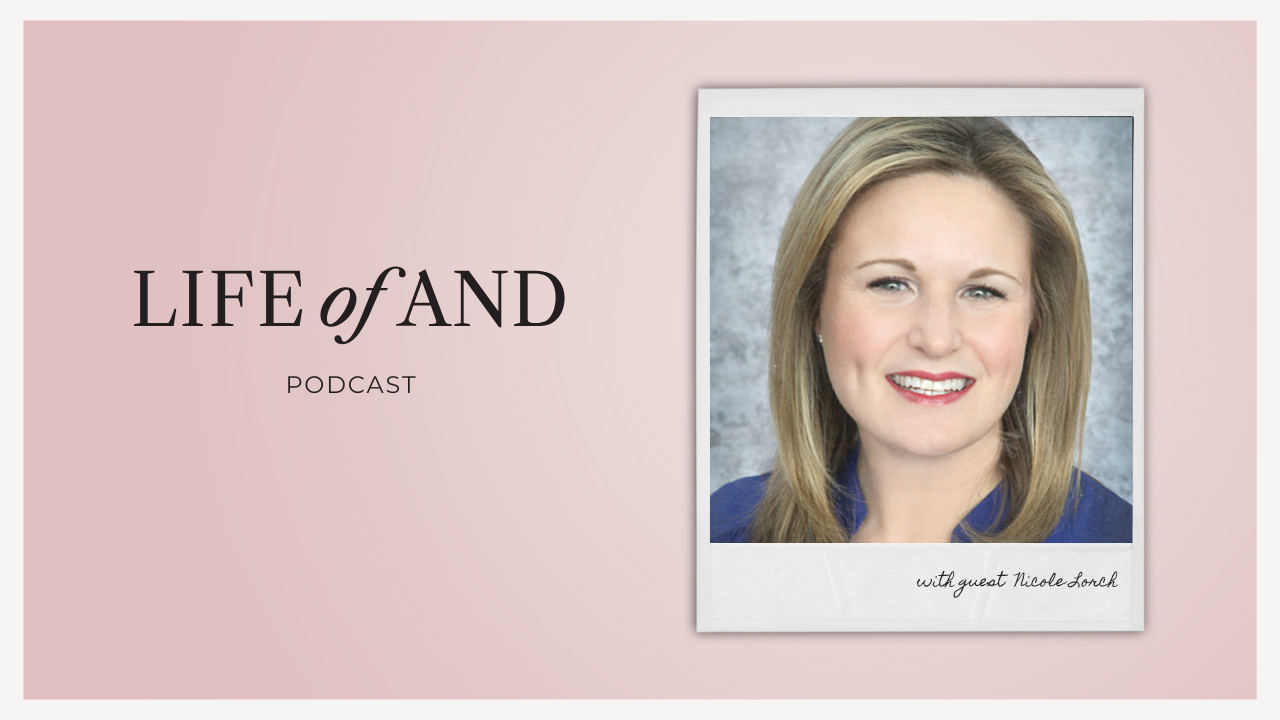
In this episode, I’m joined by Nicole Lorch, President and COO of First Internet Bank.
And what I love about Nicole is that she doesn’t talk about money like a textbook.
She talks about it like a human.
Like someone who understands that money decisions don’t happen in a vacuum—they happen in the middle of real life.
With real trade-offs.
With emotions attached.
With imperfect information.
The Gap No One Talks About
Here’s one of the biggest things that came through in your questions:
There’s a gap between earning money… and feeling confident about money.
And a lot of working moms are living right in the middle of that gap.
You’re making more than you ever have.
You’re doing the “right” things.
And still…
It doesn’t feel settled.
That’s not a math problem.
That’s a clarity problem.
“Are We Doing Okay?” (The Question Behind the Question)
So many of the questions we received weren’t really about tactics.
They were about this:
“Are we okay?”
Are we saving enough?
Spending too much?
Missing something important?
Setting ourselves up for the future we actually want?
And here’s the truth:
There is no universal “right” answer.
Because your money should serve your life—not someone else’s version of what it’s supposed to look like.
Money + Real Life = Tradeoffs
This is the part we don’t talk about enough.
Every decision you make with money is connected to something else:
- Time
- Energy
- Stress
- Flexibility
- Presence
You don’t just “spend money.”
You’re choosing:
- convenience or effort
- now or later
- margin or stretch
And when you’re a working mom?
Those tradeoffs are constant.
The Emotional Side of Money (Yes, It Matters)
We also talked about something that doesn’t show up in spreadsheets:
Guilt.
Guilt when you spend.
Guilt when you don’t.
Guilt when you outsource.
Guilt when you don’t invest enough.
It’s exhausting.
And it’s not solved by more budgeting apps.
It’s solved by getting clearer on:
- what actually matters to you
- what you’re trying to build
- and what’s “enough” for your life
You’re Not Behind (Even If It Feels Like It)
If there’s one thing I hope you take from this conversation, it’s this:
You’re not the only one asking these questions.
Not even close.
The women who submitted questions for this episode are:
- smart
- capable
- high-performing
- thoughtful
And they’re still figuring it out.
Just like you.
This Is What a “Life of And” Looks Like
A Life of And isn’t about having perfect answers.
It’s about being willing to ask better questions.
To stop pretending you “should already know.”
To stop avoiding the conversation.
To get honest about where you are—and where you want to go.
And then make decisions from there.
Your Next Step
If money has been sitting in the background of your life—nagging at you, creating tension, making you feel unsure—
Don’t ignore it.
Start the conversation.
With your partner.
With a professional.
Or even just with yourself.
Because clarity here changes everything.
If this episode resonates, share it with a friend who’s quietly wondering if she’s “doing money right.”
Chances are… she’s asking the same questions you are.
And she doesn’t have to figure it out alone.

Tiffany Sauder [00:00:00]:🎙️ View Transcript
We think more money is going to solve our problems. And we think people who have more money than us don't have the problems we have. But the truth is there's always another level. And no matter how much you're making, you see people who are making more. You've got to figure out what you care about. You and your husband, you and your family, you have to figure out what do we care about spending our money on and kind of let the rest be the rest. I'm Tiffany Sauder, entrepreneur, wife, mom to four girls, and a woman figuring it out just like you. Come on, let's go build your life of and. Holy crap, ladies. We asked you to send us your real money questions, the ones around buying back your time, valuing what you spend your energy on and figuring out how to make your finances actually work for the life you're trying to build.
Tiffany Sauder [00:00:51]:
And you did not hold back. What's your guess? How many questions do you think we got? Over 100 questions came in, like blowing my mind. And I have to tell you, when I sat down and read through all of them, Nicole too, we could not stop because these weren't just polished put together questions. These are like the real ones that we have that we ask at 11:00 PM when we're in the house in front of our computer. It's finally quiet and we're wondering if we're doing any of this right. Questions like what happens to our investments if something happened to my husband. We make over a half million dollars and I still feel behind or I feel guilty every single time I spend money to make my life easier. These are the kinds of questions that we got. I know I have felt these and I know you have.
Tiffany Sauder [00:01:39]:
So here's what we're going to do. Here's what I know after reading every single one of your submissions. We are a generation of women who are smart, capable and doing a lot of things right now, but we're still struggling with financial confidence. And I think too often we've handed one size fits all budgeting advice when what we need is a real conversation. So today that's what we're going to do. And here's what I'm excited to tell you. This is not a one-time thing. Today is the launch of something new. Every quarter, myself and Nicole Lorch, we are going to sit down and do this. We're going to bring your questions and get to the real stuff. Our lived advice, your questions, no lectures, just jargon, and honest conversation. But before we dive in, I have a disclaimer. Your welcome compliance department. What we're going to share today is real talk from real life.
Tiffany Sauder [00:02:30]:
It is not a substitute for professional financial advice around investing or budgeting. Please, please work with a financial partner or planner for decisions specific to your situation. Here's how this is going to work. Samantha's going to ask Nicole and I get your questions and Sam is going to be acting like the voice of the audience, making sure we don't get away with non-answers. Nicole Lorch is here bringing her own advice, both as a working mom who plays a big part in her family's financial story and as the president of First Internet Bank. You're going to find she's not only the kind of leader you want to be like when you grow up, but she's also refreshingly human about all of this money stuff. So let's go.
Sam Johnson [00:03:05]:
So thanks to everyone who submitted their questions to win a pair of sneaks. Our winner was announced. Her name is Amanda. So thank you to Amanda. She is ordering her pair of sneaks and hopefully will show them off to us soon. Before we dive into our audience confessions, I want to ask you both a question. What's your money confession? Something you've done, believed, or avoided that you're ready to admit out loud today?
Nicole Lorch [00:03:32]:
It's mid-April as we are recording this. So it is taxes are front of mind for a lot of people and we did ours on time. But since I had a job more than 20 years ago that involved variable compensation, I had some commission that I earned in sales. I got caught once owing much more in taxes than I anticipated and I hadn't saved for that. So I changed my withholding to single no dependents and have never changed it back. So I've since gone to a salary only job and I still have far more withheld than I should from my paycheck. And I've gotten a refund, not a huge one, not life changing money, but it's something that every financial planner tells you not to do. Don't give an interest free loan to the government because that's effectively what I'm doing when this money's withheld from my check.
Nicole Lorch [00:04:31]:
So I hereby resolve to get my tax situation right because I'd rather be responsible for saving that money in a savings account where I'm earning the interest, not giving it interest free to the government because there are things I could do with that interest.
Tiffany Sauder [00:04:46]:
So instead of having the government, you're going to change that single no dependence to something-
Nicole Lorch [00:04:53]:
To something a little closer to my actual situation. Yeah. So that less is withheld from my check, consequently I will earn more and what I earn in the margin of what I earn, I'll just put into another savings account and hold that so that I'm paying taxes, but I'm earning interest on it in the meantime.
Tiffany Sauder [00:05:11]:
Yeah. I think that's super smart. So you let it sit there until your tax bill comes, pay it out of that account and then you know the excess. You can actually keep the earning income. Exactly. Love that. Mine is a little more vain. The one I came up with is like money confessions. I'm like, the first thing my head goes to is budgeting. And for me, a personal priority has always been clothes. I love clothes and I love, and I feel very comfortable spending, I'm going to say a lot of money on them. And I felt like anytime I went and looked at like budgeting advice and what percentage of your income you should spend on clothes, it was like way less than I was spending. And I got to the point where I realized it's just a priority for me. There are other things I deprioritize.
Tiffany Sauder [00:05:54]:
I don't go get Starbucks. I don't get my nails done. I don't do a lot of like entertainment kind of things. I cook at home all the time. So there are other places that I would say I make fairly budget conscious decisions so that I can spend more freely in things I really care about. And so I think getting to the place where I understood the way we spend money is really an expression of our values. And these pie charts of where you spend your money is a great place to start, but then tweaking into like what really makes sense for you and your state of life and all that kind of stuff. So this is kind of my money confession. She's so vain.
Sam Johnson [00:06:30]:
We'll allow it.
Nicole Lorch [00:06:32]:
I could absolve you of that if you'd like though.
Tiffany Sauder [00:06:35]:
Of what?
Nicole Lorch [00:06:36]:
Of the guilt that you feel over spending money on clothes. I mean, the way you present yourself is you're telling the world how to think about you.
Tiffany Sauder [00:06:44]:
Well, I think that's, I've come to say this is just part of the way I express myself. It's a creative outlet. It makes me feel confident and that is okay.
Nicole Lorch [00:06:54]:
And you make choices in other places.
Tiffany Sauder [00:06:56]:
Yes. And I think that's the key thing, choices in other places beside it.
Sam Johnson [00:07:01]:
I will kick us off and I'll have Nicole lead this one.
Nicole Lorch [00:07:04]:
Okay.
Sam Johnson [00:07:05]:
Could you speak to the identity transition? I grew up with a do-it-yourself and I've got two good hands, mindset. It's hard to work against that.
Nicole Lorch [00:07:14]:
Oh, certainly it is. I grew up in a house where we would be told you have two good working legs. You can get up off the sofa and get that for yourself. I completely understand this idea of wanting to do as much as you can yourself. But I think the whole philosophy behind Life of And is to take help where you can get it because we're talking about equality of life and not just saving money absolutely everywhere you can, but creating a beautiful life for yourself. So sometimes that does mean taking help, whether it's from experts, maybe you should not try to take on a plumbing project by yourself or an electrical project. Maybe it does make sense to have your house cleaned or to send laundry out. There are choices that we can and probably should make because I heard you say it recently, Tiffany, and it was so profound to me.
Nicole Lorch [00:08:08]:
We can make more money. We can't make more time. You get to spend your minutes once. So I would say, yeah, figure out where experts can come in and add value to your beautiful life and it will feel richer for it.
Tiffany Sauder [00:08:24]:
I think that's great advice, Nicole. I also would really encourage those of you who struggle with this identity thing to really sit on that identity word. Because when I was early in this working mom journey, I started to realize that actually the decisions and values I was absorbing were of my mom's identity, which was of a stay-at-home mom in rural Indiana with very little resources around her. So the things I was projecting into my own life were not actually my identity. I loved my mom so much. I loved my childhood so much and I was trying to pick up what I'd experienced to put into my kids' life so that they had a great childhood. And I had to realize my identity, my choices were of a working mom. And so I had to find choices that still allowed me to express the values I'd felt from my mom of love and consistency and of generosity and celebration and these things that she was and figure out how do I bring those values through in a way that works for my chosen identity.
Tiffany Sauder [00:09:35]:
So I think that word, we can sort of not sit on it as honestly as maybe we think we are.
Sam Johnson [00:09:42]:
Nicole, did you ever have a moment where that sort of came to a head for you and your family? I think you had said before that you kind of grew up in a household that was like do it yourself.
Nicole Lorch [00:09:50]:
Oh, I absolutely did. Yeah. And it's interesting when you say that, Tiffany, because my grandparents were all farmers in central Illinois. And I remember once my dad saying to me about a choice I had made to go get a manicure, he said, "My mother never got manicures." And I said, "Your mother was a farm wife in central Illinois and she didn't have a 40 hour a week job where there was an expectation as to her physical presentation." So that's a really ... I like the way you brought that forward and the way you put that into words, the identity of who we are and dressing the part if that's the case, but also being your authentic self because there's so much more to who we are and how we serve the world than just how we spend our money and which buckets it comes from.
Sam Johnson [00:10:39]:
All right. I'll have Tiffany lead this one. I feel guilty spending money to make my life easier. How do you shift your mindset from saving money to valuing your time? I
Tiffany Sauder [00:10:50]:
Think there are two things here. One, the question specifically said, "I feel bad trying to make my life easier." If you've hung around Life of Ans, you know I care a lot about implicit versus explicit things. Implicit things, we can't very specifically imagine what that means. When you say make my life easier, what does that really mean? Not doing what you're thinking about outsourcing is giving you time back to do what? I believe when you actually look at that equation very closely, "I don't want to do this anymore, laundry, and instead I want to spend two hours with my kids, I'm going to go to bed a half an hour earlier and I'm going to take a 30 minute walk every day." That then becomes a decision in which of those choices most align with my values because my values when I act in them, that's who I am becoming.
Tiffany Sauder [00:11:47]:
I'm becoming the person who makes choices towards this set of things, okay? So when you make it really explicit and take it away from this like you're not trying to be an oath who just watches Netflix on the couch, unless that's what you're trying to do because that gives you energy. I know no one that gives them actual energy, that's usually an avoidance strategy. So when you say this thing, I'm trying to make my life easier, I think we sometimes obfuscate the task of getting really clear about what we want our money to give us and the easiest thing is stuff. That's a one-time transaction. I'm going to go to the store, I'm going to get some dopamine hit from it. It's going to make me feel a little bit better when I walk out of the house, but it didn't actually give you anything back.
Tiffany Sauder [00:12:31]:
So this equation of beginning to move from a consumer mindset to more of, I'd say, an investment mindset where you start to think about your time like a balance sheet where when I invest this, I can make it earn this to give me back. If you're sort of talking about this in financial matters, when you're willing to sit down and do the actual math of that of when I give up laundry, which for most of us is six, eight, 10 hours a week, I'm going to spend those hours giving myself this back. How does life feel? What do you unlock? So that's what I want you to look at when you think about this idea of, I think we kind of push around this word guilt a little bit. I think we kind of push around this idea of like, "Well, I don't know. I'm just like, what am I just trying to make my life easier?" It's like, yeah, maybe you can sleep.
Tiffany Sauder [00:13:18]:
Maybe you can feel good about yourself. Maybe you can eat something that tastes like food. Maybe you can feel the temperature outside. These are not luxury items. And if you've convinced yourself they are, that's, I think, the crazy burnout economy that we perpetuate as women to one another instead of saying like, "No, those are table stakes as a human being. Those should be things that you experience every single week." The core of what I'm trying to get across to women is we think about income statement transactions, consumer purchases, and we are living in such a complex world of decisions when we have all of this opportunity, all of these commitments, all of these channels for our time and energy, and we don't think about it really intentionally.
Nicole Lorch [00:14:05]:
Well, I always hear everybody has the same 24 hours and how much are you going to put into that? And it almost becomes a competitive idea of how much can I jam into this 24 hour period of time that the one negotiable seems to be sleep. And so I chip away at that and I chip away at that until there's so little left of me to give to others because I've had so little rest. And then I'm not my best self. I'm not my true self, not my authentic self. I'm certainly not doing the best I can at being a mom or an employee or a friend or a wife. It's how do you best allocate the 24 hours, not just how much can you fit into that period?
Tiffany Sauder [00:14:46]:
I love that echo.
Sam Johnson [00:14:47]:
So what about the person that hears this and says, "That sounds nice, but I can't afford it."
Tiffany Sauder [00:14:52]:
" That may be honestly true and I would begin the barter system and I would find a friend who wants to make progress towards the same thing. And I would say, "I don't know, I'll watch your kids for an hour so you can take a walk on Tuesday. Will you watch my kids on Thursday for an hour?" I would literally start bartering my way into how do I get some margin in what I want. I am a entrepreneur and so I think about time and the ability to earn as really relevant relationship too. And so I would go to my boss and say like, I would go figure out if I need to get my house clean, that's going to cost me, I don't know, 200 bucks a month, 2,400 bucks. I'd be like, "What do I need to do to get a $5,000 bonus and how many hours do I think it's going to take for me to get that?"
Tiffany Sauder [00:15:41]:
" And then I would earn my $5,000 bonus, I would pay my taxes on it, I would put it in a money market account and I would pay my house cleaner for a year out of that account and that's how I would get my time back. I would literally, that's how I've practically started doing it as my business made more money or I would get a distribution. We would not go buy stuff. I would say I now have for a year the funds to go pay for this to be done and that gives me more time to be healthy and to sleep and to work on the things I care about and grow stuff. And so it's like when you do just a little of that over 10 years, you start to get a lot of life back. And I think we're scared to start because if we can't do all of it, we don't want to do any of it.
Tiffany Sauder [00:16:24]:
And it's like you started everything. I mean, when I first started having childcare, I shared a nanny, my mom came down and it was cobbled together in a gajillion ways because I just had to start. And I think that flywheel of belief starts to grow when you just start.
Nicole Lorch [00:16:38]:
I love that you're advocating for women asking for the raise or asking for the bonus. Women on the whole tend not to do that as frequently as men or as easily as men will. They feel like this was what I've been offered and I should take it. So if there is an opportunity, maybe you do need to take on a different assignment or maybe there is some other way that you could contribute. But if your goal is to make more money so you can afford to do the one thing that's going to make your life easier and give you better peace of mind and let you show up in a better way for all of the things you do, then make that a priority and be your own advocate.
Sam Johnson [00:17:20]:
Right, I'll have Tiffany, take the lead on this one too. What are some exercises to start identifying invisible loads in our lives, especially if we don't consciously identify it because it's just what we do?
Tiffany Sauder [00:17:32]:
So I think an invisible load is like kind of on the stupid word list. And I don't mean that because it's not real, but I think sometimes like guilt and balance and I feel exhausted, it's like, what do we really mean by it? What do we mean? So I think a lot about words that I think are stupid words to say, "Well, what does it really mean?" Because it started from a place that tried to make sense, but to me it's like, I think it's become sort of this weird weapon. But to me, the invisible load is like when I decided I wanted to have a kid, I had like a list of things I could imagine I was going to do when I had that kid. I was going to play with them and put them to bed and like feed them. That's probably what I could think of.
Tiffany Sauder [00:18:11]:
I'm going to have a kid. Well, there's a lot of other things that come with having a kid. So you have to set up daycare, you've got to figure out what you're going to do when they're sick. You've got to rebuy all the supplies it takes like the diapers and get the wipes and have them warm and then write a list of things that are going to happen when you're going to leave the house and then you have to take them places and there's doctor's appointments. So there's all of these other things that come along with having decided to think that you didn't realize how big it was going to be. That's how I think about invisible load. What do you think of when you think invisible load, Nicole?
Nicole Lorch [00:18:47]:
I think that makes a ton of sense. I think about it as the emotional work that we have to do. Sometimes you can divide up things like unloading the dishwasher and who's going to vacuum, but who is going to call the school to arrange the meeting with the teacher or who is going to take responsibility for getting them signed up for soccer. Those other things that come along with being a mom and all of the roles that we have in our life, it's those little tasks that do come along with it that we probably, like you said, don't think about it.
Tiffany Sauder [00:19:21]:
We don't think about it. It's like this mushroom cloud of things that are around kind of these core choices that we made. It can happen even like when you say yes to a board thing and you're like, "I'm going to go to meetings and I'm going to raise some money." And it's like, "Oh, there's so many things you have to read the minutes." There's all these other things. So to me, that's what invisible load is. It's like these other tasks that we look at it and say on its own is not that big of a deal, but when it's times 100, it starts to become like a double digit percentage of your capacity. And so those little micro tasks add up to like a part-time job. So when you say, "How do you start with just identifying it? " To me, it's looking at those core responsibilities and saying, "What are the things that are just taking up a lot of time?" So I then love to put that because I don't want to be a victim to things.
Tiffany Sauder [00:20:11]:
Invisible load is in fact a true thing, but how do I get better at managing that? And that's why I do things like family meetings. Family meetings is a forcing function for me to get very organized for the week so that there's not same day solving because that increases invisible load when I'm getting a text message from a daughter every three and a half minutes, interrupting my train of thought, interrupting their day, and I'm just conversing with them for hours. That's exhausting. So I do things to try to minimize the invisible load or offboard it. Do you have an assistant at work, Nicole? I
Nicole Lorch [00:20:48]:
Have an amazing assistant.
Tiffany Sauder [00:20:49]:
At work. Amazing. Does she do any personal things for you?
Nicole Lorch [00:20:51]:
Try to really minimize that, but there have been times.
Tiffany Sauder [00:20:54]:
When she's always wanted to help. Decision or her decision. That's
Nicole Lorch [00:20:57]:
A me decision.
Tiffany Sauder [00:20:58]:
Yes. So my point is there are times where there are resources around us. Nicole is an executive at a company. I suspected she had an assistant. There's people around you who can help you also off board. So I have my nannies do a ton of invisible load stuff for me because I just don't feel like I have to do it. AI with things like putting practice schedules on your calendar, that's an invisible load activity because it takes forever. Now we can take a picture with Gemini and it can put it on our calendar automatically. So there's ways that we can remove friction from these invisible load moments, stop doing it, like turn it into a family meeting, offboard it like actually getting some help, but recognize it and not becoming a victim of it for me is step number one, because it's not going to go away.
Tiffany Sauder [00:21:44]:
It's part of the job. And so when I say job, the part of the job of being a working mom. So some of it is being like, "Yeah, this is part of it. I'm going to make friends with it. " And where it exists, how do I try to lighten it or just say, "Yep, this is just part of the come along with what I chose."
Sam Johnson [00:22:00]:
When a lot of people make these invisible load lists, then the first thing they want to do is take it to their husband and be like, "Look at this. Look at all I do. " And not that it's a bad thing to have that conversation, but how do you do it in such a way where it doesn't just become a big fight of, look at me, look at what I'm doing, look at what you're not doing.
Tiffany Sauder [00:22:17]:
I would ask you first, what is the spirit of making the list? For me, sometimes the spirit of making the list is not actually that I want help because I think I do it better and I really want to do it. I just want you to recognize it. So I think that's first. What's the spirit of it? Is it just that you want recognition for what you're doing? And if so, that's human and real and okay, but that's more to say, "I just need you to see that I'm doing this because I feel alone in it and I think my attitude would be better if I didn't feel alone in it. " So I think that's one. I think the other is sometimes we do need help and we can look at it and say, "Well, I don't want to do it, so you have to because there's only two of us." Which is maybe the answer, maybe they do need to help more, but maybe that's where you start the conversation of saying, "Hey, I've grouped three or four things together that I think we could get some help with.
Tiffany Sauder [00:23:08]:
I went and did a little research. I think it cost us $150 a week. Would you be open to us trying, getting some help with these things that are kind of pushing me into the red zone of energy?" And so it's a productive conversation, or would it be something you would want to pick up and help with? That way, I mean, they are grownups. They're not our children, our spouses. And so when we children them with lists like, "Do this or I'm going to be mad at you. " I don't think it creates a great environment, at least doesn't my marriage. So I would just say, let's be careful with that. My approach is usually to say, I'm going to absorb in the way that my husband and I's worlds look, I see myself as a chief operating officer of our household. And so there's some things that come with that that I want to do and don't want to do.
Tiffany Sauder [00:23:58]:
And if he wants to help me, amazing, but he takes the lead in other areas of our lives. And so that's kind of how I think about it.
Nicole Lorch [00:24:05]:
I have a really tangible example of that.
Tiffany Sauder [00:24:07]:
Love.
Nicole Lorch [00:24:07]:
It. Every month of December, I melt down because it's all of the things. It's for us at work, it's year-end budgeting and getting those final board minutes and memos put together. And then for my daughter, it's school programs and wrapping up the school year. And then there's the holiday gift giving for every living human being that I know. And I made a list this year and I said, "I am buying gifts for 48 people." And that we don't have a huge family. So it was like that number just blew me away. And so I did. I presented it to my husband, not as a look what I do, look at all ... But it was more a, "This is why I'm a tiny bit freaked out this year." It's because there are 48 people that I'm trying to find the perfect gift to show them how much they mean to me and how grateful I am there in my life.
Nicole Lorch [00:25:00]:
And it's all that emotional load of trying to find exactly the right thing.
Tiffany Sauder [00:25:05]:
Totally. And then the invisible load to it of like, then you have to wrap it all, then you have to write a card for it, then you have to deliver it, then you have to figure out the timing on the calendar. Do you have it with you? Is it in the car? It's insane.
Nicole Lorch [00:25:16]:
Absolutely. I can't tell you how many things I bought off your gift guide because I said, "Perfect.
Tiffany Sauder [00:25:22]:
She knows.
Nicole Lorch [00:25:22]:
What.
Tiffany Sauder [00:25:22]:
She's doing. It's amazing. I love that so much. We'll get affiliate links next year, Sam. There you go. Love it. I want to take a quick moment to thank my partners at Share Your Genius. For the past four years, they have been an incredible part of my journey behind the microphone. Share Your Genius is a content and podcast production agency that helps leaders and brands bring their message to life. So whether you're trying to find your voice, develop a content strategy or get your leader behind a microphone, they're going to help you make it simple, strategic, and impactful.
Sam Johnson [00:25:55]:
Okay. I'll have Nicole take this one. My husband and I have very different spending and saving habits. Any practical advice?
Nicole Lorch [00:26:05]:
Yeah, I think couples fight more about money than anything else, right? And I would say that the marriage that I'm in, we do come from different backgrounds, different philosophies about what should be important and how to spend time and how to spend money. And so there has been an evolution of us as a couple where I'm not fully like my parents and he's not fully like his parents and we're growing to appreciate the same things. But very much what helps us is, first of all, we have separate spending accounts so that I don't see every single dime that he spends and he doesn't see every single dime that I spend, but we agree generally on what those amounts are going to be. So that there is a sense of independence and freedom and not a sense of being monitored. So I think that's important, but also is agreeing on the big picture things.
Nicole Lorch [00:27:00]:
How much do we want to end up with? What kind of retirement do we want to have? Do we want our daughter to be able to go to college? Do we want a second home? Do we want to be able to spend things on having the house cleaned? And so some of those more important things we are aligned on, but the day-to-day spending, not necessarily, but what did I read once that marriage, it's best to have your eyes fully open beforehand and half shut after. And so sometimes you do have to just accept that I am in love with and going through life with a wholly different person who has a different view on things, but at the same time, I have to respect and honor that that's what's true for him and these are the things that matter to him.
Tiffany Sauder [00:27:47]:
I think one of the things that can make it hard for couples is not knowing when to talk about money and the only time they talk about it is when they're fighting about it in the moment of purchase or purchase regret or whatever. I have to plan things so that I live the life I want to. I'm just not good at being like, "I don't know. We'll just see." So my husband and I, and most seasons of our lives are doing a quarterly planning meeting.
Nicole Lorch [00:28:11]:
We do the same.
Tiffany Sauder [00:28:12]:
Okay. So what's that look like?
Nicole Lorch [00:28:14]:
It can be very brief if we're where we want to be. And I am the CFO of our household, which is, that's my role. So I pull it all together and I present him with a statement. "This is where we are. This is our balance sheet right now. And based on my projections, this is where we'll be in five years, this is where we'll be in 10 years. And if things are off track, we have that conversation and we talk about the things that we want to work on and what are some big spending priorities.
Tiffany Sauder [00:28:42]:
That are coming up.
Nicole Lorch [00:28:43]:
I love that. I think we don't have these business meetings as couples, which sounds like very sanitary, but it's really important because it kind of keeps the issue proactively being discussed. I'll also pull into those quarterly planning meetings, just like big issues that I see or like with our kids being like, "We need to figure out what we want to teach them about budgeting. What age do we want to start that? Are we going to use screenlight? How are we going to do this?" I feel like when you're getting ready to snugland and watch a movie and be like, "Hey, I just wanted to have a quick conversation about what we want to teach our children about money." It's just like hard launch. Nobody wants that. So everybody's kind of walking into that experience expecting some harder conversations and getting the infrastructure to have a personal financial statement, a personal balance sheet does start to create some really familiar vocabulary for the two of us.
Tiffany Sauder [00:29:39]:
So if you don't have one of those as a couple, AI can help you build one. And it's very helpful to start to see the assets you're accumulating and not just the budget that you're spending, really important.
Nicole Lorch [00:29:50]:
It took me a very long time to realize that I can't just spring a topic on my husband because guess what? I've been thinking about it for weeks. I've been thinking about our Quarterly financial statement, he has not. And so if I just out of the blue, catch him and say, look at this, look where we are and we need to make these changes, he's ill-prepared and ill-equipped to have that conversation. And that's not fair to him. And then I get frustrated because we're not getting the outcome that I envisioned. So I had to learn to tell him what I was going to tell him, present him with the information, give him time to digest it, which is only fair because I've had that time, but it took me a while to put those connections together. And we have better resolutions now.
Sam Johnson [00:30:32]:
Nicole, you mentioned that you have separate spending accounts. Are there structures you see that work well for couples that are wired differently?
Nicole Lorch [00:30:40]:
Well, I am a banker, so I love to think about bank accounts. And as it turns out, 98.5% of the population does not like to think about bank accounts. But I think now with mobile apps, we have made it so much easier for people to have multiple accounts and have instantaneous access to that information. This will not resonate with some people, but we used to wait for our checking account statement to be mailed to our house at the end of the month. And then we would reconcile to a checkbook. And gosh, you don't have to have that anymore. So you can have twenty four seven access to your financial position, even if that is with multiple banks. And I'm sure that sounds like heresy for me to be advising that, but sometimes I need my money to be not where I see it every day so that I don't spend it.
Nicole Lorch [00:31:31]:
And with account structures now, banks have become more competitive. We want your deposits. Every bank wants your deposits. So prices have come down on bank accounts. You may be able to have a free checking account or even a free savings account, even if that's something that you didn't think was possible before. So you may want to think about having different accounts in different locations for different purposes. So that's kind of a high level breakdown of it, but because you can have such easy access to it, you can check where you are at any point in time. And there are apps that will even integrate all that information and tie it into one complete picture for you
Sam Johnson [00:32:10]:
How can money be simpler in my house when income isn't consistent? My husband makes all of his income on commissions and bonuses. I feel like I'm doing accounting 101 homework every time I sit down with our bank statements.
Nicole Lorch [00:32:22]:
Ooh, I've been there and I got screwed by it. As I explained earlier, I didn't realize that I was going to have to pay a different tax rate on all those commission checks. So I've talked to some friends who have positions where they have variable compensation and the timing is never what you think it'll be. A deal that you think is going to get signed in March, doesn't get signed until April. So timing is an issue, money is an issue. This idea of cash flow, what I would recommend is start with if there's a salary component to this position, live within the means of the salaried portion of the compensation, the fixed portion of the compensation. So think about the things you have to have. You've got to have housing, you've got to have food, you've got to have transportation, insurance, the bare minimum, set the bare bones and then have an account for those things and have a cushion.
Nicole Lorch [00:33:21]:
Depending on how variable the compensation is or how wide the fluctuations can be, you may need to have somewhere between three and six months of bare bones in that account. And then some of this involves setting up direct deposits. Stop me if I get too technical, but my employer will allow me to parse out my payroll and say, okay, first put $1,000 over in this account and then put $1,000 in this account and then whatever is left put over in this final account. And I can split that out in several different ways. So I would say make sure first that you have enough in that bare bones account to cover the must haves in life. And then I would probably, and you can do what's right for you, but I'd have an account that's for shorter term spending and probably longer term, maybe spending or saving.
Nicole Lorch [00:34:14]:
So if I think about things like the kids' clothes, those little rug rats keep out growing everything. And you can wake up one morning and shoes are an inch too short and hems are two inches too short and you're sending your kid off like they're looking like a flood. So I would say some of those expenses you know are going to come up and are they absolutely critical? No, but they're probably shorter term important than they are longer term. But clothes for me probably can go in that longer term bucket. So I would make sure that things are allocated so that when the variable portion comes in, when that commission check hits, when that bonus hits, then you're filling up the other buckets, but make sure you have enough for the essentials on a day-to-day basis because you don't want to have to go into debt for something that you don't absolutely need.
Nicole Lorch [00:35:06]:
So try to live within the means if you can, of the salaried portion of your compensation.
Tiffany Sauder [00:35:13]:
Our household is about 50% W2 and 50%, like just distributions, bonuses, et cetera. And our household runs on our fixed expenses or on our fixed income. And we have just been so, and this is to my husband's credit, so very slow to add anything that's monthly recurring, like joining a country club, sending kids to private school, like that is where I feel like families get way upside down, is you're depending on this variable comp to cover what is a fixed cost. So you have variable income covering a fixed cost every single month. And that when that gets out of balance, you start to be, you set yourself up for potentially, I think, a more catastrophic event. We spend our variable, the 50% other on house projects and vacations and gifts, that kind of thing. Christmas might come from that. It might maybe sometimes it's leaner and sometimes it's bigger.
Tiffany Sauder [00:36:14]:
So the variable income is spent on variable costs and keeping those things as connected as possible. I think the question was actually 100% commission. Is that right, Sam?
Sam Johnson [00:36:26]:
Yeah. All of his income on commission and bonuses.
Tiffany Sauder [00:36:28]:
So if that was the case where 100% was commission and bonus, I would probably look at a 12 to 24 month average and pick like 10 to 15% below that and say, "This is where we're going to get our mortgage," like you were saying, our insurance, that's where this is going to sit. And as that number stair steps up, then as I start to get more confidence over time, we can maybe ratchet up our standard of living. But when variable income is covering fixed costs, even if it's variable, if you've said, "I haven't made less than $150,000 in five years," it might come in a variable way, but you know that that's really your baseline number.
Nicole Lorch [00:37:09]:
Right. Timing will get you. So I would say as the banker in the room, don't be afraid to set up more than one account and keep things separate so that you're not tempted to spend what you probably shouldn't right now. Make sure you have enough and the more variable the compensation is, the bigger your cushion needs to be in terms of covering. So 12 to 24 months is probably a good idea if it's a hundred percent variable.
Sam Johnson [00:37:36]:
And Nicole, you were just talking about like different types of accounts. So what is the right balance between a savings account, a high yield savings account and retirement funds?
Nicole Lorch [00:37:44]:
Savings versus high yield savings, there's probably no real difference. It is marketing. And I started in marketing, I adore marketing. Marketing exists to make us buy things we don't need. But I would say that savings versus a longer term retirement savings. There are certain, what I think of as hands off type accounts, whether it's a 401k or an IRA, those are designed for long term savings. They are tax advantaged. So often with a 401k, your contributions are not taxed on the way in. And certain IRAs, they might be taxed on the way in, but not the way out. Those are designed though with tax advantages to encourage you to save for the long term and they should be hands off until you need them, unless something catastrophic happens. You can borrow against them, but I would not advise it if it can be avoided because there are real implications to doing that.
Nicole Lorch [00:38:44]:
Instead, I think about having shorter term savings horizons, and again, this is where I'm going to say, open a bunch of accounts and your bank will probably let you even give them cute little nicknames through their app. So you can say, "This is for my Hawaii trip and I'm going to have a Hawaii savings account and I will put into that what I can." So if you designate the purposes, whether it's a savings account or a high yield, often the only difference is how much you have to start with because there will be minimum balance requirements and fees. If you go below that, you may earn more in a high yield account, but there may be a threshold that you need to meet on the way in to make sure that whether it's 4,000, 20,000, there are different pricing levels for savings accounts at different banks.
Tiffany Sauder [00:39:33]:
But what's your threshold at First Internet Bank?
Nicole Lorch [00:39:36]:
So at First Internet Bank, firstib.com, we have two types of savings accounts. There's a free savings account. You can open it with as little as $25 and there's no monthly minimum required. So it can go to zero, it can go to 25,000. There will be no fee for keeping that account, but it doesn't earn quite the amount of interest that our money market savings account has. Now with that account, you'll need $100 to open it, but you get more in terms of interest. And there is a $4,000 minimum in that account to avoid a fee. So for most people, I think the trade off between those, depending on what interest rates you're doing, might be somewhere in the neighborhood of 27, $2,800 where it would make sense to be in one account versus the other. Most banks will offer more than one savings account option.
Nicole Lorch [00:40:27]:
So don't be dazzled by the name money market savings. It's effectively a high yield savings account, but usually there's a higher threshold in order to earn interest that is on that account, or there might be a higher threshold to avoid fees. Fees will just erode your earnings. So make sure that you are in the right product for you and be afraid. Don't hesitate to compare your options. Like I said, with all the different apps that we can have, your bank doesn't need to be right down the street, especially for a savings account. You can have your money put in there through direct deposit and it's somewhat hands off because you're not touching it and allow it to grow that way. Yeah.
Tiffany Sauder [00:41:07]:
That was a great answer.
Sam Johnson [00:41:08]:
Tiffany, I'll have you take this one. How do you balance buying back time in a high cost season like when you're paying for daycare? Do I forego money for the sake of flexibility and convenience?
Tiffany Sauder [00:41:18]:
Yes. When we were in the thick of paying for nannies and growing our careers and the things costing a lot of money, I thought so intentionally about the time I was buying back, was that giving me time to earn more? So I was an entrepreneur and so there was such a correlation between my availability and my earning. If you can get yourself in a situation where you can have some variable comp in your job, or I know if I can be in this job for three years and get this promotion, then this is the money I can make. Again, balance sheet thinking as we think about our careers and our time. But when you're underwater in your life, you have no additional capacity to be able to actually put yourself in a position to be able to earn more, have more responsibility, get more impact, that kind of thing.
Tiffany Sauder [00:42:11]:
So it was heavy, heavy, heavy balance sheet thinking. I also would challenge you to actually go and see how much it's going to cost you to get the time back that you really want, because you can get your laundry done for like 40 bucks a week and get really aggressive with yourself about where have you said yes to stuff and maybe previous seasons of your life that that was important that you can say no to now in this season. Again, things like entertainment, eating out. I always go to getting your nails done. My hair looked the exact same since I was high school until I had to color it because I was like, I was not going to spend the time and money in a salon chair when I knew that I could be spending that 400 bucks on getting help and I could spend that two hours selling something. That's literally how I thought about my time in my 20s and 30s.
Tiffany Sauder [00:42:58]:
So think about yourself like an asset that has energy and talent that you're managing into your highest potential. And that doesn't mean being with your kids isn't high potential, but getting really aggressive about what is getting our resources. I also have found with my teenagers, putting them on a budget, what that looks like for us is we have a contract literally written up with both of them that outlines what it is that they pay for and what I will pay for and the amount of money they get every other week to do that has really helped contain the, I want the latest and greatest Lululemon. I need the latest and greatest aloe sweatshirt. I need the latest, like the never ending. We make a lot of money as a household and it was still getting insane. And I started to realize this was going to mushroom into perpetuity and I was giving them a lifestyle that they cannot afford when they graduate from college and make $62,000.
Tiffany Sauder [00:43:52]:
And so I'm going to train them at 14 and 16. Yes, they want nice things. I understand that, so do I. And I want to put them in a place where they get to make the choices and grow the executive function of delayed gratification and it's not all yes or no. And I'm not the bad guy anymore. They get to make choices in spending. So I think giving our kids some control gets us out of having to be a perpetual ATM that can add up to like a couple thousand bucks a month before you know it. And it's become very contained and I feel like we're spending less, honestly, and I feel like they have more agency and their choices and priorities and it's taken the fight, the conflict out between me and my teenagers in particular.
Nicole Lorch [00:44:35]:
And what a gift you're giving them to be prepared for what I think of as a cliff sometimes when you roll off mom and dad's payroll and you're making your own money. The whole idea behind parenting is that we're preparing our kids to be responsible adults. And if they can self-sustain once they leave the nest, then we've done our part. And sometimes that's not a perfect cutoff, but I think that's a great way to think about getting your kids ready for being adults.
Sam Johnson [00:45:05]:
Nicole, this is from someone whose husband is like the CFO in their household. So if something happened to my husband, I'd suddenly find myself in charge of all our investments. What's the best way to wrap my arms around this without my head exploding? So thinking about the future, if something were to happen, how can they proactively be prepared for that?
Nicole Lorch [00:45:24]:
Of course. And we hate to think that that might happen. It's reasonable and realistic to expect that life won't be a terminal event for both of you concurrently. So I think this question's being asked and that there's some thought going into it because for some of us, money is this giant blind spot. For me, it was always insurance. Somebody would start to talk about insurance facts and I would almost hear white noise in my head because it was just such an unimaginably difficult thing to wrap my head around. So don't feel like you have to become the expert, but I would say know your financial position. Have the quarterly meetings with your husband or your partner. Understand where things are held, have passwords to them so that that doesn't become an issue. Make sure that there is some amount of estate planning that has happened because what you don't want is for all of your assets to end up in probate.
Nicole Lorch [00:46:24]:
And so make sure that meet with an attorney, do some estate planning so that there will be a smoother transition of those assets if either one of you leaves Earth first and then make sure you know what the position is, but then my goodness, go get help. You don't need to be able to spell ETF, much less understand which one is right for you. There are a lot of certified financial planners out there who can help you to make those decisions and make sure if and when that comes, then start to interview. Find comfort in the financial professional that you're working with, one who asks questions, one who gets to know you and will help you through what will be a very difficult time if and when that happens. I love that you're thinking about this in advance. It's sometimes difficult to do, but it's responsible to do that.
Tiffany Sauder [00:47:16]:
I might add, maybe that you start the conversation with him because it sounds like it hasn't started yet. In saying, "What would it sound like if we were to start trying to have conversations around where our investments are and what I would do if something would happen to you?" It's very open-ended versus like, "What am I supposed to do if you die?" It feels like, "What? Ah, I'm not dead. I'm here." So just like, what would it sound like to have that conversation I think is an open-handed way to sort of start it. Your husband may also already have identified someone who's going to step in and essentially be an agent for the finances if something would happen to him. So I would ask too, "Is it something you need to know?" I think having context for it, understanding it and knowing who the person is or organization that your husband is saying, I'm pointing to them as the people to trust you to help with this.
Tiffany Sauder [00:48:07]:
My husband is a CFO in our family. I know a lot about 60% of our balance sheet and almost nothing about the rest. And so there's sort of this asymmetry and like I wouldn't know who to call for this Charles Schwab account. I wouldn't know how to navigate the vocabulary of some of this. And so how would I do that? So that's a way to think about it too.
Sam Johnson [00:48:30]:
All right, Tiffany, here's one for you. In the past two years, we've grown our net worth by over one million. Everyone around us is vacationing and spending money. How do we get to a point where we can start having more experiences and still feel comfortable? We easily make over $500,000 a year together. How is everyone else making it happen?
Tiffany Sauder [00:48:49]:
Such a good question because we think more money is going to solve our problems and we think people who have more money than us don't have the problems we have, but the truth is there's always another level and no matter how much you're making, you see people who are making more. You've got to figure out what you care about because the first of it said, everyone else I see going on these trips, sending kids to private schools, whatever. It's like you and your husband, you and your family, you have to figure out what do we care about spending our money on and kind of let the rest be the rest. We don't send our kids to private school. They ride the bus to a public school. Instead, I have a nanny and we go to Europe. That's the probably equivalent cost. Nanny and a trip to Europe is the same as sending four kids to private school.
Tiffany Sauder [00:49:37]:
It's like, we can't do both of those things. That would not be financially smart for us, so we're going to have to pick one. So there are things where you're at a place where it's like we have to pick one of these things, you might see other people doing both, and maybe they can. Maybe they're rolling on debt, maybe they're using a HELOC to do it. Maybe they got a
Tiffany Sauder [00:49:59]:
$6 million inheritance yesterday. You have no idea, but it doesn't matter because it's not your situation.
Nicole Lorch [00:50:22]:
Comparison is the thief of joy. And it happens a lot in the suburbs. I live in the suburbs and you see these houses and these cars and these outfits and you think, how are they living this good life and what am I doing wrong? Because first of all, you're making a half a million dollars a year. That's awesome. Congratulations.
Nicole Lorch [00:50:39]:
Don't let that make you wish away your accomplishment. I think there are a couple of things in this question that as the banker, as the CFO of the family, I hear and it's such good thinking you talk not only about your income statement, which is our revenue is $500,000 a year, but you talk about your net worth growing by a million dollars in a year. Awesome. I love that because you're talking about the balance sheet. And I didn't love accounting classes when I was an undergrad, but here is where it matters. You have a balance sheet in your life, which is the things that you have. Your assets may be your home, but as an offset to that, you have a liability, which is the mortgage that is allowing you to finance the home. So your balance sheet is going to talk about what you have.
Nicole Lorch [00:51:13]:
Your income statement talks about what you're making and how you're spending it. You want the number at the bottom of the income statement to be positive. You want to have made more money than you spent. And when that happens, you will grow the balance sheet, but life is really more about the balance sheet than it is the income statement. We get caught up, and I think this has been something for me that I still battle this demon. I think to myself, I make X, I should be able to afford Y. And I find myself doing it all the time. And first of all, it's gross income thinking. I think I make X. Well, the reality is I have taxes, I have insurance, I have a lot of other things that have to get paid before I really make. So it's really like X minus a big number.
Tiffany Sauder [00:52:10]:
Minus X.
Nicole Lorch [00:52:11]:
Yeah. My daughter keeps saying, "I'm never going to need to use algebra again." And I said, "Oh, but you will. You'll be constantly solving for X." So I would say first of all, erase the gross income mindset if you can, because you don't really make X. You bring home X minus a big number. So try to reset your thinking around what you're really bringing home, what your disposable income is, and that'll help you then right size all of your money choices after that. But rather than getting tripped up in the what I make, think about what I'm trying to grow, what I'm trying to build. We talk in life of Anne about building this life that you love. Part of that is building your net worth, creating assets that create income for you, whether that's maybe a home because that is going to grow in value or you're creating a business or an investment property, but try to get to a place where even if it's just your retirement savings, your assets are creating income for you.
Nicole Lorch [00:53:17]:
And that's really the financial life of And is growing that balance sheet and becoming less concerned because then that will help to fuel the income statement.
Sam Johnson [00:53:27]:
Okay. I love this as a last question here because we've talked a lot about having open conversations with your spouse, having conversations with your friends. So this last one is, how do I become financially literate? I'm a working mom and my husband handles the finances. I don't even have the jargon to start those conversations. I
Nicole Lorch [00:53:46]:
Think money is a priority to everyone, but some of us get scared to get started. And I hope that what we've done over these last few minutes has been helpful to some of you. I think there has been a lot of bravery in the questions that have been shared. And so I think this is a starting point, is acknowledging what you don't know, what have you been putting off, what have you avoided, because it may feel like a blind spot or something that's insurmountable. And nothing in this life is you can build the vocabulary. There are so many amazing resources, specifically for women even, to help you learn how to talk about money, how to think about money. I'm listening to the audio version right now of How to Become a Rich Old Lady, I think is the title of the book. The title caught me, right?
Nicole Lorch [00:54:41]:
It's amazing. Yes, I want to be a rich old lady. And so just thinking about it, there are some really clever headlines, but find something that speaks to you in a language that you understand. It's not all dry textbooks out there. There are so many ways you can absorb money, whether it's podcasts while you're driving or audiobooks or while you're getting ready. Let's make use of that mirror time and try to learn something new. So I think there are lots of resources out there. And if you find the one that speaks to you in a language that resonates with you, it'll be more enjoyable for sure.
Tiffany Sauder [00:55:17]:
And I think expect you're going to go through everything you do when you learn something new. You're going to feel dumb, it's going to be annoying, you're going to be frustrated, you're going to want competency faster than you have it. And look at the way you've learned other topics and give yourself that. I learned by working it out verbally. So I would need to find a friend that knows this really well and say like, "Okay, you said this word. I don't know the difference between an income statement and a balance sheet. Can you show me examples of that? And what about my car? Where would that go on here?" Literally, I would have to piecemeal all of this stuff and tell stories and bring it to life so that I could understand these silly words in a way that was very conversational and very story oriented is how I learned things.
Tiffany Sauder [00:55:59]:
So figure out how you learn and then yeah, step into that. And tell yourself, "I'm going to feel silly." And that is part of this process, is to feel silly in it.
Nicole Lorch [00:56:09]:
And you don't need to become an expert. You don't need to be able to sit for a CPA exam. You don't need to understand it all that well in order to get started. So give yourself a lot of grace.
Tiffany Sauder [00:56:19]:
Totally. But I think all of us as women have a responsibility to put this conversation on the table. That's actually where this whole thing started with Nicole and I. We were at a dinner, I may have purposefully put her beside me because I was like, we have to talk about money, about women at the tables that we're at. It can't just be about parenting and about what we've bought. I care so much about that and so does Nicole. So it begins, we give ourselves the vocabulary, our daughters the vocabulary, our friends the vocabulary when we are willing to start the conversation.
Nicole Lorch [00:56:52]:
And thank you for doing that.
Tiffany Sauder [00:56:54]:
Look at us now. If
Nicole Lorch [00:56:55]:
I had known what I was getting
Tiffany Sauder [00:56:56]:
Into, right? I know my gosh. Where am I going? Here we are.
Tiffany Sauder [00:57:01]:
Here's what I keep coming back to after today. It doesn't matter if you grew up around these conversations or not. It doesn't matter if the words feel comfortable or completely foreign. It doesn't matter if you have financially savvy friends in your corner or you're starting from zero. At some point in every area of our lives, we have to decide that we want to be good at it. And money, it's no different. We still have over 90 questions left from your submissions. So know that we are listening, we are paying attention to the themes, and we are using what you're telling us to shape every money conversation that Nicole and I are going to have as we go forward. We'll be back next quarter with another episode of Money Confessions, where we're going to keep chipping away at what matters most to you. Nicole, thanks for joining me on the set for showing up without Armor on and for making this feel like a conversation and not like a lecture.
Nicole Lorch [00:57:53]:
Thank you. I look forward to the next conversation and thanks to all the listeners out there who gave us such great material as a starting point. I can't wait to see what's next.
Tiffany Sauder [00:58:03]:
I know. Amazing. So fun. If you guys got something from this episode, please share it with a friend. It is the fastest way that we grow the show and we have got to put the conversation of money into the foreground and sharing this is a great way to do that. So thanks for joining us and we'll see you next week.