305: What is the Key To Reinvention?
Mar 12, 2026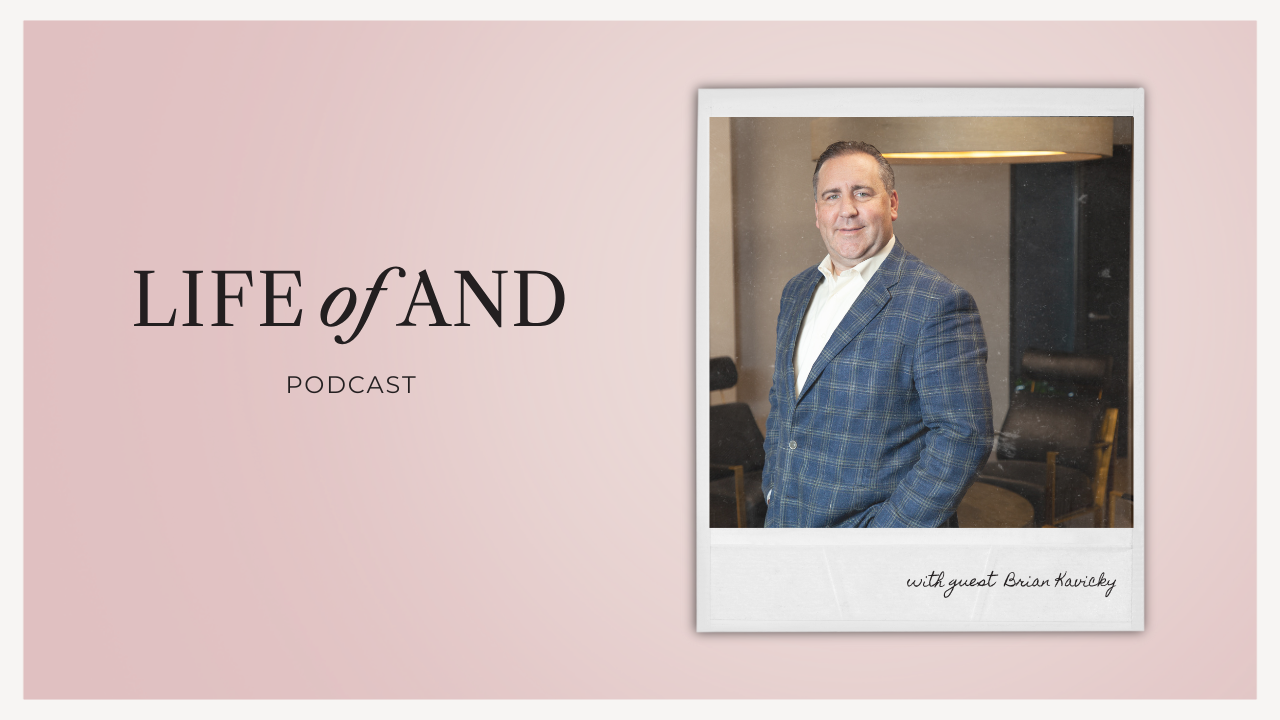
APPLE PODCASTS | YOUTUBE | SPOTIFY
When the House Gets Quiet: Rebuilding Your Identity After a Season of Being Needed
If you have spent years being needed by your kids, your family, and your work — and suddenly the house feels quieter than you expected — this conversation is for you.
Because when a role ends, it doesn’t just create space.
It creates questions.
Questions like:
-
Who am I now?
-
What do I want?
-
What does this next season look like for me?
For so many women, the transition when kids leave home or responsibilities shift can feel disorienting. Not because life is worse — but because the structure that once defined your days is gone.
And with that structure gone, something deeper gets exposed:
Your identity.
In this episode of Life of And, I sat down with leadership coach Brian Kavicky to talk about a season we don’t discuss enough — the season when the pressure lifts, the roles shift, and you’re left asking what’s next.
The Real Problem Isn’t the Empty House
Recently, I had two separate conversations that made me realize how real this transition is for many women.
The first happened before I was about to speak at an event. A woman approached me and said:
"I just sent my only child off to college. The house is so quiet. Everything feels eerily still. I don’t know what to do."
Just a few days later, I was talking with a colleague whose wife was going through something similar after their last child left for college.
He said, “Honestly, she’s a little lost right now.”
The kids’ activities had been the structure of her life. School events, schedules, volunteering — everything was wrapped around their son.
And now that structure was gone.
Brian said something that immediately reframed the issue:
The problem isn’t the event.
The problem is how we respond to the event.
And our response is shaped by something deeper:
Identity.
When Your Identity Is Tied to Your Role
Many women build their identity around being needed.
Being the mom who coordinates everything.
The person everyone depends on.
The one who keeps the family running.
And there’s nothing wrong with that role.
But when your identity becomes fused with the role, something difficult happens when the role changes.
Brian explained it this way: roles give us structure, purpose, and a scorecard.
You know what success looks like.
-
Did the kids get where they needed to go?
-
Did they succeed in school?
-
Did the house run smoothly?
Your days are full of feedback loops telling you that you're doing a good job.
But when the role shifts, the scorecard disappears.
And suddenly you're left with a question many women have never had the time or space to ask:
Who am I outside of the role?
Why This Question Feels So Hard
Part of the challenge is cultural.
Think about the questions we ask each other at parties.
“What do you do?”
Not:
“Who are you?”
We’re trained to describe ourselves by roles:
-
I’m a mom
-
I’m a teacher
-
I’m a lawyer
-
I’m a business owner
But those are roles — not identity.
And when life changes — when kids grow up, careers shift, marriages evolve — those roles change.
If identity was built on them alone, it can feel like everything underneath has disappeared.
The Work of Separating Who You Are From What You Do
Brian calls this process role separation.
It means learning to answer the question “Who am I?” without referencing a job, title, or responsibility.
Instead, identity is rooted in things like:
-
Your values
-
Your beliefs
-
Your character
-
The way you move through the world
For example:
Instead of saying:
“I’m a mother.”
You might say:
-
I value integrity.
-
I’m someone who loves building relationships.
-
I’m a curious learner.
-
I care deeply about helping others grow.
Those statements describe who you are — regardless of what roles you currently hold.
And that identity travels with you through every season.
The Courage to Want Something Again
One of the most surprising challenges in this season is rediscovering your own wants.
For years, many women operate in service of everyone else’s needs.
Kids.
Spouse.
Family logistics.
But when that season shifts, something uncomfortable happens:
You have to start asking yourself what you want.
And that question can feel surprisingly difficult.
Brian pointed out that many people carry internal beliefs like:
-
I don’t deserve that.
-
It’s too late for me to do something new.
-
I don’t have the experience.
Those thoughts often silence the small voice inside that says:
"You know what would be interesting?"
Or
"I wonder what would happen if I tried this."
Brian calls those whispers.
And those whispers are often the starting point for reinvention.
Reinvention Doesn’t Start With Certainty
Many people think they need clarity before they take action.
But the truth is, clarity usually comes after experimentation.
Brian suggests a simple process:
1. Ask yourself new questions
-
What do I enjoy?
-
What gives me energy?
-
What kind of life do I want to build now?
2. Try small experiments
Take a class.
Volunteer somewhere new.
Start a project.
Reconnect with interests you once set aside.
3. Pay attention to what energizes you
Your identity doesn’t appear fully formed overnight.
It emerges through exploration.
Why Reinvention Can Affect Relationships
One thing that often surprises people is that identity shifts can create tension in existing relationships.
When you start changing, some friendships may feel different.
Some social circles may no longer fit.
But that doesn’t mean you lose everything.
More often, what happens is alignment shifts.
Certain relationships grow stronger because they align with who you’re becoming.
Others naturally fade.
And that’s a normal part of growth.
How Your Kids Actually Benefit From This
Many parents worry that redefining their identity will somehow distance them from their children.
Brian offered an interesting perspective.
As children grow into adulthood, they don’t just want parents.
They want relationships.
They want connection.
They want to see their parents living full lives — not waiting around for their next visit home.
When parents develop their own identities, it actually creates a healthier dynamic.
The relationship becomes less about dependency and more about connection.
The Role of Self-Trust
Ultimately, this entire conversation comes back to one idea:
Self-trust.
Brian said something that stuck with me:
You cannot trust someone you don’t know.
And the same is true for yourself.
If you’ve never taken the time to understand who you are — what you value, what matters to you, what kind of life you want to build — it’s hard to trust your decisions.
But once you define that identity, something powerful happens.
Your boundaries improve.
Your decisions become clearer.
Your confidence grows.
Because now your choices are anchored to who you are — not just what the current role requires.
If You’re in a Season of Space
If you’re in a season where life suddenly feels quieter…
If the roles that once defined your days have shifted…
If you feel a little lost, a little lonely, or a little unsure what comes next…
Know this:
You are not broken.
You are not behind.
You are simply standing in a moment of possibility.
The question now is not:
“What do I have to do?”
The question is:
“Who do I want to become?”
And that might be the most powerful question you’ve asked in years.
[00:00:00] Brian Kavicky: The issue is they never really formed their identity. They grew up in an environment where a parent was telling them, this is what you're supposed to do. This is who you're supposed to be. Their spouse is saying, well, why don't you do this? Why don't you stay home with the kids? It's all this direction of do never asking the question like, what does life look like for you? [00:00:17] Brian Kavicky: What do you want for yourself? [00:00:19] Tiffany Sauder: I'm Tiffany Souder, entrepreneur, wife, mom to four girls and a woman figuring it out just like you. Come on, let's go build your Life of And. If you have spent years being needed by your kids, your family, your work, and suddenly the house feels quieter, then this episode is for you if you're successful, capable, and respected, but find yourself asking, but who am I? [00:00:43] Tiffany Sauder: Now, this episode is for you because when a role ends, it does not just create space. It creates questions. Questions about purpose, questions about identity, questions about what you actually want, not what's been required of you. Today we're gonna talk about self-trust in one of the least discussed seasons of a woman's life at the season of overwhelm, but the season of space. [00:01:04] Tiffany Sauder: And while learning to trust yourself when no one needs you in the same way might be the most important leadership skill of all. Welcome to another episode of Life of And this conversation is part of our ongoing work around self-trust. To some degree, not a mindset, but a leadership skill that shows up differently depending on the season of life you're in. [00:01:22] Tiffany Sauder: In earlier episodes, Brian and I have talked about trusting yourself under pressure when you're overwhelmed and when you're just sort of buried under responsibility. And today we're gonna explore a different kind of test. What happens when the pressure lifts, when the house is quieter, when the role that wants to find your days no longer needs you in the same way I'm joined back on the microphone with Brian Kavicky, who coaches leaders through transition. [00:01:45] Tiffany Sauder: Oftentimes identity shifts when roles end and another begins, and the moments when the old scoreboard disappears, and the next chapter just isn't quite obvious yet. [00:01:54] Tiffany Sauder: Brian, Welcome to our new studio. Great [00:01:57] Brian Kavicky: to be here. [00:01:59] Tiffany Sauder: I want to start. By kind of giving you and listeners an understanding of like, why are we on this topic? Because this is not my season of life where life is quiet. And I'm wondering or wondering, I'm very much in a high execution phase in both my business and my family, but over the last couple of weeks I had two very acute experiences where one, I was at an event before I was getting ready to speak and she said to me, Tiffany, I've listened to your podcast, I've listened to some of your things. [00:02:27] Tiffany Sauder: I just sent my only kid off to college. They're in their first semester and the house is so quiet. Everything is eerily still, and I don't know what to do. What do you have for women like me? And I just sort of like, was like, eek sounds amazing. Was like what my inner voice was saying. I was like, I, I don't know what to say actually. [00:02:50] Tiffany Sauder: And then literally a couple days later I was having. Coffee with, a executive colleague in town and he and his wife had just sent their last kid off to college and I asked him how things were, how's his wife? 'cause I know her as well. And he said, honestly, it's like kind of weird. She's pretty lost right now because she doesn't know where to start. [00:03:10] Tiffany Sauder: the school is a big part of her community. The things that she did with her time was really wrapped around our son and so. It's kind of a weird season of rebuilding and we kind of don't know where to start. And so I thought, well, this is what we do is bring questions to the podcast and work on that out loud. [00:03:28] Tiffany Sauder: And so I wanted to bring you into this and that's kinda a backdrop, so thanks for coming. When I two story, when I texted Brian an overview of what I wanted to talk about, what did your email say back to me? [00:03:38] Brian Kavicky: I said, well, this is a deep topic. We gotta go. I like, I bought notes. This is a, this is a little deeper than the normal. [00:03:44] Tiffany Sauder: Is it good or bad? He's like, yeah, it's can be both. Yeah. So, so where does this conversation need to start? [00:03:55] Brian Kavicky: I think it starts with what the real problem is. it's not about the event. it's about how you respond to the event. And your response to the event is based on where your actual identity is, which is the who I am piece. [00:04:09] Brian Kavicky: So you said an interesting thing is you're downloading those two stories. As that person said to you, my house is empty, it's quiet, I don't know what to do. [00:04:17] Tiffany Sauder: Mm-hmm. [00:04:17] Brian Kavicky: You said, sounds amazing. So exact same environment, two different responses. [00:04:22] Tiffany Sauder: Mm-hmm. [00:04:22] Brian Kavicky: Um, she is struggling with, well, I have loss. You are saying I have some gain. [00:04:29] Brian Kavicky: Mm-hmm. Now. It's a very different approach, but it's tied to how I see the world is based on what's going through my head, where I'm mentally and all those things. it goes back to a problem of identity and role separation is that who I am is tied to what my role is. So in your second story, it was. [00:04:50] Brian Kavicky: Yeah, she's a little lost right now because her kids' activities, the school activities, everything was wrapped around our son, so she is attached to the sun and the activities related to the sun. But if we asked that person, so what did you do when your son was out of town? Well, so I, I waited for him to come home or I set up the thanks thing. [00:05:11] Brian Kavicky: It's, everything was focused on that, and there's a purpose for that, but it's, it makes it hard to pivot from. [00:05:18] Tiffany Sauder: Well, I think that as a woman there becomes this, identity around being needed and being useful. [00:05:31] Tiffany Sauder: He's grinning at me, which is making me feel very uncomfortable suddenly, but I'm going to finish what you'll now undo. But there's, there's an identity that comes with being very needed and very useful, and I think that. Uh, that can become a big stabilizer to our identity. Oh yeah. Is this like responsive? [00:05:53] Tiffany Sauder: What am I going to do with my time? Let me just wait for 13 seconds and somebody will say my name and I'll know what to do. [00:05:59] Brian Kavicky: Yeah. So think about what, uh. Think about what attaching to a role gives you, attaching to a role, gives you structure. You know, I can structure my day around the kids' schedule. I can structure my day around their activities. [00:06:10] Brian Kavicky: I can structure the way the house works based on who needs me and when I have purpose. Now I have this, oh, my purpose is to raise my children. My purpose is to provide a good home. My purpose is to do this. It provides you with a, a, a scorecard as you use the word scorecard. Mm-hmm. I am being measured by my kids' grades and how successful and what their friendships and their relationships. [00:06:31] Brian Kavicky: So you have all these things that give you, and you go, oh, this is good for me because I'm being measured. I have purpose, I have structure, I have all these things working for me. And that reinforces this mindset of, this is what I'm supposed to be doing. But doing and being are not the same thing. [00:06:50] Tiffany Sauder: Okay, so how do we start to disconnect those things? Because I'm, I'm thinking this like even in the vocabulary of our friendships becomes all of the things that you just said, what I'm doing, where the kids are going and how they're doing in school, and whether they made the ones team or the twos team. [00:07:07] Tiffany Sauder: And like, are you going to the fundraiser and did you get the thing back on time and did you get senior picture? Like, it's like literally this perpetual vocabulary of thoughts and words. [00:07:18] Brian Kavicky: I, and it's cultural and it's culturally reinforced. So you think you, you go to a party like that, uh, one of the first questions somebody asks you is, what do you do? [00:07:27] Tiffany Sauder: Mm-hmm. [00:07:28] Brian Kavicky: So they're, they're focused on what is your role? What do you do? How do you do that? Like, I'm a doctor and I'm an attorney, and all of a sudden all the judgments are based on that. But if somebody came up to you at a party and said, so who are you? You would actually struggle with that just 'cause you're not used to the question. [00:07:44] Tiffany Sauder: Mm-hmm. [00:07:45] Brian Kavicky: But if, but if somebody sat you down and said, let's have a real conversation. Who am I? Who are you? Let's talk about what that is. The degree that I'm going to find roles to attach myself to is the degree that I can answer and respond to that question with. Here are my values, here's who I am as a person, here's how I think, here's how I do. [00:08:05] Brian Kavicky: Because that is where the separation is needed. So most of the time where people are struggling with this is they can't answer that question, who am I? Because they say things like, I'm a mom, but I'm, I'm a mom, or I'm a homemaker, or I'm whatever. Whatever they word they want to use, that's the only way they've ever learned how to do it. [00:08:23] Brian Kavicky: And, and it is reinforced by their social interactions. [00:08:28] Tiffany Sauder: So how do you begin? [00:08:32] Tiffany Sauder: I literally picture, and I've been through some of this process on my own when I left Element, when I was emotionally detaching myself from the outcome of Element Three and being okay with it, failing or not, but it's like literally the picture I have on my head is a piece of gum stuck in your hair, like how you even begin to get it out. [00:08:51] Tiffany Sauder: That like idea of your identity is so like how do you begin disconnecting your role from your identity? So [00:08:58] Brian Kavicky: what would be the answer to that question? How would you get gum outta your hair? [00:09:00] Tiffany Sauder: I would probably cut it off. [00:09:01] Brian Kavicky: Yeah. [00:09:03] Tiffany Sauder: Okay. So, [00:09:05] Brian Kavicky: but what are you left with No gum in your hair? [00:09:09] Tiffany Sauder: Yeah, but also it looks whack [00:09:12] Brian Kavicky: to you. [00:09:12] Brian Kavicky: But to everybody else it's just, oh, it a little short hair, [00:09:18] Tiffany Sauder: but, okay. So. My analogy was somewhat helpful, but what is the equivalent of cutting gum outta your hair in your life, like if you would've been like me standing beside the charcuterie spread in lemonade at that event, and she says, what is it that I should do because the silence is deafening? [00:09:35] Tiffany Sauder: What would you have said? [00:09:37] Brian Kavicky: I would've said, well, first you have to decide who you are and go back in time to Who am I today? And then you have to spend time deciding who are you in the future. Because it can't be. What role are you in? It can't be what you're doing. It's Who are you? Like who are you becoming now? [00:09:54] Brian Kavicky: Now that your kids are gone, what does your life look like? Where are you going to live? How are you going to operate? How are you going to think? How are you going to spend your time? What are your values that you have? Have you ever thought about that? What are the things you love? What are the things you don't love? [00:10:08] Brian Kavicky: Any of that stuff. That they have to sit in that, because the, the issue is, is that they never really form their identity. A lot of times it's, they grew up in an environment where a parent was telling them, this is what you're supposed to do. This is who you're supposed to be. Their spouse is saying, well, why don't you do this? [00:10:25] Brian Kavicky: Why don't you stay home with the kids? It's all this direction of do not, not never asking a question like, what, what does life look like for you? What do you want for yourself? [00:10:34] Tiffany Sauder: You know, it's interesting. I think one of the women. That I had talked to, I think she said to me, I had my child really young, like potentially in high school or college, like, like before she had sort of decided to, and that will probably even perpetuate what you're talking about right now. [00:10:51] Brian Kavicky: Yeah. 'cause you this idea, you don't have the exploration stage of, [00:10:54] Tiffany Sauder: and I'm, I'm forced, I'm, I'm, I'm not forced, but I'm pushed into this role. Uh, is that true or false? I, [00:11:01] Brian Kavicky: so, so I [00:11:02] Tiffany Sauder: feel like, yeah, [00:11:03] Brian Kavicky: if, when you have, so you have a child at a young age, you go from, I thought my life looked like this to now it looks like this. [00:11:12] Tiffany Sauder: So we can put anything in that. [00:11:14] Brian Kavicky: Yeah. [00:11:14] Tiffany Sauder: I thought my life was going to look like me moving to this market and being a president. I thought my mark my life was going to look like I was going to be married for 50 years. I thought my life was going to look like. Um, I was going to live close to my parents. Like there's a ton of things where disappointment or life is just di could be better too. [00:11:31] Tiffany Sauder: I thought I was going to have to work the rest of my life and I won lottery. Does it work in that regard? [00:11:35] Brian Kavicky: Yeah. [00:11:35] Tiffany Sauder: Okay. So anything where [00:11:37] Brian Kavicky: I, I've seen it with, uh, spouse deaths too, where they were so attached to their spouse and, and it, and it's like a lot of times it's bad stuff where it's, they were, there were problems in their relationship or they weren't living to their full potential because of how their sp what they had to deal with their, like codependency or any of those things. [00:11:54] Brian Kavicky: And when they have that cut out, they're just like, oh, well this is different than I thought it was going to be. And they have to actually take, use the word space. They have to take space and time and sit there and go, okay, what do I want my life to look like? Who am I becoming? What is it? Because you can actually decide who you're going to be if you don't know. [00:12:15] Brian Kavicky: So the fix is some why I don't know who I am. Perfect. Decide who you're going to be and decide what that's going to look like and how you're going to operate, and how are you going to be? What are your values going to be? And now go down that path. You can effectively reinvent yourself. [00:12:31] Tiffany Sauder: So does that mean like practically testing some things? [00:12:34] Tiffany Sauder: Does that mean just journaling for like what is the, what is the thing I do? [00:12:40] Brian Kavicky: So the, the first thing is to sit down and say. Who am I? And you know, you could Google it, like what are, who are my questions? [00:12:48] Tiffany Sauder: Mm-hmm. [00:12:49] Brian Kavicky: But they're sort of the questions that I've been rattling off mm-hmm. And sort of go, okay, what does that look like? [00:12:53] Brian Kavicky: What do I want for myself? 'cause the want thing is hard for people too. Mm-hmm. And what do I want this to look like and saying, I like this. I, I like what this looks like. I'm excited about this. This gives me energy to do that. And then the next stage would be to experiment. It was like, let, let's see what happens when I've lived this out. [00:13:12] Brian Kavicky: Mm-hmm. Let's see what happens when I put myself in those positions. Let's see what happens when I spend my time in ways that are consistent with what I've outlined. And that gives you the confidence to go, okay, I like where this is heading. I like how this feels, and I'm just going to continue to explore and sort of own this, this new who am I piece. [00:13:35] Brian Kavicky: Mm-hmm. [00:13:36] Tiffany Sauder: I think it can feel startling to even want something again. [00:13:41] Brian Kavicky: Well, the, the want is part of the devil's tongue of where negative head thoughts are. So it's, I'm not likable or lovable just the way I am. I don't have enough. I don't have enough education, I don't have enough experience. And the next is I don't deserve. [00:13:55] Brian Kavicky: So the scary part of saying I want this is that little voice inside your head that says, but I don't deserve it. It's not okay for me to do this. Um, and that still goes back to young ages where you were very careful about what wants and needs and now understanding the difference between those two things. [00:14:16] Brian Kavicky: Mm-hmm. [00:14:17] Brian Kavicky: I think one of the things I'm running through, through, in my mind as well is that those questions could potentially challenge some relationships that you have, friendships, that you have circles, you run in the country club. You like saying like, I wanna, I wanna take. I don't wanna say a chance, I wanna take this next chapter of my life could create some dissonance or disconnect in other areas of your life that have historically been very stabilizing. [00:14:48] Brian Kavicky: Is that right? [00:14:49] Brian Kavicky: You're correct. Yes. It, it will almost al always cause that to happen, but you don't lose all of it. [00:14:55] Tiffany Sauder: Mm-hmm. [00:14:55] Brian Kavicky: It's not a, it's not a, I've lost everything. It's that, you know, some of the relationships that I might with having in the school. Don't really fit where I'm going, but these two people do. [00:15:04] Brian Kavicky: Mm-hmm. So I'm going to build those relationships more 'cause they align with the direction I'm heading and, who I'm becoming. [00:15:11] Tiffany Sauder: I wanna take a quick moment to thank my partners at Share Your Genius. For the past four years, they have been an incredible part of my journey. Behind the Microphone, Share Your Genius is a content and podcast production agency that helps leaders and brands bring their message to life. [00:15:25] Tiffany Sauder: So, whether you're trying to find your voice, develop a content strategy, or get your leader behind a microphone, they're going to help you make it simple, strategic and impactful. [00:15:33] Tiffany Sauder: In this scenario, how do you bring your kids along with you because they've, you know, they're off adventuring, becoming and exploring in the situation we're talking about. [00:15:44] Tiffany Sauder: They're going to college, they're going to live wherever they're going to find careers and they're going to grow. How do you reintroduce them to the fact that that's. Also a season that I'm sharing with them, um, I too am exploring alongside you because it's like, I remember when I went off to college, I pretty much wanted my room, my parents, the grass, everything, to stay exactly the same because that was stabilizing on my. [00:16:07] Tiffany Sauder: Launching journey. And so then for me to come back in my mind and be like, good news. In my new version of myself, I don't like to cook. I would be like, I'm sorry, and my version of you, you definitely like to cook. [00:16:20] Brian Kavicky: And how would your mom have responded? [00:16:23] Tiffany Sauder: Um, my mom probably would've cooked, [00:16:25] Brian Kavicky: oh, [00:16:28] Tiffany Sauder: my mom still cooks. [00:16:29] Brian Kavicky: Well, but that's what she wants to do. [00:16:32] Tiffany Sauder: Yeah. [00:16:32] Tiffany Sauder: well, let me give my mom some credit in this. She has grown a lot in the last 10 years, probably more than that, but that's probably when I've been paying the most attention. and her reinvention has not come in her capacity for us. [00:16:48] Tiffany Sauder: But I would say it's come in her own, just creating more dimension to herself. She like got an Airbnb. She like, you know, it's like, I, I don't wanna say funny little projects in a way that that's demeaning to it. It's like amazing. It's like awesome for our community. She's does some really cool things. [00:17:04] Tiffany Sauder: So I think as she's found more capacity, she's realized that she has talents and gifts that she didn't know were in her when we were all home and taking all of her capacity. [00:17:16] Brian Kavicky: So the good news for people that say, well, what's going to happen if I change who I am? how is it going to affect my children? Especially when your role is attached to your children, is the good news is your children want a different version of you than the version they had. [00:17:31] Brian Kavicky: So I think you're correct that. There's a version when they launch that says, I want everything the same. But that pretty quickly pivots to, I don't want my parents to be my parents anymore. I want my parents to actually be my friends. Because if they're my friends and we have a friend relationship and they're not parenting anymore, I can stand them longer. [00:17:53] Brian Kavicky: I can, I want to be around. we came back from this weekend and somebody in our office, he, he was totally on edge. And I was like, what is wrong with you? 'cause he was just defensive about it. He was like, what's going on? And he said, my mom came into our house and she said, I need to clean your house for you. [00:18:10] Brian Kavicky: And I've been on edge since, well, her mom is still parenting him. She's like, your your house is a mess. I'm going to clean it for you. That is, that is, it creates a problem where he said, I just want my mom to hang out with us. Mm-hmm. And be with us today and do this stuff. It all would've been fine. Same time, different role. [00:18:27] Brian Kavicky: So as long as you go, Hey, the, the longer term is I want a friendship and relationship with my children, then I can switch. And your kids actually get excited about what you're doing. Mm-hmm. And what that is because it says, well, you're not going to parent me anymore 'cause you're focused over here. [00:18:43] Tiffany Sauder: Mm-hmm. [00:18:44] Brian Kavicky: And I get the version of you that's all good. [00:18:46] Tiffany Sauder: Mm-hmm. [00:18:47] Brian Kavicky: And some parent grandparents say, my, I want to just be a good grandparent now. And they're like, well, what about me? And they get over it and they go, you know what? Yeah. Be the grandparent. It solves a lot of problems for [00:18:58] Tiffany Sauder: us. Mm-hmm. Mm-hmm. [00:19:05] Tiffany Sauder: So in this season of change, is it like, how long do you sit in it? [00:19:08] Tiffany Sauder: Do you go fast? Do you go slow? Like what, what's the. I'm not saying like prescribed duration, but what does that look like? [00:19:15] Brian Kavicky: the faster you move in starting to brainstorm who you want to be and what you want to do and what's next for you. From a values, and this is what I want for myself perspective, the quicker you start to experiment. [00:19:30] Brian Kavicky: So if, if I postpone it and I say, well, I'm going to wait and see, or I'm going to delay this, or this is too hard, I just have to not deal with it. nothing changes, nothing moves, and as soon as kid comes back on fall break, you're back in that mode again. As soon as spring break, you're back in that mode again. [00:19:48] Brian Kavicky: And what happens is you'll start to distance in those relationships because the, the husband that said, my wife is a little lost right now because of this, it's not helping their relationship. [00:19:59] Tiffany Sauder: Mm-hmm. [00:19:59] Brian Kavicky: They, they didn't start with children. They're not going to end with children in the house. But there's this friction of the longer we wait to go, Hey, who are we even as a couple? [00:20:09] Brian Kavicky: Mm-hmm. And what do we want for ourselves? And what's going to be different about that? The more that there's friction between those two people, because you know, if, if I'm the husband and my wife's going, I just feel so Wasco, I don't have kids, it's not an attractive quality. And the person will go, yeah, I wanna hang out with you. [00:20:25] Tiffany Sauder: Mm-hmm. Well, I think there can also be, again, I'm projecting but like almost resentment that builds of like, you're not experiencing this loss to the depth that I am. Like I can imagine that playing out. [00:20:40] Brian Kavicky: Yes. [00:20:40] Tiffany Sauder: Where there starts to become this imbalance of like, you don't get me. Like, I just feel like that could create. [00:20:45] Brian Kavicky: But it still goes to this brute problem of, you don't get me because I don't know who I am, so I'm going to blame you for how I feel, and you need to be patient with me and you, you like, it'll add to that friction. Mm-hmm. Because you have to own that of, you know, I have now realized that I'm too attached to my kids. [00:21:04] Brian Kavicky: I gotta do something about, to figure out who I am because I, I didn't do that earlier. And I have attached to all these things that are, that were good for other people, but not necessarily good for me, and now I have to do what's good for me. [00:21:17] Tiffany Sauder: Mm-hmm. It's not so dissimilar. [00:21:22] Tiffany Sauder: I've like made, I, I think, help me with this parallel, I've made this observation like when you have a new baby and my sister-in-law just had a new baby. [00:21:28] Tiffany Sauder: He's like six days old. When that is the case, it is an on-demand relationship. Like it just, it just is. And at some point you have to decide as the parent to change that because the kid won't, like you, decide to get 'em on a sleep schedule or not. You decide that they're going to feed on a schedule or not. [00:21:45] Tiffany Sauder: You decide like, and so I think some, in some relationships, parent child, that always on relationship, it never, it never pivots off of kind of how it was originally formed, which would note just born. Just does kind of need to be an always on thing. and in some ways, I think in this season of life where your kids are moving on and this like detaching when you were saying like becoming friends with them, it was like actually kind of annoying to me when you were saying that, but I'm seeing it. And like even when we most enjoy my parents, it's like when we're skiing together, we're like doing something interesting together. We're both exploring. So it is like, yeah, it's like a, it's more of a friendship. I still look to them for advice and I still in a way that I don't my friends, but the idea of adventuring through life together feels more like a peer relationship than I'm under their rule. [00:22:41] Brian Kavicky: But when you go to them for advice, are you going them as a parent, are you going them as a. Very close relationship that you deeply trust? [00:22:51] Tiffany Sauder: Well, I think I respect their outcomes in life, and so I would say I go to them as a parent, but it's probably not just the role they play, it's the, it's the, it's also, I respect the thing they've done. [00:23:03] Tiffany Sauder: Does that make sense? [00:23:04] Brian Kavicky: As a parent or as in life? [00:23:08] Tiffany Sauder: Um, probably more in life. [00:23:09] Brian Kavicky: Yeah. [00:23:09] Tiffany Sauder: That's fair. [00:23:10] Brian Kavicky: So, so that's the difference. [00:23:11] Tiffany Sauder: Mm-hmm. [00:23:12] Brian Kavicky: So the rule is act today as if you mean to go on. So your reference, say [00:23:16] Tiffany Sauder: that again. [00:23:17] Brian Kavicky: Act today as if you mean to go on. So if I'm in the season of hearing this podcast and I just had a baby, and I'm going, oh, I don't want to have this problem where I'm freaking out when they go to college. [00:23:30] Brian Kavicky: Well start acting today like they're going to go to college. So what does life have to look like if, I don't want them sleeping in my bed for the rest of life? In month one, they probably shouldn't sleep in my bed or in my bedroom. If I don't want them to constantly rebel, I better fix that the first time they smart off to me or else they're going to rebel against me for the rest of their life. [00:23:50] Brian Kavicky: So what does that look like? And that means couples going on dates and having relationships and saying, this is a hard time about your time, or, [00:23:57] Tiffany Sauder: mm-hmm. [00:23:58] Brian Kavicky: What I see at most is the shift of, you have a couple and they used to go out to dinner once or twice a week. And then they say, well, we have a kid. We can't do that. [00:24:05] Brian Kavicky: Well, that's why they have high chairs. Like mm-hmm. You, you either bring 'em or you got a babysitter. Mm-hmm. Why did you change your life for them? [00:24:13] Tiffany Sauder: Mm-hmm. That would be very uncomfortable for some people to hear. [00:24:17] Brian Kavicky: I'd said this was a deep topic. [00:24:19] Tiffany Sauder: Mm-hmm. [00:24:20] Brian Kavicky: But it's who do we wanna be for a long term? Your, your window of children or your window in a job or is a very short window compared to your life. [00:24:30] Brian Kavicky: And, and, and this idea of. I, I meant sometimes people have this problem when they've, they've dreamed, like, all I wanna do in life is to be a mom, and they achieve the dream of now I'm a mom. they never solidified their identity. And so when that is broken off, it's very hard to get back. So you just have to decide, but as you said, make the choice. [00:24:53] Brian Kavicky: Mm-hmm. I gotta make the choice that this is not what it's going to be. And it is not a selfish choice. It's a, it's, it is actually a selfless choice of, I'm going to be a person that is so comfortable with myself and so confident in myself, and so secure who I am, that I can help all the people be in the relationships with all the people because I'm not attached to anything. [00:25:15] Tiffany Sauder: Well, and I think also that person who's strong in their identity. Can hold space with, in a non-personal way with a disappointment that can, again, I might be overstating this, but like that can happen when my identity is saying I'm not going to overextend my role here. [00:25:35] Brian Kavicky: Yes. [00:25:35] Tiffany Sauder: Does that vocabulary make sense? [00:25:37] Brian Kavicky: Yes. [00:25:38] Tiffany Sauder: So I think a example of that happened yesterday. you and I had dinner last night with, uh, another colleague and. I don't do very many things in the evenings because it's like prime time for my kids. And it was a Monday. What happens on a Monday? Literally no sporting events ever. On Mondays. It's Tuesdays. [00:25:56] Tiffany Sauder: Thursdays, right? Saturdays it was like safe zone and um, my daughter had a big dress rehearsal and so her hair had to be done or makeup had to be done, all this stuff. I was like, honey, I, I, I have made this commitment like I, I cannot support you in this, but I can help your sister can help you. A nanny, like whatever. [00:26:15] Tiffany Sauder: My sister-in-law. I can help you get it done, but I'm not going to change my plans. And she was really annoyed with me. She really wanted me to change my plans. and the next mor I let her be annoyed. And I was like, what do I do? Do I, you know, I could have canceled. It was not like life or death. I was like, well, I'm going to keep it like this is part of my aunt and there's going to be disappointment in the space of her life because of this that I chose. [00:26:39] Tiffany Sauder: I said, I'm sorry that my schedule has disappointed you, but I'm working. Maybe I shouldn't have even apologized. [00:26:46] Brian Kavicky: did her hair get done? [00:26:48] Tiffany Sauder: She looked beautiful. She was super ready. All the things got done. She [00:26:51] Brian Kavicky: said that [00:26:51] Tiffany Sauder: what? She said [00:26:53] Brian Kavicky: what? That she looked beautiful. [00:26:54] Tiffany Sauder: Yeah. She felt very confident. [00:26:55] Brian Kavicky: Yeah. So that's, [00:26:57] Tiffany Sauder: it's really about feeling confident. 'cause it's like a new space and, yeah. [00:27:00] Brian Kavicky: Yeah. So the question is, was this about your hair or was this about me doing your hair? 'cause that was the disappointment is it wasn't you, but the, the role was hairdresser. In that moment. She was saying, no, I'm attached to you. [00:27:14] Brian Kavicky: I want you to do this. [00:27:15] Tiffany Sauder: Well, she was certain I would do what it took to make her feel confident. [00:27:19] Brian Kavicky: And you did? [00:27:20] Tiffany Sauder: Yes, I did. [00:27:21] Brian Kavicky: So why, why would you apologize for that? [00:27:23] Tiffany Sauder: Yes, and I did. Oh wow. [00:27:30] Brian Kavicky: And, and that's where people think if I, if I do something different, the outcome will be different. But if I focus on what is the outcome that matters here and what is the objective? So as a parent, your true outcome is that your kids are wildly successful and independent of you. But if I'm attaching to them, that's never going to be the case because they become dependent on you. [00:27:50] Tiffany Sauder: Mm-hmm. [00:27:50] Brian Kavicky: If it's, I, I need to make sure that my kid is confident for a dress rehearsal, I'm going to give all the resource to do that. But it doesn't have to be me. [00:27:58] Tiffany Sauder: Mm-hmm. [00:27:58] Brian Kavicky: Because there's somebody probably better than me to do that job then. [00:28:02] Tiffany Sauder: That's exactly what we solved. Actually, my sister-in-law is like amazing. [00:28:06] Tiffany Sauder: She sent me all this stuff from Target that we need to get, and so I did the online order a's going to pick it up. She's going to go do a tutorial. I don't have to do anything. [00:28:13] Brian Kavicky: Right. [00:28:14] Tiffany Sauder: But pay $48 for the target pickup. [00:28:16] Brian Kavicky: And you arranged to have it happen. [00:28:17] Tiffany Sauder: Yeah. [00:28:18] Brian Kavicky: And your sister-in-law is thrilled that she got to be the one to do it because she dead. [00:28:23] Brian Kavicky: And your daughter said, I am comfortable. She [00:28:25] Tiffany Sauder: would way better than if I was there. It's so true. So interesting. [00:28:28] Brian Kavicky: But that's what I mean, where you're going to have those tugs that say, I'm doing the wrong thing, because people are saying, I want this need met in me. And that reinforces you to go, well, maybe I'm supposed to not go to dinner. [00:28:42] Brian Kavicky: Maybe I'm supposed to be there for my kids. But if you're confident in your identity saying, oh no, I have other plans. My role tonight is here. I'm still your mom. I wanna make sure your needs are met. But my role is to be at this dinner. My role is to attend this. My role is to be successful at work. that's the separation of my identity. [00:29:01] Tiffany Sauder: So when I was in the bowels of having no identity outside of my roles, I didn't even know what it sounded like. To say who are you without saying roles? So I'll ask you the question so that people can hear what is a, not that yours is the outcome people are looking for. We all have our own version of it, but like what we're not. [00:29:23] Tiffany Sauder: If somebody was at a party and said, Brian, who are you? What, what are the words that we use to describe our identities that doesn't use role vocabulary? [00:29:33] Brian Kavicky: it would be your values. Like, who are you, what do you value in life? Uh, what do you, what, what are you focusing on? So it would be values like, um, I am a person with high integrity. [00:29:47] Brian Kavicky: I am somebody that has Christian values. I am somebody that that's like that, that is a, just a self description of who you are. 'cause those aren't roles. if you slip and say, I'm a husband, I'm a father. You're slipping into role land. [00:30:02] Tiffany Sauder: Mm-hmm. [00:30:03] Brian Kavicky: And you just gotta sit on that for, because it's, like I said, it's cultural. [00:30:07] Brian Kavicky: Mm-hmm. Like, people, people are uncom. They're like, really? You'd say that? Well, you never say that. You don't tell 'em what your role is at a party. [00:30:14] Tiffany Sauder: Mm-hmm. [00:30:14] Brian Kavicky: The key is that you know who you are as you do that. My role at a party is to, like, if somebody asks me at a party, what do you do? I say, I help CEOs with growth problems in their company. [00:30:26] Brian Kavicky: And they're like, okay, [00:30:28] Tiffany Sauder: yeah, they didn't hear, that's my role. They didn't even hear it. [00:30:30] Brian Kavicky: No. Check the box. My role was to make you comfortable with what I did. I'll just say that [00:30:36] Tiffany Sauder: Uhhuh. And [00:30:36] Brian Kavicky: they're like, okay. [00:30:39] Tiffany Sauder: this is deep, heavy work. Does it happen? Do you have to do it? As life goes, or is it once you've done this work, it stays with you? [00:30:52] Brian Kavicky: Once you've done the work, it stays with you and your boundaries become better and your decision making becomes better. But if you go, I can't do this alone, that's where you go, I'm going to go to therapy, I'm going to get coaching, I'm going to spend time doing this, I'm going to take some courses like, like find a way to say, I'm going to use this space to figure out who I am. [00:31:13] Tiffany Sauder: Mm-hmm. [00:31:13] Brian Kavicky: And if you can't figure out who you are, then just figure out who you want to be. [00:31:18] Tiffany Sauder: Mm-hmm. I think in the absence of it, we start to become who other people want us to become because it serves their, you've said this before, it serves their outcomes in life instead of your own. [00:31:29] Brian Kavicky: Yeah. And one of the greatest like, like suction into that is people need me. [00:31:34] Brian Kavicky: I do this because they need me. And that feels very important. Yet if you look at when somebody says you need me, that means. You are a vulnerable person like you, you don't, you don't solve it. Like, I need a fire engine right now means you're on fire. [00:31:51] Tiffany Sauder: Mm-hmm. [00:31:51] Brian Kavicky: I need food right now means you're starving. So it's not good for anybody else that you are attached to these roles, uh, because you are always going to be the crutch to them. [00:32:02] Tiffany Sauder: Mm-hmm. [00:32:03] Tiffany Sauder: So if there's a woman listening to this episode who's feeling a little lonely, maybe a little disoriented or like. Unseen and unneeded in a world that sort of used to be like, it's like not anymore. What's your advice to her? [00:32:22] Brian Kavicky: I think the first advice is listen to the whispers. There's little whispers in your head that says, you know, what'd be cool and I wonder if this, and there's little possibilities of stuff that you're sort of suppressed and said, you know what, I can't do that right now because I'm a mom [00:32:36] Brian Kavicky: I can't do that because of this is, what would you do with those whispers? What would you do if you said, you know what? I think there's something here that I, that I can. I can lean on. And that gets you sort of in that momentum. And then you can sit back and go, okay, who do I want to be in this next phase of life? [00:32:53] Brian Kavicky: What do I want life to look like? Where do I wanna live? And start with sort of those roles and then get to the values thing last of what's important to me. What do I care about? What matters? You know, what, how do I wanna spend my time? Those types of things, sort of in that order. [00:33:10] Tiffany Sauder: I find whenever I was working through change, I would call you and sort of say like, what are the words I use? So if this woman is trying to orient the people around her to this journey she's on, can you give her the words to say to her husband, to her friends, to her kids? [00:33:28] Tiffany Sauder: To a social setting that says, what are you doing now that your kid's gone? It's like, yeah, like you just basically put hot water on my face. Well, what are the words that she says? [00:33:38] Brian Kavicky: I think the first thing is I met where you're at. Um, I have realized that with my kids gone that it's a harder transition than I had, and part of the problem is I was pretty attached to being a mom. [00:33:50] Brian Kavicky: So what I'm doing now is figuring out what my life's going to look like, what I'm going to be doing, who I am going to become that's not a mom, so that I can figure out what's next for me and us and just let it there. And I guarantee that when you, if you ever have the guts to tell a person that they're going to respond, they're like, that's actually really good. [00:34:10] Tiffany Sauder: Mm-hmm. [00:34:10] Brian Kavicky: And they will like enfor reinforce that of, yeah, you should do that. I wish I would do those things just by saying that. [00:34:18] Tiffany Sauder: I think one of the things that is so, so, um, stayed in common for women is that we, we feel so alone in these seasons of change because we feel afraid to say it out loud. It makes it too real. [00:34:31] Tiffany Sauder: And we've always been okay for everybody around us. And so admitting we're in this season can be really difficult. And I've seen in every area of my life when there's been change or uncertainty, when I say it, people show up who have been there before, who have experiences, who can make it a little smoother. [00:34:46] Tiffany Sauder: So it also, I think, can create community of women who are going through it together to encourage each other. [00:34:51] Tiffany Sauder: So anything else we should say or add to this Brian's conversation? [00:34:56] Brian Kavicky: I, I want to go back to the idea of self-trust. if I ask the question, name a person that you don't know that you trust, you can't do that. [00:35:06] Brian Kavicky: So if I know that I don't trust people that I don't know, then if I want to eventually trust myself, trust in my abilities, trust in who I am, I have to define what that is first. And then I can say, okay, now I trust me to do that. I trust me to accomplish that. So you gotta get that order correct. It's not like otherwise you're just getting this, I don't trust myself. [00:35:26] Brian Kavicky: Well, who are you? I, well, of course you can't. You can't ever say you're trusted 'cause you don't know who you are. [00:35:32] Tiffany Sauder: It's imperative process that life is going to force us through at some season. Uh, I, I found my, I don't know, um, my moment when I was going through potentially losing Element Three and it was destroying me personally. [00:35:49] Tiffany Sauder: And you rightly recognize like the company failing is not you dying. Like you've gotta uncouple this. And so it forced me. It's like taking. I don't know, like saran wrap off of something that's like perfectly formed to it. You almost can't see it when you're in it. And so sometimes it does take somebody else to help you shine the light differently so that you can see it, how to take it off. [00:36:14] Tiffany Sauder: So, we're all in journey, but thank you for, I mean, this is a really important conversation. I think as women, we need to feel more comfortable sitting together and the uncertainty of being undefined and that not be. An embarrassing place to be, but one that is actually super empowered and, um, an exciting moment of sort of opening the curtains and seeing what's next. [00:36:37] Tiffany Sauder: So thanks Brian. [00:36:39] Brian Kavicky: Yep. [00:36:40] Tiffany Sauder: If this is a season of life that you're going through, then take a look at the download that we have for you. [00:36:45] Tiffany Sauder: There's a link in show notes. Um, I don't think it's a download, just the PDF. If you're trying to figure out, I need somebody to help me walk through these questions, sit down with yourself, sit down with your spouse, sit down and take the time to be quiet. The truth of where we are can sometimes be scary, but I found every single time I confront the truth. [00:37:05] Tiffany Sauder: It's not nearly as scary when you see it as you thought it was in your head. So. Push forward on this journey. It's a big part of building a Life of And, and is about what's next and is about being able to hold two things at the same time. Thanks for joining us.🎙️ View Transcript