303: The Financial Confidence Every Ambitious Woman Deserves
APPLE PODCASTS | YOUTUBE | SPOTIFY
Imagine More: Why Women Need Financial Fluency — Not Just Budgets
If you are successful in your work and your life — but still feel unsure when it comes to money — this conversation is for you.
If you’ve ever thought:
-
I should understand this better.
-
I know I could be smarter with money, but I don’t know where to start.
-
Why does this still feel intimidating?
You’re not alone.
Too often when women talk about money, we talk about budgeting. Cutting back. Being disciplined. What we bought. Where we traveled. The shoes. The bag.
But real change doesn’t happen when we get better at spending less.
Real change happens when women become fluent in the language of influence.
Because whether we like it or not, money is the vocabulary of influence. And if you want more influence over your life, your work, your family, or the causes you care about — learning that language matters.
The Way We Learn Money Matters
My relationship with money started early.
My dad grew up in a home without strong financial literacy. His father filed for bankruptcy, and that experience shaped him deeply. He wasn’t college educated, but he was deeply committed to understanding money — not to be defined by it, but to use it as a tool.
A tool for:
-
Growth
-
Freedom
-
Generosity
I learned to read balance sheets in middle school. I hired my friends to help with my mulch business and filed 1040EZ forms at the library.
Money was never secret.
It wasn’t scary.
It was something to be understood.
But I’ve realized how unusual that was — especially for young girls.
When women get together, we often talk about what we bought — not what we invested in. My husband gets called far more often than I do about investment opportunities — even though we share the same bank account.
That tells me something.
We have work to do.
From Scarcity to Strategy
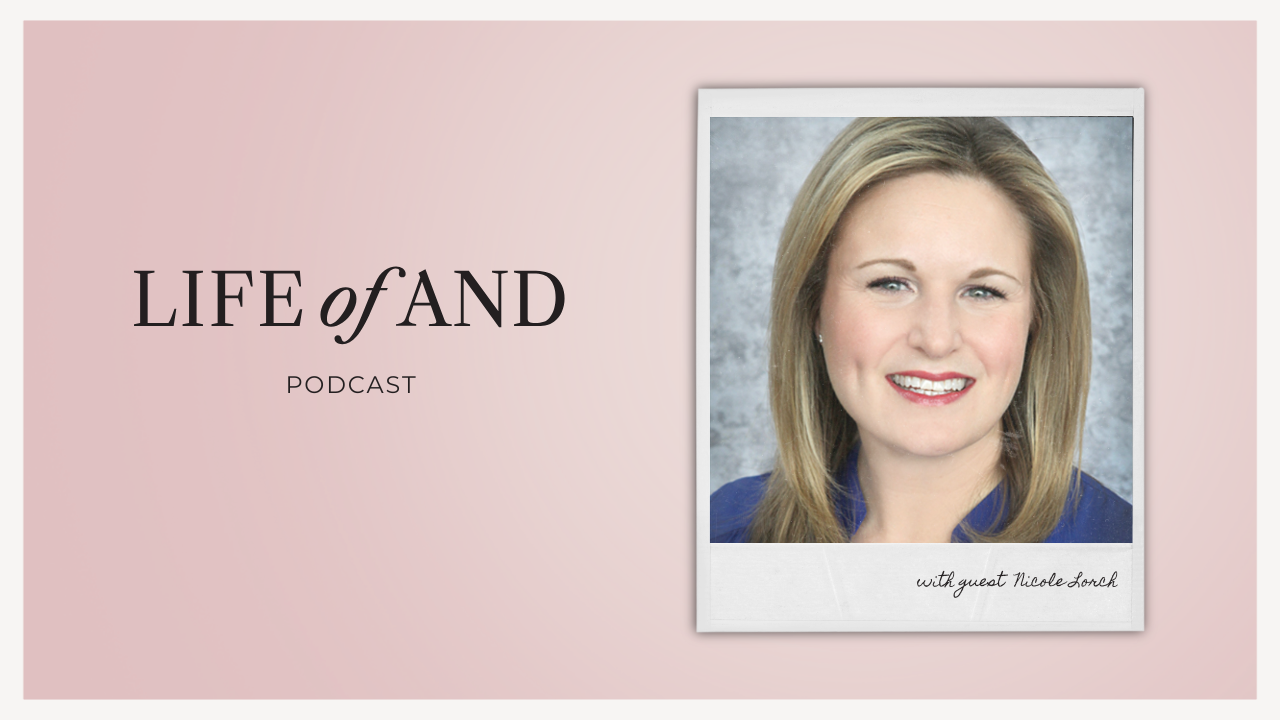
In this conversation, I sat down with Nicole Lorch, President of First Internet Bank, to talk about money — not as a title, but as a tool.
Nicole grew up in a home where money was treated carefully and conservatively. Her parents were disciplined savers. Scarcity wasn’t dramatic — it was just practical.
And here’s what she realized over time:
Saving is important.
But saving without intentionality limits what money can do.
Long-term wealth isn’t built by hoarding. It’s built by putting money to work.
Through years of working alongside entrepreneurs, she saw something shift:
Money isn’t just protection for a rainy day.
It’s fuel for growth.
Whether that’s:
-
A 401(k)
-
An investment property
-
A business
-
Or simply a high-yield savings account
Money works best when it has a job.
A Practical Starting Point (That Isn’t Intimidating)
Let’s start simple.
If investing in real estate or buying a business feels overwhelming, begin with something accessible: a high-yield savings account or money market account.
A money market account isn’t complicated. It’s simply a savings account that earns significantly more interest than traditional brick-and-mortar banks.
Here’s why that matters:
Traditional banks have massive overhead — branches, staffing, buildings. Online banks don’t. That allows them to return more yield to customers.
The point isn’t chasing percentages.
It’s this:
Put your money somewhere it can grow while you sleep.
Even $10,000 earning meaningful interest begins to change your mindset. And that interest can fund something real:
-
A house cleaner
-
A child’s Roth IRA
-
A personal goal
-
A giving opportunity
The goal isn’t complexity.
It’s momentum.
Money Is Influence — Not Power
Let’s clarify something important.
Influence is not the same thing as power.
Power says: Do this by Tuesday.
Influence says: Come with me. Let’s build something better.
Money allows us to:
-
Change communities
-
Fund ideas
-
Support causes
-
Invest in people
-
Create options
That isn’t ego.
That’s responsibility.
And when women step confidently into financial fluency, entire ecosystems shift.
“Imagine More” — A Different Way to Think About Banking
First Internet Bank was founded on a radical idea in 1999:
A bank with no physical branches.
At the time, that was unheard of. No vault. No storefronts. No “come in between 9 and 5.”
Just access — anywhere, anytime.
The phrase they operate under is: Imagine More.
It’s not just about banking differently.
It’s about envisioning better.
Not:
-
“That’s how we’ve always done it.”
But:
-
“What if there’s a smarter way?”
That mindset resonates deeply with me because it mirrors the Life of And philosophy.
Life is not linear. Careers aren’t linear. Motherhood isn’t linear.
We don’t choose:
-
Ambition or caregiving.
-
Security or growth.
-
Saving or investing.
We build lives of and.
Teaching Our Daughters Differently
One of the most practical parts of this conversation was parenting.
Nicole’s 13-year-old daughter has a debit card. She has an allowance tied to responsibilities. She makes real spending choices — including whether DoorDash is worth the cost.
That matters.
When kids spend their own money:
-
They learn trade-offs.
-
They feel ownership.
-
They discover priorities.
It’s not about controlling their choices.
It’s about teaching discernment.
Because one day, they’ll be making decisions without us.
Where to Start If You Feel Behind
If you’re listening and thinking:
Okay, I want to be smarter about money — now what?
Start here:
1. Build a Rainy Day Fund
Not dramatic — practical.
Flat tires and broken refrigerators happen.
Resilience builds confidence.
2. Invest Early (Or Start Now)
Contribute enough to get your company match.
You don’t have to max everything out.
But start.
3. Create Transparency at Home
Talk about money.
Set shared goals.
Dial back when something feels misaligned.
Not with shame.
With clarity.
Money conversations should feel like holding hands — not pointing fingers.
The Relationship Side of Money
One of my favorite reframes from this conversation:
Bankers aren’t the police.
They aren’t there to punish you.
They’re there to partner with you.
Entrepreneurs need financial partners who understand risk, growth, and long-term vision. And families need internal partnerships built on trust.
Money is relational.
With your spouse.
With your kids.
With your banker.
With yourself.
And trust is the foundation of all of it.
Imagine More — For Yourself
Here’s the real invitation.
Not:
-
“Spend less.”
-
“Be more disciplined.”
-
“Know every financial term.”
But:
Imagine more for your financial life.
More literacy.
More clarity.
More influence.
More intentionality.
Money should support the life you want — not quietly intimidate you from the sidelines.
You don’t have to become a financial expert overnight.
But you can become fluent.
And fluency changes everything.
If this conversation resonated, share it with a friend and start talking differently about money. Not what you bought — but what you’re building.
Because women who understand capital change communities.
And that’s a language worth learning.