300: How to Master Change in Every Season of Life

APPLE PODCASTS | YOUTUBE | SPOTIFY
Why “Balance” Isn’t the Goal — and What Actually Works Instead
When you’re a working woman who is also leading a family, change isn’t an interruption — it’s a permanent condition of your choices.
Kids grow.
Jobs get bigger.
Seasons shift.
Energy fluctuates.
So the work isn’t about saying, “I’m going to fail less.”
It’s about saying, “I’m not going to fail at this — I’m going to reorient to what’s possible.”
But here’s the part we skip too often:
If there isn’t a plan — if it isn’t resourced — it doesn’t magically happen.
That’s what this conversation is really about.
When “Work-Life Balance” Stops Being the Right Question
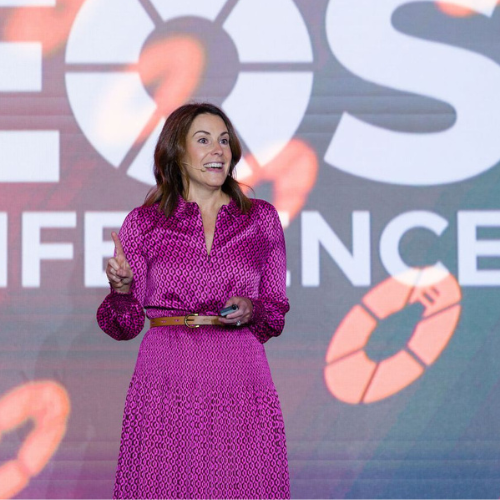
This episode came from a conversation I had with Courtney Montfort, an executive at Gibson Insurance and someone I’ve had the privilege of working alongside for several years.
Courtney has:
-
A bigger job than she did two years ago
-
More change, not less
-
The same kids — now with more activities
-
A husband whose career has also expanded
And yet, she said something that stopped me in my tracks:
“For the first time, I don’t worry about work-life balance.
I actually feel like I have it under control.”
Not because life got easier.
But because she built a system that could handle complexity.
That distinction matters.
The Lie of “Just Quit Something”
Most women don’t need fewer dreams.
They don’t want smaller jobs.
They don’t want to stop caring.
What they want is to live inside their life without feeling constantly behind, guilty, or resentful.
I know that because I’ve been there.
In 2019, everything in my life cracked at once:
-
A business that was growing fast but was financially unsustainable
-
A marriage that was barely hanging on
-
Young kids I was caring for, but not truly enjoying
-
A version of myself who was functioning… but completely numb
I didn’t lack ambition.
I lacked a way to hold all of it together.
My first instinct was the same as everyone’s: What do I quit?
But quitting wasn’t an option.
So I had to learn how to create change in place.
That’s where the Life of And was born.
What a Life of And Actually Is
A Life of And isn’t a feeling.
It’s a structure.
It’s when three circles are intentionally supported at the same time:
-
You (health, energy, identity)
-
Your work or calling
-
Your family or relationships
Not perfectly.
Not equally.
But intentionally.
Think of it like a Venn diagram.
When one circle starves, the whole system collapses.
The goal isn’t eliminating stress.
It’s having tools to rebalance when things drift.
That’s what Courtney named so clearly — she didn’t lose stress.
She gained agency.
Ordinary vs. Extraordinary (And Why This Changes Everything)
One of the biggest shifts Courtney made — and one I teach often — is this:
Solve for the ordinary so you have room for the extraordinary.
Most resentment doesn’t come from the big stuff.
It comes from death by a thousand tiny decisions.
Laundry.
Meals.
Schedules.
Mess.
Logistics.
When the ordinary eats all your capacity, you start resenting:
-
Your work
-
Your kids
-
Your partner
-
Even the dreams you asked for
That’s not because you don’t love them.
It’s because you’re exhausted.
So we get ruthless about the ordinary.
Examples:
-
Outsourcing laundry (yes, really — it’s math, not indulgence)
-
Quarterly handyman check-ins instead of constant mental load
-
Explicit nightly kitchen routines so mornings don’t feel like failure
-
Clear ownership instead of martyrdom
You don’t need to do everything.
You need to stop pretending you’re the only one who can.
Every Yes Is a No (Whether You Admit It or Not)
One of the hardest truths for high-capacity women:
Every yes costs something.
Not emotionally — logistically.
If you want 10,000 steps a day, that’s not a wish.
That’s 12 hours a week.
If you don’t account for that time, you’re not “failing.”
You’re just planning fantasy instead of reality.
This is where most goals die.
Which is why I teach minimums.
Minimums: How Progress Actually Sticks
Minimums are the smallest version of a habit you can keep on your worst week.
Not your best week.
Not your fantasy week.
Your real life.
For me, after having my youngest:
-
My minimum was 2 workouts a week
-
I committed to it for a full year
-
No renegotiating, no all-or-nothing resets
That minimum held — even when everything else changed.
Over time, the minimum grew.
But only when the context supported it.
Minimums don’t lower standards.
They protect momentum.
Why Families Need Meetings (Just Like Teams Do)
At work, we plan.
We align.
We review the week.
At home?
We expect everyone to “just know.”
That’s chaos.
The weekly family meeting changes everything:
-
Kids know what’s coming
-
Parents stop firefighting
-
Expectations are explicit
-
Emergencies drop dramatically
And here’s the key rule:
No same-day solving for things that could’ve been planned.
That boundary alone gives women back enormous capacity.
You Are the Sun in Your Home
Here’s the image I keep coming back to:
As moms, we’re the sun.
When we’re centered, nourished, and whole —
the whole house feels warm.
When we’re resentful, depleted, and running on fumes —
it’s like the sun is behind clouds.
The goal isn’t perfection.
It’s responsibility.
No one else will design this life for you.
You have to decide what keeps you whole — and then build support around it.
This Is the Work
The Life of And isn’t about fixing your life once.
It’s a toolbox you return to every time the season changes.
Because change is not the exception.
It’s the operating environment.
And when you plan for that reality — instead of fighting it —
life doesn’t get smaller.
It gets lighter.

[00:00:00] Tiffany Sauder: When you are a working woman who is also leading a family, we have to be masters at change because it is a permanent condition of our choices. And so, yes, it's about saying, I'm not gonna fail at this. I'm gonna reorient to what's possible, but if I don't have a plan, if it's not resourced, it's not automatically gonna happen. [00:00:21] Tiffany Sauder: I am Tiffany Sauder, entrepreneur, wife, mom to four girls, and a woman figuring it out just like you. If you're tired of living a life of half to and finally ready to build a life of want to, then you're in the right place. Come on, let's go Build your Life of And. [00:00:45] Tiffany Sauder: Welcome back to another episode of The Life of And Podcast. I'm your host, Tiffany Sauder, and we're doing a little something different this week, which I feel like I say all the time because I'm not a person of habit or routine naturally. And so let me tell you what we're doing. So I was a podcast guest on a show that is done by Gibson Insurance and the woman who interviewed me, her name is Courtney Montfort. [00:01:09] Tiffany Sauder: She is an executive there. She has a great big job. They had just come through selling the company and she was part of the team that led the deal, like coming out of a huge, massive piece of work. And we also partnered last year in 2025 where Gibson was a Life of And corporate partner. So I would speak to them quarterly. [00:01:32] Tiffany Sauder: I was working with some of their executive women. This podcast episode was really kind of a recap of the work we'd done together, but more importantly, some of what Courtney had learned as she had worked through the Life of And Framework. She attended my executive mini retreat and really decided that she was going to make herself a customer of her own time and money. [00:01:56] Tiffany Sauder: So. I thought instead of me telling you how much the Life of And program works, I thought it might be special to hear in her own words some of the journey that she's been through over the last year, and she's got young kids. Her husband also works outside of the home. She'd come through probably the biggest sprint of her professional career over the last 24 months, and it was pretty incredible to hear her say. [00:02:21] Courtney Montfort: We all talk about work life balance and how do we find it and how it's not really a thing, but there's ways to do it. And I was sitting in the meeting and I realized for the first time, I don't have that worry in my life. And it was a powerful moment to sit there and, and to want to stand up and say, this is actually something I feel like I have under control. [00:02:46] Courtney Montfort: The why is because of you, Tiffany. [00:02:49] Tiffany Sauder: So my gift to the world, I hope, someday, is that professional women are saying, you know what? We don't have to trade words like I feel guilty and burn out and overwhelmed and all my word. I know, blah, blah. We're complaining about the abundant opportunities that are in front of us, but that we have the agency over our time, the discipline to be able to really say yes to the things that matter and no, to the things that don't. [00:03:14] Tiffany Sauder: The confidence to stand in the moment and in the day, so, so proud. I've, I've just loved getting to know Courtney over the last several years. I certainly count her a friend, and so I hope you enjoy this conversation that we had, and I think it will give you a little more insight into what I mean when I say the Life of Event program can help you and your women as well. [00:03:34] Tiffany Sauder: So thank you for listening and let's jump into the conversation. [00:03:39] Courtney Montfort: Welcome to the podcast Tiffany. [00:03:41] Tiffany Sauder: Thanks Courtney. [00:03:42] Courtney Montfort: So I also am very excited to be here with you 'cause you are a friend and I have had the fortunate luck of spending time with you over the last few years. When I was preparing for today, I had a whole list of things that we were gonna do and talk about and take the podcast. [00:03:57] Courtney Montfort: But earlier this week I was in New York at an event focused on women and insurance and in every session of the conference. Conversations came up about work-life balance and how do I do that and how do I find that? And the speakers and the people in the meeting had great platitudes to give us, right? We all talk about work-life balance and how do we find it and how it's not really a thing, but there's ways to do it. [00:04:29] Courtney Montfort: And I was sitting in the meeting and I realized for the first time. I don't have that worry in my life. And it was a powerful moment to sit there and, and to want to stand up and say, this is actually something I feel like I have under control. And the why is because of you, Tiffany, and the Life of And movement that I have been a part of. [00:04:52] Courtney Montfort: So. So excited today to just get right into it and talk about what is in the toolbox and what tools you have given me, and that you give other female leaders and share those tips today to hopefully make this a very actionable podcast that at the end people feel. I'm gonna go do this and I'm gonna get control of things. [00:05:11] Courtney Montfort: So tell us a little bit about Life of And and, and what that means to you based on what I just described. [00:05:16] Tiffany Sauder: Yeah, I'll do that here in a second. But I think, Courtney, I think what's important for our listeners to know is that you are, are you in a bigger job or smaller job than you were two years ago? [00:05:24] Courtney Montfort: Absolutely bigger. [00:05:25] Tiffany Sauder: Are you in more change or less change than you were two years ago? [00:05:28] Courtney Montfort: More change. [00:05:29] Tiffany Sauder: Do you have the same kids or fewer kids? [00:05:32] Courtney Montfort: I have the same kids with more activities. [00:05:34] Tiffany Sauder: Yeah. And your husband, his job is bigger, not smaller. Correct. And so I, what I want you to understand is that the Life of And is not it. [00:05:40] Tiffany Sauder: It is literally about how do you. Form and shape your life so that it's at a place that's sustainable in the context of change and in the context of a lot going on, it's not that you decided to lop off one big part of your life. That's a great point. To get it to a place where you're like, no, I actually feel a sense of clarity. [00:05:58] Tiffany Sauder: I feel a sense of peace. I feel a sense of empowerment of agency over these choices and life feels light. Even though it's busy and some days are hard and it's not perfect, but life can feel light kind of in that. In that. So I mean you, I think in particular, you've been through the last two years have been wild. [00:06:17] Tiffany Sauder: Yes. Your company sold, you were part of the team that ran that process and. I, I think for you to say those words at this season in your career, that's like pretty special and a huge proof point I think for the work that we're working to do in the world. I'll maybe give three minutes of background on just my story so that people understand why I care so much about this. [00:06:37] Tiffany Sauder: I think most of us who have decided to create some type of content for the world, it is always born of our own lived experience. And so my lived experience and sort of my moment of man of reckoning was in 2019. Everything that I had worked so hard for, just literally began to crumble and crash. I'm a firstborn, high achiever. [00:06:57] Tiffany Sauder: I'm married to a firstborn, high achiever. I often say he was an Ivy League athlete. A, because it's impressive, and B, because it's like, like that's the level of person that I'm choosing to do life beside and. I also have big dreams and ambitions. In 2019, the business that I had ran for about 15 years, we had grown so much and I had, you know, kind of naive, first time entrepreneur didn't understand the operational infrastructure required to support that growth. [00:07:25] Tiffany Sauder: And so we were growing more and more and more every year, getting more and more and more attention. But I was making less every year not getting compensated for the risk that I was taking as an owner. Honestly laying in bed at night being like, first of all, I feel like I'm failing and I'm trying so hard, and B, I'd probably be better off just getting a job like this is terrible. [00:07:43] Tiffany Sauder: Our marriage got to a place that it was on total life support and we had just that conversation in the kitchen that you think is never gonna be you where. You both say, we deserve better than what this is. My kids were young at the time, and so they won't look back and say, I wasn't a good mom, but I was just functioning in the role of being a mom. [00:08:02] Tiffany Sauder: I wasn't enjoying them. I wasn't, I wasn't present. I wasn't in the moment. I was doing the tasks that moms do, but I was not sitting in the joy of being a mom and being present for them. And my own relationship with myself was one of, I just operated. I did the stuff. I did the to-dos. The agendas were prepared, the emails were responded to, the lipstick was on the pencil, skirt was all the, all the, I was just doing life as fast as possible and I didn't remember the last time I had felt an emotion. [00:08:31] Tiffany Sauder: I didn't remember the last time I'd felt the air when I walked outside, like I was just operating. And it wasn't that I wasn't paying attention to life. It wasn't that I wasn't trying my absolute hardest. It wasn't that I didn't want to be highly successful in all those areas of my life. I just had to recognize I don't know how and every place in my life up to that point, I had figured out how to be successful. [00:08:54] Tiffany Sauder: And I'm sure everybody listening to this podcast, it's the same way you, your opportunities are born of a life of success. And so when I would lay in bed at night mad and crying and scared and all the things, the way I first tried to solve for how to get life back in bounds and how to get it sustainable was to figure out what to quit and. [00:09:15] Tiffany Sauder: That's where we go first is sort of this or mentality of like, I can have peace, or I can have success. I can have time with my family, or I can have money, I can have. A great body or I could have a career. I, it's like we go to this place of, or, and for reasons I don't need to go into here, the or was not possible for me. [00:09:33] Tiffany Sauder: I'm like my, well, I will go into it. I guess I, I, I had seen my best friend get divorced and while maybe my husband and i's marriage was over, I didn't know the answer to that yet. I'm grateful to say we just celebrated 20 years. [00:09:46] Courtney Montfort: Congratulations. [00:09:47] Tiffany Sauder: Uh, I'm grateful for that number. Not everybody gets the chance to restart. [00:09:51] Tiffany Sauder: Both people have to choose that, but I'd seen my best friend get divorced, and I knew that didn't fix anything. Giving up your kids is actually possible, but really complicated and embarrassing and not really what I wanted. I knew I had to figure out how to get back to myself and my dad had signed a million dollar personal guarantee on our lease for my agency because my husband and I didn't have the personal net worth at the time to be able to sign for it. [00:10:17] Tiffany Sauder: And so if I gave up on the business, I was gonna have to figure out how to pay my dad back a million dollars, not because he would've demanded it, but because I would've needed to do that. So I like literally, or was not it like, it was like this loop of like, I, like literally I have to figure out how to create change in place, which is what we talked about at the beginning with you of how do you create change in place. [00:10:35] Tiffany Sauder: You don't want a smaller job, you don't want fewer kids. You don't want a different you. It's not what you want. You wanna be able to live inside of your life in a way that feels peaceful and confident, like of agency over your choices. So. It's from that place of just total brokenness that I was like, alright, honey, you've solved a lot of hard problems in your life. [00:10:54] Tiffany Sauder: Let's figure out how to do this too. And so, over the course of three to four years of just testing in my own family, testing in my own life, testing in my own mindset, I started to create. The toolbox, the mindsets, the frameworks that I teach today around how do you build a Life of And, and to go to your question most simply a Life of And is when three areas of your life are working in concert with one another, your time for yourself, your time for your career, or that thing that you do in the outside world and time for your family. [00:11:27] Tiffany Sauder: And when those three things think like a Venn diagram, when each of those three things are working to the. Inside of the priorities, the extent, the degree to which they feel complete when all those three things are fed. That's a Life of And, [00:11:42] Courtney Montfort: and I think the key to that is. It's not that I don't have stress around each of those things, right? [00:11:49] Courtney Montfort: That, that there's always stress, but the toolbox that you've created. When I feel the things outta balance in those three circles, I have tools that I can engage to then bring them back in balance. And so I, I don't wanna lead at the beginning alluding that, [00:12:06] Tiffany Sauder: no, [00:12:06] Courtney Montfort: it's, oh, I've got it all figured out and I don't have that stress. [00:12:08] Courtney Montfort: But it's having the tools and, and. One of the things you talk about in the Life of And is the ordinary and the extraordinary and solving for the ordinary to make sure you have time for the extraordinary. And part of that for me was going back and figuring out, well, what does extraordinary mean? Yep. You mentioned the, the deal where we joined Unison Risk Advisors earlier this year and it did take a lot of time away from my family and there was a part of me as a mom that wanted to sit down with my boys and say. [00:12:39] Courtney Montfort: Oh, yes, I know mom is mom's so sorry that I have to go away. I, I hate that I have to leave you and, and go away. And I changed that talk track to say, no, actually I'm, I'm not sad that I have to go away. I'm gonna miss you. But this is really important to mom and this is what this is gonna mean and it's gonna be good for our family and it's gonna be good for mom and. [00:13:02] Courtney Montfort: Teaching. Mm-hmm My boys that there is a balance of a Life of And is I can be a mom and I can miss you, and I can want to be part of this big thing. And so I think that's what's so magical about changing that talk track from. Work life balance. [00:13:19] Tiffany Sauder: Yep. [00:13:19] Courtney Montfort: To a Life of And I, I want this and I wanna do that. So [00:13:23] Tiffany Sauder: I think one of the things I teach [00:13:25] Courtney Montfort: that you've [00:13:25] Tiffany Sauder: heard is this idea of how do you develop very clear priorities in each of those three circles? [00:13:31] Tiffany Sauder: And when we don't have clearly defined priorities, we become a victim to other people's choices and priorities for our time because we don't know what to say yes. And what to say no to creating a financial future for your family is. A priority of yours. And so the, the reality of that choice is that there is going to be consequences, both positive and negative for our other circles. [00:13:57] Tiffany Sauder: And that's true. There's also, as a result of that moment, you have more financial resources to be able to commit to yourself and your healthcare. Yes. You know what I mean? Like as your self-care. Yeah. Because that was a choice you made in the circle also for a season. Your self-care was at its minimums. [00:14:14] Tiffany Sauder: Because that career circle took up a lot of time, but you knew, hey, there is a potential for an incredible outcome for our family, for our company, for the people that work for me. And so there's a sacrifice there. The other thing that you did was you talked to your kids about it in a way that is not apologetic and regretful, because when we telephone that to them, that's the way that they feel about those moments in our lives too. [00:14:36] Tiffany Sauder: One from my own life in the last 60 days, my junior had a fairly important choir concert on a Monday evening that I did not have on my calendar, and I had committed to being away overnight in Toronto, Canada. And I told her, honey, I want you to understand that this opportunity that's up there is a pretty significant potential moment for the agency and. [00:15:01] Tiffany Sauder: It's my mistake that I did not have the, the concert on the calendar. 'cause if I would have, I would have scheduled around it. So that was my mistake and I'm owning that. I also want you to understand that this is not a flippant dinner or something that's like, I don't know, just like, you know, sort of something I could easily reschedule and I wanna sort to understand that. [00:15:22] Tiffany Sauder: But I did not, I apologized for my mistake of not reading the email. Did not apologize for being gone because I want my girls to understand you are going to have to make choices. And there is incredible things that get to happen for our kids as a result of that. And there are things that sometimes I say we all have to give a little. [00:15:41] Courtney Montfort: One of the first things you taught me was every yes is a no to something else. And when I first heard that. It was hard for me to hear because I'm a yes person, right? Not just in people pleasing, which, but, but in, I, I wanna do it all. I, I want to experience all of these great things, but thinking of that framework that there's only 24 hours a day and if I'm gonna com, walk me through a little bit your concept on, it's not just about the saying the Yes. [00:16:08] Courtney Montfort: It's really thinking about how much time that Yes. Is going to take. [00:16:12] Tiffany Sauder: Yes. So, and I think we can take that to your other question too, of like sort of ordinary versus extraordinary. Perfect. So. Yeah, I actually did this with a group of women yesterday and I asked someone, what do you wish you had in your life that you don't? [00:16:24] Tiffany Sauder: And they said, me, time, self-care. I was like, okay, well let's get more clear about what you mean by that. And they listed a list of like six things, but one of them was to have 10,000 steps a day. I said, okay, amazing. If you're over 40 there, everything on your Instagram reel says that you should get 10,000 steps a day. [00:16:40] Courtney Montfort: You get the same algorithm [00:16:41] Tiffany Sauder: that comes up and says that, yeah, same. You and me, we are, we are matching. And I said, do you know how many minutes it takes to walk 10,000 steps a day? And she's like, [00:16:51] Courtney Montfort: I dunno. [00:16:52] Tiffany Sauder: And I said, it's about an hour and a half. So it takes an hour and a half every day. So if you do that time over the course of seven days, that's like 10 hours that you've gotta find to walk. [00:17:03] Tiffany Sauder: So amazing. Which [00:17:05] Courtney Montfort: sounds crazy, right? I'm just thinking about a week just saying that. So [00:17:08] Tiffany Sauder: yeah. Well, seven, yeah, it's like, it's actually more than that. It's like 12 hours. So that, that's, so I said, do you have 12 hours in your week that you could walk 10,000? But that's what you said. You have to quantify it, which we don't do. [00:17:21] Tiffany Sauder: We don't actually look and say, and I said, that's just step taking time. That does not include the six minutes before to get your shoes on. That does not include getting a drink of water so that you can take it with like, there's all these sort of accessory minutes that we also simplify out that actually have to go somewhere. [00:17:40] Tiffany Sauder: So I said, you've got a couple of options. One is walking. Sometimes you can stack that behavior so you can look at your calendar and say, is there one or two meetings a week that I could take walking so that you can stack that behavior. The other is that you replace another behavior. So it could be something like, which is where we go to verse sleep, but it could be something like, something ordinary. [00:18:03] Tiffany Sauder: So I am a huge proponent of people not doing their laundry. Anybody who makes over $70,000 a year can afford to send their laundry out. It's about $50 a week for a family of six. We have so much laundry and so many people, but it's been democratized. There are people who are professionals at laundry. I don't consider myself a professional laundry, and I'm not uniquely qualified to fold anybody's underwear. [00:18:25] Tiffany Sauder: That is not a relationship fulfilling motion for me, and I have no embarrassment reflex, so I don't care what people see in my laundry. So it works great for me, but that's a place where you could get six to eight hours of time back where you say, I'm not going to be folding laundry. I'm not gonna be have your kids put it away, but find a laundry service. [00:18:47] Tiffany Sauder: Have somebody do that for you, and all you have to do is put it in trash bags, put it outside your back door. In 24 hours it comes back wash, folded, sorted in a more beautiful manner than you could ever do on your own. So that's an example of these ordinary things that have gobbled up our capacity as mostly suburban working moms laundry, getting your house maintained. [00:19:09] Tiffany Sauder: Another thing I teach is get a quarterly handyman to call you every 90 days and ask you what needs to be fixed. I have a note on my phone. My handyman's name is James, and it says James. And he texts me at 90 days and says, Mrs. Sauder, what do you have for me? And I take a screenshot of it and he knows the code into our door and he fixes everything. [00:19:27] Tiffany Sauder: And if there's something he can't do, he coordinates getting quotes for me, and he takes care of that. And it's amazing. So these are places where the. The ordinary things that were taking capacity from my ability to be able to be with my family, which is an extraordinary thing, to be with my husband, which is an extraordinary thing, or chase my dreams, which is an extraordinary thing. [00:19:48] Tiffany Sauder: We've become so consumed with the managing of our choices and decisions that we don't dare dream of more of them. A [00:19:58] Courtney Montfort: and then we become resentful, which is, we hate it all. We hate everything we hate, we hate even the extraordinary at that point, right? And, and then that comes out and yelling at the kids, or the tipping point of the house is the socks laying all around. [00:20:10] Courtney Montfort: And then I'm yelling at them over the socks. And it really has nothing to do with the socks. It's, [00:20:13] Tiffany Sauder: it has it, you just feel like I can't keep up. Like there's nothing. And, and that's an example of where can you have explicit agreements in place so that people know what your triggers are. Mine is in the morning, waking up and seeing the kitchen a mess. [00:20:27] Tiffany Sauder: Is the worst moment you could possibly create for me as a human being. [00:20:31] Courtney Montfort: A little triggered by that. [00:20:32] Tiffany Sauder: Yeah. I feel like I'm starting from behind and it's like, oh my word. And so my family knows that we have an explicit process that we run every single evening. Again, owning the ordinary. And I say, I don't wanna see yesterday. [00:20:45] Tiffany Sauder: So we have a checklist that was on the fridge for forever. It's not there anymore 'cause everybody knows the program, but it's start the dishwasher, empty the kitchen, kitchen and the bathroom trash. Wipe down the counters, wipe down the front of the fridge. Pack lunches, because I hate. Lunch packing mess after we've cleaned up dinner. [00:21:03] Courtney Montfort: I've never been happier when my kids decided they like the hot lunch at school. Oh God [00:21:07] Tiffany Sauder: bless ' [00:21:07] Courtney Montfort: em. Yes, exactly. So fingers crossed it stays that way. [00:21:10] Tiffany Sauder: Yes, we, you know, they bring in these like nutritionists to the athletes in high school and they're like, that food isn't good for you. So my girls pack $42 lunches. [00:21:18] Courtney Montfort: Good for them. [00:21:19] Tiffany Sauder: Yeah. Say something, you know, I am like, do we need charcuterie spreads? I don't know. But anyways, yeah. So that kind of stuff drives me nuts. So, but that's an example. Of owning the ordinary, how do you make it clear? And this is the other thing that we do as I think women moms often is we can be really protective of the information. [00:21:40] Tiffany Sauder: And so other people can't help us get it done. And we stomp through the house with a lot of grander and prove the point that we're the only one that knows how to do anything. But it's like at work, hiring somebody new and never telling them what to do. Then holding them accountable for not doing a good job. [00:22:00] Tiffany Sauder: That's what we do at our homes. Make the list, show them how it works, pick a night of the week of who does what and make it really explicit so that when they don't do it, you can create accountability for them, which is creating all kinds of just like executive agency for our kids about like, Hey, when you have a responsibility and somebody's clearly told you how to do it and you don't do it, there's gonna be consequences in life around that. [00:22:23] Tiffany Sauder: So we're gonna practice that kind of behavior. Because I want you to re a really great human being, so there's gonna be a consequence. This is just a natural thing. And I oftentimes let my kids pick the consequence because they have great ideas. It's like, yeah, I love that idea. Let's do that. And it's like, and it's like I actually learned that from a parenting coach. [00:22:42] Tiffany Sauder: It gives them control back in a moment where they feel embarrassed and like they let you down. It gives them some power back and then they're oftentimes more compliant. There's less 'cause they picked it, they picked [00:22:53] it. [00:22:53] Courtney Montfort: I don't really care [00:22:54] Tiffany Sauder: what the punishment is. [00:22:55] Courtney Montfort: Right. It's not the punishment. And I think as a parent, that's one of the hardest things is to align the punishment with the crime. [00:23:01] Courtney Montfort: Totally. For lack of a better word. Yeah. We do these crazy things 'cause we're angered and dysregulated and saying, fine, no iPad for a week. Meanwhile, that iPad might really be necessary when the little is getting drugg to the older practice. And there's nothing to do to be, to be quiet. One of the tricks for the family and, and to get to that point that we have implemented is the family meeting. [00:23:21] Courtney Montfort: And it has been a game changer, which was a tip you taught me. Talk a little bit about that. Why don't you see what it is? Okay, so it is a weekly meeting that we do in our house on Sundays and before the meeting on Sunday. At some point I go through and I. Look at the week. We, we live our life through a, it's ultimately a Google calendar, but I use a skylight, so it's an app on my phone and it's a physical representation in the off in the house that everything that we need to do as a family goes on that. [00:23:49] Courtney Montfort: And if it's not there, it's probably not gonna happen. So. I go through, I organize things and it's the little things like, okay, Alex, my little guy does TaeKwonDo, and it starts at 6 55 on Tuesdays. How are we getting him to TaeKwonDo and how are we getting Isaac? My older one picked up at a certain time, which parent is literally going to do that? [00:24:08] Courtney Montfort: So I lay out the how the week is gonna happen. Then as a family, we get together and we literally go day by day and we inform the kids of. Hey, mom's picking you up on Tuesday, dad's getting you on Wednesday. And we turn it back on them and say, so what uniforms do you need? What tests do you have? What things are you needing to accomplish this week? [00:24:32] Courtney Montfort: So that I have an awareness and, and. They're boys and they're still trying to figure out how to use their prefrontal cortex. But for the most part, I am getting a headstart on some of the things that would would be emergency. And then we play a game. Right now our favorite is Yazi and it is super competitive and we have a great time, but we started this about 18 months ago, and so my little guy was barely five at the time, and I thought it was going to be. [00:25:00] Courtney Montfort: A waste of time for him. I'll be very honest and I found it was the most impactful for him, and especially on weeks when I traveled, because then they knew mom was gonna be gone Tuesday, Wednesday, and okay, she's got a plan for that and I know what's gonna happen. So it has been a true game changer in our house after implementing it. [00:25:22] Tiffany Sauder: I wanna take a quick moment to thank my partners at Share Your Genius. For the past four years, they have been an incredible part of my journey behind the microphone. Share Your Genius is a content and podcast production agency that helps leaders and brands bring their message to life. So whether you're trying to find your voice, [00:25:38] Courtney Montfort: develop a content strategy, or get your leader behind a microphone, they're gonna help you make it simple, strategic, and impactful. [00:25:47] Tiffany Sauder: It's amazing. I just like it so happy. And it gives me chills because That's exactly right. We think kids don't care what's happening. It makes them feel invisible and not a customer of the family, and they care so much and it gives them a lot of confidence even when you're gone to know that they knew that and they know when you're coming home and it just creates a lot of alignment for the family. [00:26:08] Tiffany Sauder: One of the other things I say is no same day solving, like you're just not gonna blow up my phone with a bunch of stuff I need to do for you. I just, I see mom spend. 20% of their capacity responding to their kids' demands all day long. And it's stealing. Again, back to that like a yes to something is a no to something else. [00:26:25] Tiffany Sauder: It's stealing from your output professionally when that's the case. And I started to observe that as my kids got older, I was like, you know that silly thing, like your lack of planning does not merit my emergency or whatever. And I was like, yo, I'm done with this. Like this is not how life works. Back to creating an environment where you're teaching kids executive agency over their lives, it's like. [00:26:45] Tiffany Sauder: That moment where that meeting where you say, this is the time for me to be able to respond to pretty much whatever you can throw to me on Sunday. That way I can plan, but if we haven't planned for it, we're just not built for that as a family to be able to run a sandwich across town for 40 minutes in the middle of rush hour and like, it's just, I just can't do that. [00:27:03] Tiffany Sauder: So I tried it. It didn't work very well. I was resentful about them not doing their stuff because it messed up my own plan for my day. I also would encourage. Women in that planning meeting. The one before the family meeting to put your workouts on the calendar, put an extra one because invariably we're kind of on a plan B, plan C as moms. [00:27:25] Tiffany Sauder: It's just like stuff happens. And then also plan out what you're gonna do for dinner that week. What night are you gonna go out and get carry out? What night are you gonna take 'em through the Chick-fil-A drive through? What night are you gonna try to prep something? Because then that choice is already made. [00:27:39] Tiffany Sauder: Just getting that decision making load out of the day to day so that you're just like in. Just like I am doing the things and things are working 80% of the time makes life feel really different even when it's really busy. So that planning meeting and that family meeting, it's sacred time for us and I think a key part of that operating system. [00:27:57] Tiffany Sauder: Working well inside of a family. But how, you know, doesn't your team meet at work? [00:28:01] Courtney Montfort: Yep. [00:28:02] Tiffany Sauder: Every week. [00:28:02] Courtney Montfort: L tens. We run EOS here. So yeah, same thing. [00:28:04] Tiffany Sauder: It's [00:28:04] like [00:28:05] Tiffany Sauder: we do this in our professional lives. Sit down with everybody who's going to be participating in our program. We make sure everybody's aligned on what they need and what the scorecard is and what the priorities are for the week and what fires are coming up and all like that. [00:28:20] Tiffany Sauder: Everybody's aligned. It's like, why don't we do that in our homes? It's incredibly important to do that. So that was where I observed it and learned it. It wasn't like rocket science, but I was like, why do I know everything that's happening at work and at home? I'm like, you know, I've wet rag, just sort of being tossed around about, and I think that's where moms feel like they're not priorities anymore. [00:28:41] Tiffany Sauder: It's because we're responding to everybody else's emergency. So the way you get them to respect the family meeting is like you don't do it if they text you same day. And that's how that meet that time. Everybody comes very prepared. [00:28:54] Courtney Montfort: Yeah. Yeah. Even and, and if I miss a week, right? Something's busy and I let a air control, they will come to me now. [00:29:00] Courtney Montfort: Yes. And [00:29:00] Tiffany Sauder: say, mom, when are we doing family meeting? And, and so then I'm able to leverage that and say, well, after you get baths and showers, you know? Yes. [00:29:06] Courtney Montfort: That kind [00:29:06] Tiffany Sauder: of thing. [00:29:07] Courtney Montfort: So. One topic. I wanna make sure that we do get a chance to quickly tuck on, and I know we could do an entire podcast on minimums. Yeah. [00:29:14] Courtney Montfort: But that is one other area that has changed my approach because I think as women, it's so easy to be like. You wake up one day and you're like, I'm gonna lose 20 pounds because this clothes don't fit me. Or I'm going to walk 10,000 steps every day this week. And you have a concept about minimums, and that has really helped reframe some of the stress and anxiety that comes along with those swings. [00:29:36] Courtney Montfort: So, [00:29:37] Tiffany Sauder: yeah. So yeah, again, as performers, achievers, we sit down and make a plan and we think about how we can do the most. And I have the heart of the most, like I wanna do the most, I wanna lose 20 pounds the fastest I've got, you know, I wanna do it by Christmas, whatever the thing is. And what I found is I just got into this failure cycle where I would put together this perfect plan. [00:29:57] Tiffany Sauder: I would execute it for like 1.3 days. I would then fizzle off and do nothing or a little bit worse than I was doing before. 'cause I felt not only that I wasn't doing it, but I was guilty that I'd let myself down again. And then there would be some window of time where I kind of did nothing because I didn't have the courage to restart, and then I would restart, and I just wasn't making any progress. [00:30:17] Tiffany Sauder: And it was frustrating and it made me feel invisible in my life and like, I must just be a failure. Then I started to realize that every time I put a plan together, it was missing the context of the rest of my life. And instead of getting thrown off on my worst weeks, what if I planned for my worst week? [00:30:38] Tiffany Sauder: And then on a great week I was able to over perform it and like the minimums were there to catch me. So I started setting my minimums and they literally are like, cannot fail numbers that you pick. So we'll go back to our, you know, lovely woman who said she wanted to do 10,000 steps seven days a week. I asked her, what are you doing today? [00:31:01] Tiffany Sauder: I was like, all of us have a health app. Or know it or don't know it on your phone. And so let's pull up, uh, your Apple Health app and see how many steps you're logging on average over the last three months, let's call it. And it was like 2,500. Okay? What if you would start right where you are for three months, hit 2,500 steps a day? [00:31:25] Tiffany Sauder: On average. So if there's a day where you miss, you can do another one, because I'm like, that's already where you are. And set that as your minimum. And so, and I think it's about figuring out what's your worst week look like and what can you get done? I used the example of after I had Quincy, I was 40, we were coming out of COVID, Humpty Dumpty fell off the wall, and I was very broken and I felt terrible in my body and whatever. [00:31:47] Tiffany Sauder: And so my minimum was to work out twice a week for 60 minutes with a trainer for 50 weeks a year. And I told myself, you are not allowed to remake this decision for a year. I didn't know where my body would be. I didn't know how fast that impact would have, but I knew that was more than I was doing. If I could get 100 workouts in 100 lifts, 160 minute lifts with a drainer, that we would see what would happen. [00:32:13] Tiffany Sauder: And I set two times a week because my husband travels for work, so I was like, if he's gone Monday through Friday, I can do Saturday, Sunday. If I have a kid that is homesick for a whole week throwing up, I can do Saturday, Sunday. Like that was like I, there's two days I can find. And so for three years, that was my minimum. [00:32:32] Tiffany Sauder: That was all that I did. [00:32:34] Courtney Montfort: That's a long horizon. I think we sometimes forget that it takes a long time to change the habits of the things that we we've done. So [00:32:40] Tiffany Sauder: I love that point itself. That's because it had so much other context, meaning. I was transitioning out of Element Three and putting new leadership in place. [00:32:46] Tiffany Sauder: I was launching Life of And we, like, I have a kid in travel sports. The rest of the context that that choice was in was continuing to grow and get bigger. But I did not, not keep my promise, I kept my promise to myself for three years. I had never done that before. And so once Quincy was three, I was stepping out of Element Three a little bit more. [00:33:09] Tiffany Sauder: I had more time. To be able to say, okay, I think I can move that to three days a week and 8,000 steps a day. So that's my minimum today, three times a week and 8,000 steps a day. And now it's winter and it's hard in the Midwest. And so I don't know what I'm gonna do about the steps thing 'cause I don't get to the 8,000 steps. [00:33:28] Tiffany Sauder: But my point is the context changed. It's winter now. So I may change that to like minutes on the bike because. The context change. It's winter and I'm a wimp. I'm not gonna go outside and put 8,000 steps on in the blazing wind. [00:33:42] Courtney Montfort: But you're acknowledging that and owning that rather than saying, oh, I'm a failure when you don't hit the steps in a wall. [00:33:47] Courtney Montfort: Totally. Right. Like [00:33:48] Tiffany Sauder: context change. Yes, exactly. And that's when you are a working woman who is also leading a family. We have to be masters at change because it is a permanent condition of our choices. And so, yes, it's about saying, I'm not gonna fail at this. I'm gonna reorient to what's possible and what does that look like in this season. [00:34:08] Tiffany Sauder: And then I'll be back to steps when it's nice outside. Or I could get a walking pad at the office or I could, there's all kinds of ways I could choose to solve for that. But if I don't have a plan. If it's not resourced, it's not automatically gonna happen. So, [00:34:22] Courtney Montfort: yeah, exactly. Yeah. And I think that just goes back to that beginning thing about I feel in control. [00:34:27] Courtney Montfort: I, I, all of the things you've talked about, I related to, but I don't have the mental anxiety of I should be doing this, I should be doing this. And when I do catch myself getting into that talk track, I pull out the tools from the toolbox you've given me and say, okay, I wanna change this part of my life. [00:34:43] Courtney Montfort: What's the minimum that I need to do? And then. When you have those minimums set and they're important to you, I think you actually talk about them in the family meeting, right? That the family knows that, Hey, this is important to mom. I'm gonna work out two days a week. This is where I'm gonna be. And then it helps explain to them how important those minimums are to you, because I know we can become martyrs a little bit. [00:35:04] Courtney Montfort: Right? And resentful again in that category and. I don't, I hate the word resentful, talking about our families 'cause that's who none of us wanna be. But I think if we really unpeel it, [00:35:14] Tiffany Sauder: yeah, [00:35:14] Courtney Montfort: that is the emotion that leads to that work life balance. Frustration that people feel that I wanna do all these extraordinary things and I'm stuck in the ordinary and I resent the people that I love the most and the activities that I love the most. [00:35:30] Courtney Montfort: 'cause I, I'm trying to do it all, [00:35:31] Tiffany Sauder: but, but I, what I realized is I never told my family what I needed. Saying I need more me time is a weapon. A [00:35:38] Courtney Montfort: hundred percent. [00:35:39] Tiffany Sauder: Because you haven't even defined what that means. And so getting it all the way down to telling, if you ask my family, they, everybody in my family knows what my, my minimums are as it relates to my workouts. [00:35:49] Tiffany Sauder: 'cause that keeps me in my Life of And it keeps me in the center of those three areas. I said, when I get that done, my head is quiet when I don't and I bail on myself. My head is very noisy, so they all know what it is. And I started to realize we're a team. They actually wanna operate as a team. I just finished watching Ted Lasso and it's like the, you know, the guy in the locker room whose job it is, like pick up the towels when they put on the ground and give them the water and lay the jerseys out. [00:36:16] Tiffany Sauder: Like we put ourselves in that role instead of a teammate who has a role to play, who has priorities that are important and who has a contribution to the family and to the team. We make ourselves the towel boy versus if you look at everybody who's got a position to play. They're part of the play that's running. [00:36:34] Tiffany Sauder: And I think I was like, nobody's gonna insert me into that role. I have to design that. And so, yeah, when you get clear, when you have your minimum defined, you can tell your family what that is, ask for their support. But again, specifically what it looked like for me, especially when my kids were even little, was my, my kids are really far apart from 16 to five, so 11 years. [00:36:56] Tiffany Sauder: So I would ask my big girls. Will you watch Quincy for 30 minutes so I can go downstairs and work out? Like, will you help me? And I tell my girls I wanna live to be 102. That's my goal. I wanna be here for a long time for you and for me. So to help me with that goal, will you give me 30 minutes of whatever? [00:37:16] Tiffany Sauder: They would 99 out of a hundred times. They're so there to be able to help me, but it's explicit. It's time bound, it's managed. It's not like nobody ever helps me or can you guys help me? Never said those things in my house. They're like, what do you want me to do, mom? And they're panicking because they know you're not happy and they're not having fun when we're not happy. [00:37:35] Tiffany Sauder: I recently started saying as moms, we're the sun. [00:37:39] Courtney Montfort: Okay, tell [00:37:40] Tiffany Sauder: me more. You're the sun in our homes. When you see the sun, you wanna stand beside it. You wanna be in its presence. You wanna be warm like we are the sun. And when it's covered up by clouds, it feels different. You can't see it, you can't feel it. [00:37:54] Tiffany Sauder: And it's like that's how we are in our homes. When we are happy and we are centered and we are filled and we are whole, it feels like the sun is shining in our homes and when we are stompy and sad and resentful and lonely. And feeling under fed by our own things that we've chosen. It's like a cloud covered sun and you can't feel any of that. [00:38:19] Tiffany Sauder: And for me, it's such a accountability word picture for myself because I know when I am whole, that's how it feels to my family. [00:38:28] Courtney Montfort: So powerful. Where my brain went immediately is you'd mentioned the Ted lasso, the be the goldfish. [00:38:34] Tiffany Sauder: Yeah. [00:38:34] Courtney Montfort: You be the sunshine. [00:38:36] Tiffany Sauder: Yeah. [00:38:36] Courtney Montfort: Be the sunshine. Maybe is is a new thing. So I know there are people sitting here listening to this podcast that are like, yes, yes, that's me and I need more of this. [00:38:45] Courtney Montfort: Talk a little bit about how people can, can learn more about the Life of And, and, and, and the tips and tricks that you share on your podcast and other avenues. [00:38:54] Tiffany Sauder: Yeah, so I have different, I would say like activations of the content. There's, yeah, different places you can get it. If you just want it for free and you wanna rip through it, then go check out my podcast feed. [00:39:03] Tiffany Sauder: I've been doing it for almost five years, so there's a bunch of content there and it's called Just Life of And. And I'm wearing a lot of pink, so you'll know that. Beautiful [00:39:11] Courtney Montfort: and [00:39:11] Tiffany Sauder: pink found the right one when you see lots of pink. So Life of And, and then if you go to my website, tiffanysauder.com, which I'm sure we'll link here in show notes, there's a couple ways that you can access the Life of And framework one is just doing it by yourself through the digital course. [00:39:27] Tiffany Sauder: It's set up to be able to just self facilitate through it. There's email series that walk you through it, and it takes about eight to 12 weeks to go through the content and it will expose you to all of the tools that I'm talking about right now and lots of worksheets. And if you're married, opportunities to collaborate with your partner. [00:39:45] Tiffany Sauder: That's kinda what that can look like. And then what we've done with Courtney and URA Gibson is a corporate partnership model where there's a quarterly opportunity to be able to hear me talk and teach and present on it. We generally kind of try to customize it to the season. You're going into summer as a mom, it feels a little different when school's starting getting ready for the holidays. [00:40:06] Tiffany Sauder: So kind of a seasonal packaging of the content and then supplemental resources with that that say, Hey, if you wanna go deeper into this content, here's places that you can do that. So you'll see various activations, but those are kind of the, I'd say simplest. If you wanna just go through the course yourself, go to the website, you'll find a way that you can just check out online. [00:40:24] Tiffany Sauder: And for a couple hundred dollars get ACC lifetime access to it. I want you to see this as a toolbox. Like what you said, Courtney, like when I'm a season of change, I've gotta go back to these and pull them back out. This is not like fix it. You know? Set it and forget it at all. And if you think your corporation would benefit from the women that work with you, just kind of learning together culturally, I think you guys have seen it be really helpful here. [00:40:51] Tiffany Sauder: We're really leaning into that activation. I have such a heart for this woman because I am her. I was her. And excited to kind of see where it goes in 2026. So thanks for letting me share it with this group. [00:41:02] Courtney Montfort: Yeah. And I will, I will go ahead and say what everybody listening to the podcast is thinking, like, oh, I'm interested in that and I wanna do that, and I don't have time to do that, because I'll be very vulnerable and say, that was me the first time that I was exposed to this. [00:41:14] Courtney Montfort: Yeah. I, I, I signed up for the course and then I didn't do it. I'll be very honest, I didn't do it. Made every excuse in the book. I said I was too busy. And then that was when Tiffany and I talked more and we partnered and said like, we need to find a different way to bring this. And so she helped work with me through the individual, but then bringing it to Gibson because it has been a game changer for my team. [00:41:36] Courtney Montfort: And I think the company acknowledging that we are over 70% women and in the insurance industry, that is the, the norms. Most companies are largely women. And we deal with other health benefits and we deal with other a advantages, but we don't actually talk about the thing that is hardest for most women in our business, whether that is family with kids or aging parents, or just trying to figure out how to do it all and what do I want for my life? [00:42:03] Courtney Montfort: And so I was so proud to bring that to Gibson and, and hopefully expand it even more in, in 2026 and, and work together. So I, I strongly encourage you to take that to your leaders and, and ask for these things because. If we can change the life and the way everybody feels, imagine how much more productive we can all be at work and happier and be the sunshine. [00:42:23] Courtney Montfort: So, all right, we're gonna move on to the rapid fire. And usually, if you've listened to my podcast, I have a, a standard group, but I've, I've switched it up a little bit for Tiffany so that we can pull out even a couple more tips from you while we've got you here today. So, rapid fire question number one, hack to get outta the house in the morning as quickly as possible. [00:42:41] Courtney Montfort: Oh, don't wash your hair. You already know that one. I love it. Love it. Uh, when you're traveling, number one travel tip to keep that simple. [00:42:51] Tiffany Sauder: Oh, I have a completely separate makeup bag that has everything in it. I don't, so I don't have to. I don't have to pack my toiletries. It's all one thing. And I have dupes of everything, like doubles of everything. [00:43:02] Courtney Montfort: Brilliant. Are you a, do you do [00:43:03] Tiffany Sauder: that? [00:43:04] Courtney Montfort: I've, no. [00:43:05] Tiffany Sauder: Oh, it's a game [00:43:06] Courtney Montfort: changer. I need to, I need to. Or do you check or do you carry on? Carry on. Carry on. I, that's my problem. I've gotta invest in the travel carry on things. Number one thing to give as a gift to just say thank you to someone. [00:43:18] Tiffany Sauder: I love a package of my favorite things because. [00:43:22] Tiffany Sauder: Anytime somebody shares something with me that they love, it makes me curious to try it. So sometimes it's lip gloss, sometimes it's my favorite. Spice my favorite. I love this eucalyptus shower spray. My favorite hair ties. So just like little kitschy things that bring me lots of joy. Like little three second things. [00:43:37] Tiffany Sauder: I love to share that with people. [00:43:39] Courtney Montfort: Best or most memorable gift you've ever received? [00:43:42] Tiffany Sauder: Oh, my husband got me a pair of shoes for a month. For a year. A new pair of shoes. Every month for a year. I love that. And it was, was the most indulgent gift I've ever received. Amazing. [00:43:55] Courtney Montfort: I love it. And we were like [00:43:56] Tiffany Sauder: 28, like we didn't have a lot of money and it was so amazing. [00:44:00] Tiffany Sauder: Yeah. [00:44:00] Courtney Montfort: Oh, that's awesome. Tiffany, when I met you the very first time I, I don't know the exact year, but you had come in and you spoke to Gibson at our state of the company, you and Tim Leman, our CEO did a fireside chat. And it was the first time as an adult and as a leader that I saw someone, particularly a woman, but I'll be honest, male or female, be so vulnerable on the stage. [00:44:27] Courtney Montfort: You, you shared a a lot of what was leading you to this journey at that point in time, as it's been years ago now. You literally changed my life at that moment to see that that was okay, and I feel like that is the type of leader I am. Empathetic, vulnerable, and seeing the whole person. It was the first time I'd ever really seen that modeled, and from that moment you changed my leadership style to lean into that. [00:44:51] Courtney Montfort: Fast forward over time, we've worked together on Life of And. I've already talked about how I sat in a meeting and felt empowered by my toolbox and, and so I'm so excited to share you with everybody else, and I'm grateful for your friendship and everything that you are doing to lead women in this Life of And journey. [00:45:07] Courtney Montfort: So thank you for being here today and sharing everything you've shared. [00:45:11] Tiffany Sauder: Thanks, Courtney. You're a gift to my life too, so thank you. It's very, very touching, so thank you. [00:45:17] Courtney Montfort: Thanks for listening to the Life of And this is your weekly reminder to keep making bold choices, saying clear yeses and holding [00:45:24] Tiffany Sauder: space for what matters most. [00:45:25] Tiffany Sauder: As always, if you like this episode, I'd love for you to drop a review and share it with your friend. It's the fastest way that we can grow the show. Thanks for joining us. I'll see you next time. 🎙️ View Transcript