298: Why Bold Ideas Attract Doubt—and How Strong Leaders Decide Anyway
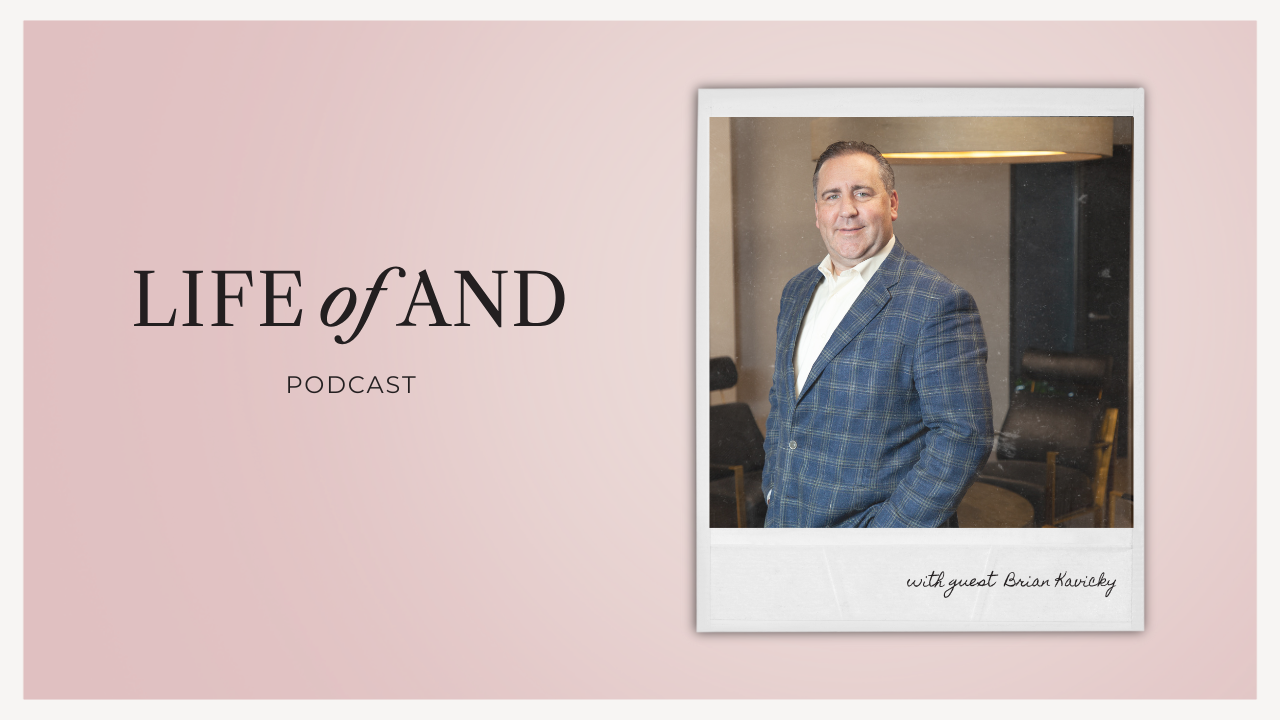
APPLE PODCASTS | YOUTUBE | SPOTIFY
The Moment That Matters Most: Why Self-Trust Is the Leadership Skill We Don’t Talk About Enough
“The better the idea, the more negative feedback you’ll get.
If people are telling you, ‘That’s stupid. That’ll never work,’
you might actually have something there.”
— Brian Kavicky
This time of year, there’s a lot of talk about bold vision.
What we want to build.
What we want to change.
What the next version of our lives might look like.
And here’s what I’ve noticed, both in myself and in the women I work with:
Most of us don’t lack vision.
What we struggle with is the moment of decision.
That quiet hesitation that shows up right when something matters.
When there’s risk.
When certainty disappears.
When the choice we make might disrupt what already works — for us and for the people around us.
Underneath all of that hesitation is a leadership skill we don’t name often enough:
Self-trust.
When Vision Is Clear, but Commitment Wobbles
I learned this the hard way.
Five years ago, I hit record on the very first Life of And episode.
A year ago, I stepped out of the agency I had led for nearly 20 years.
That agency gave me certainty:
-
I knew the cadence
-
I knew the calendar
-
I knew how revenue showed up
-
I knew who I was in that role
Walking away from it meant stepping into something far less defined.
Less predictable.
Less socially legible.
And if I’m honest, there was embarrassment in starting again.
I went from being “the CEO who had it figured out”
to being back in startup mode — hustling, solving cash flow, finding the first dollar of revenue again.
Choosing growth over comfort always sounds noble in hindsight.
In real time, it feels destabilizing.
So I asked myself three questions:
-
What bold vision am I holding right now?
-
What decision am I overthinking or avoiding?
-
What am I actually afraid might happen if I get it wrong?
That’s where the real work begins.
“You’re Ignoring Your Own History”
When I brought this to Brian Kavicky — BK — he didn’t let me off easy.
He said something that stopped me cold:
“You’re ignoring your history.
Nothing about your competence disappeared — only the context changed.”
I hadn’t jumped into a new body with no experience.
I brought everything I had learned with me.
But my brain was telling a different story:
New setting = I must not be competent.
And that’s where self-trust erodes — not because we lack evidence, but because we selectively forget it.
The Danger of Outsourcing Belief
Here’s where it got even more uncomfortable.
I realized how much I had been “socializing” my vision — testing it, floating it, waiting to see how others reacted.
And when people responded with things like:
“That’s cute.”
“How do you make money with that?”
“Are podcasts really a business?”
It pissed me off.
But BK called it out:
Why did I need their validation in the first place?
Most people don’t question your vision because it’s flawed.
They question it because it threatens their own comfort with the status quo.
If they didn’t see the opportunity — or tried something similar and failed — the easiest move is to talk you out of it.
Here’s the truth I had to face:
You cannot outsource belief.
Confidence has to be intrinsic.
If it depends on the room agreeing with you, it will never be strong enough.
Why We Default Back to the Status Quo
Even high-capacity, high-performing women get stuck here.
We imagine a different future.
We feel the pull toward something more.
And then… we circle.
Why?
Because change creates friction — especially for the people closest to us.
Our teams.
Our families.
Our kids.
When they don’t immediately see what we see, it’s tempting to slow down, soften the vision, or abandon it altogether.
But as BK reminded me:
People are biased toward what they understand.
That doesn’t mean your vision is wrong.
It means it’s new.
The Bracelet That Wouldn’t Let Me Forget
During our move, I found a cheap little bracelet that said BELIEVE.
I almost threw it away.
Instead, I put it on my wrist.
And it’s been messing with me ever since.
Because things in my life are objectively good.
Health is good.
Career is good.
Family is good.
But I have a vision of pushing beyond good into great.
And no one else is pushing me there.
Not my husband.
Not my parents.
Not my friends.
Not my mentors.
That ceiling — the next 3%, the next 10% — is mine to believe in before there’s proof.
That’s the part of leadership we don’t talk about enough:
At some point, the only thing left is your own conviction.
Discomfort Is a Signal, Not a Stop Sign
Here’s the reframe that changed everything for me:
Discomfort is often evidence that something matters.
You don’t get uncomfortable about things that aren’t worth it.
Waiting for total certainty is just another way to delay commitment.
You don’t need a perfect path.
You need a decision — and the willingness to learn as you move.
Self-trust isn’t built after the win.
It’s built before the proof shows up.
The Questions That Matter Most Right Now
As you step into this next season, maybe the questions aren’t:
-
What do I want?
-
What’s my vision?
You probably already know those.
Maybe the better questions are:
-
Do I trust myself enough to decide in alignment with what I want?
-
Am I willing to stand behind that decision even if others don’t understand it?
-
What might be possible if I stop waiting for permission?
Because the life you want isn’t built on perfect certainty.
It’s built on decisions you’re willing to own — and stay with — especially when it’s hard.
And that’s where the Life of And actually begins.
[00:00:00] Brian Kavicky: I believe that the, the better the idea, the more you'll get negative affirmations, the more you're breaking the mold of what people think you should do or what's possible, the more negative feedback you get. In other words, the more people go, that's stupid. That'll never work. You might have something there. [00:00:18] Tiffany Sauder: I am Tiffany Sauder, entrepreneur, wife, mom to four girls, and a woman figuring it out just like you. If you're tired of living a life of have to and finally ready to build a life of want to, then you're in the right place. Come on, let's go Build your Life of And. [00:00:42] Tiffany Sauder: This is the time of year where there's just a lot of conversation about bold vision. What we want to build, create the next step, and I don't think that most women listening actually lack vision. What I see over and over and what I feel in myself isn't that the gap is that we don't have vision. It's that moment of decision. [00:01:04] Tiffany Sauder: It's that quiet hesitation that shows up, right when something actually matters, when there's risk. When something that we have today maybe won't be able to persist because we want this new thing. When you don't have full certainty and when other people are maybe impacted by the thing that we choose, the new today, I wanna talk about the leadership skill that sits underneath all of that. [00:01:25] Tiffany Sauder: It's this idea of like self-trust, because I've learned the hard way that you can have the boldest vision in the world and still stall out if you don't trust yourself enough to actually decide in alignment with it. Brian is gonna be joining me today in this conversation. Brian Kavicky. If you've been listening for a minute, you know BK is a monthly conversation that I have. [00:01:46] Tiffany Sauder: He's been a personal mentor of mine for 14 years, and we have, as I said on LinkedIn, we have both fought and hugged a lot over that time. And so Brian, just excited to welcome you back into this conversation and talk about. Why is it that oftentimes we get in our own way and it's actually no external factor that is stopping us from reaching our goals, finding our vision, sort of arriving into the dream that we have for our lives, but sometimes it's inside of us. [00:02:14] Tiffany Sauder: So thanks for joining me here. [00:02:16] Brian Kavicky: Glad to be here again. [00:02:18] Tiffany Sauder: I'm gonna start a little bit with a personal story around this. We're getting feedback from listeners that when I put myself in the student seat, it helps them sort of learn alongside. And so I, I sat down and asked myself three questions. What's one bold vision I'm holding this year? [00:02:38] Tiffany Sauder: What one decision am I overthinking or avoiding? And the third is, what am I actually afraid might happen if I get it wrong? So what's my vision? What am I overthinking and what am I afraid? And so I'm gonna talk a little bit about over like the last five years. So, you know, five years ago I pushed record on the first podcast episode with this Life of And Project. [00:03:00] Tiffany Sauder: And a year ago I stepped out of the agency that I'd been leading for 20 years. And I have a lot of like. Competence in that job. People knew me as that person. I kinda knew how it worked. I had a team around me. I knew the cadence, I knew what the calendar expected of me. I understood the vision of it. It was like all these things that I understood, and I made this bold choice to step away from that certainty and into this like, kind of project of Life of And, and in that moment. [00:03:36] Tiffany Sauder: I had actually very little certainty about what the revenue stream was going to be, how I was gonna pay myself, what it was all gonna look like, how it was gonna come together. And we've unpacked some of that over the last few episodes, just like, what does it look like? And there was kind of this like embarrassment almost of. [00:03:54] Tiffany Sauder: Going back to starting again. Like I used to show up at my network as like really capable and confident. I was a CEO and I was all these things and she'd done this stuff. And now I was like going back into startup mode, hustling my network, like being constrained by cash solving problems that like I had already done, like finding the first dollar of revenue and selling and just like being back in the trenches. [00:04:18] Tiffany Sauder: And there were times and it was like, man. I didn't fully understand the cost of this decision. I didn't totally understand what it was gonna look like in my calendar to do all of these things. And I am choosing growth over the comfort of like what I knew before. And I think even as I sit on the threshold of going into 2026 and I'm finding the vision is more validated. [00:04:47] Tiffany Sauder: I still, as we talked about a couple episodes, like I wanna get to a million dollars in revenue this year. And I say it and I'm working on believing it, but I have to make sure that my decisions are aligned behind that. So help me when you, when you see like capable high performing women hesitate at like this moment of decision, even when the vision is clear. [00:05:09] Tiffany Sauder: Like why does that happen and where does that come from? [00:05:13] Brian Kavicky: I think the first is, uh, and you referenced it, is that you're ignoring history and ignoring history is like you're choosing to look at history in the wrong way and ignoring the parts that actually serve you and sort of looking at the things which don't. [00:05:29] Brian Kavicky: So you said I was competent, I was confident, I was very talented. I knew how to do these things, blah, blah. Well, none of that's changed. [00:05:38] Tiffany Sauder: Okay. Except [00:05:38] Brian Kavicky: the setting has, and so your, your brain is going. Well, because the setting has changed and the context has changed, then I must not be competent. No, you brought everything that you were into this as well. [00:05:53] Brian Kavicky: You're just in a different context, but you're choosing to see it differently and, and part of that is there's this hesitation of, and you referenced it at the beginning, is what if I'm wrong? Like what if I'm wrong? Which is also ignoring history is how often have you been wrong? When you've said, oh, this is my vision, this is what I see as possibility. [00:06:14] Brian Kavicky: I actually have a path that I think can get me there. And yet you go, well, but what if I'm wrong? It's this filtering that says I have to be careful. I have to be aware of what if, what if, what if? And almost none of it is positive. [00:06:29] Tiffany Sauder: Such a good point, because I am not. Jumping into a new physical body that has no experience. [00:06:35] Tiffany Sauder: I'm taking all of that stuff with me. And that's part of, as I've gotten wiser in this journey with Life of And I'm like, I have to go to the things I've spent 20 years learning how to do because those are the things that can sort of bring success faster. Meaning I'm gonna take a B2B sales angle versus a B2C sales angle. [00:06:53] Tiffany Sauder: 'cause like I know how to do that. I've done that for so many years. The speed at which I can accelerate into that is that. 10 x what I can do on a thing I've sort of never done before. Right. So I'm taking that competence. That is a really good point. I think the other piece for me, and let's talk about where this fear comes from, but this idea of like owning the belief, being intrinsic instead of outsourcing it. [00:07:18] Tiffany Sauder: So I would go to things, to events, social events, networking events when I was the CEO of Element Three. And people would ask me not only different questions, but. The certainty in their own eyes that I was gonna be successful, that I was trying was much higher than when I'm like in Indianapolis trying to hustle this podcast thing, like, how are you making money? [00:07:42] Tiffany Sauder: And people are kinda like, that's cute. And it would kind of piss me off. Like, no, there's a real opportunity here. There is a real business here. Like not yet, but there's an opportunity for one. And I would just kind of be like mad. What is that about? [00:07:59] Brian Kavicky: Oh, well, let, let's go back to the other point though. Is that okay? [00:08:03] Brian Kavicky: You, you said as I'm soc these are my words, not yours. You said as I was socializing what I was doing. Yeah. The feedback that I was getting was, that's cute. So one, why did you need to socialize it? And two, what made that cute, valid feedback enough for it to affect how you feel. Oh my word. Because I would argue the people giving you that feedback are doing that in order to not do what you're doing and to make what you're doing wrong. [00:08:37] Brian Kavicky: Because if you see an opportunity that they didn't, they're gonna feel bad. So the easiest way to do that is to talk you out of something that has possibility so that they don't miss it. And they could be people that, like you go to somebody and say, yeah, this is what I'm doing with my podcast. And they look at you and go, oh, that's cute. [00:08:53] Brian Kavicky: But podcasts don't really work for that. And it's because their podcast did not do very well, and they want yours to not do well, to validate their position. So when you go out and you validate your position with other people, and people are doing the same thing with you by giving you feedback to validate your position, you're in this weird mix of everybody's validating to their own mechanism and you have enough humility and intellectual and emotional stability to go, I'm gonna take this feedback and consider it. [00:09:25] Brian Kavicky: Really you should just go, eh, whatever. I don't care what you think. [00:09:28] Tiffany Sauder: Well, that's interesting 'cause I started this whole part of this segment was saying like, you can't outsource your confidence. That has to come from a place of belief internally. And then the very vocabulary that I used was I was socializing this, which is about kind of like getting market feedback, right? [00:09:47] Tiffany Sauder: But if your belief internally is deep and strong, it's. Somewhat irrelevant what the marketplace, I, I mean, there's like, obviously you have to have a product and a buyer, but it's, it's irrelevant whether people think it's a good idea or a bad idea. I've gotta just go do it. [00:10:06] Brian Kavicky: Exactly. [00:10:08] Tiffany Sauder: So, so we've got this, you know, these big ideas going into next year, and I think even sometimes as high capacity women and leaders, we can even get to the place where we stop. [00:10:23] Tiffany Sauder: Believing that great big things are possible because we've had the belief, we've, we've tried enough times and been like, okay, yeah. I went into this year imagining it was all gonna be different. I got caught up in the wake of everything just being too much, and so I settled back into what was easiest, which is the status quo while the stuff I'm doing and the craziness, because the velocity or the, the inertia that I need to be able to create change feels too hard. [00:10:49] Tiffany Sauder: And so I just, I just do the same. Year. Why does that happen? [00:10:55] Brian Kavicky: So it where I've seen that happen with Mark and, and, and as I say this, think about times that it happened to you. 'cause I know it's happened to you in the past, is that, that you have a vision and you have a path, and you have a way and then. [00:11:10] Brian Kavicky: What a leader does is they go to their team and they say, I have this vision. I see these possibilities. This is what I think they should do. And the team goes, whoa, we're not ready for that. We don't have the infrastructure for that. We can't do that yet. We need these pieces. Blah, blah, blah, blah, blah. And you go, okay, I'll take your feedback. [00:11:31] Brian Kavicky: Let's go slow down. And then you end up with where you just described of, we're back to this incremental, do those things. But it was the it. It was the moment of going to the team and saying, what do you think? I want feedback that actually caused that circle to happen. [00:11:50] Tiffany Sauder: I think that can happen in both our professional lives and in our personal lives. [00:11:55] Brian Kavicky: Yes. Actually, Mike, when we go to [00:11:56] Tiffany Sauder: the team, which is our family, and they look at us and say. In so many words, I don't know how to support that level up. I don't know how that works. [00:12:06] Brian Kavicky: Yeah, it happened to me two years ago. I had told my family that when both my kids were in college or done with college, we were going to move outside of our neighborhood. [00:12:16] Brian Kavicky: We were gonna move, and I just declared it. We're going to move. And so my daughter that year, we sent her to college with a packed room and said, when you come back to visit in the fall, you will be at a different house. And the kids were somewhat like, I don't see it. I don't understand why we're moving. [00:12:36] Brian Kavicky: This is our home. There's nothing wrong with it, any of those things. So much so that my son, when we move, did not help at all, and he literally said, well, this is really your house. I mean, I don't really understand it. I don't know how I participate and sort of checked out of the whole thing. And then fast forward today, they're like, I love our home. [00:12:57] Brian Kavicky: I love where we live. It's so much better, blah, blah, blah. But they didn't see it. They didn't know, and they were doing everything of, this is our childhood home. We wanna keep things where they're at because we are biased towards the status quo. We are biased to what we understand. And when a visionary comes in and casts a different vision, the rest of the people who aren't wired that way with the same vision go, yeah, but this is what I know and this is how I think, and I'm not sure. [00:13:21] Brian Kavicky: Are you sure you wanna [00:13:22] Tiffany Sauder: do that? So how do we get through that piece of it? Because I, I've even like real life in my, my world right now, I have some health goals for myself that I'm finding the practical implementation of those that the time is requiring, like things like a step goal. A step goal actually is a time thing. [00:13:46] Tiffany Sauder: To get eight to 12,000 steps a day is like an hour and a half to two hours of walking. That is an insane amount of time. You can have it stack and wake up early and all that kind of stuff, but there's gonna be some period of time where my kids are used to having me around that I'm not gonna be able to be in the house, you know, if I'm actually gonna do this goal. [00:14:02] Tiffany Sauder: And so there's this friction in this silly, silly little thing of this goal that I have for myself that. Calories. My body needs to be able to burn to be able to get there. And the time required to do that. And it's like, well, is it after school that while they're watching a show, I'm not gonna be in the house? [00:14:20] Tiffany Sauder: Which means if they wanna drink, they have to get it themselves, whatever the stupid things are. Or is it like, hey, while they're winding down and watching a show before bed, I usually sit and snuggle with them. It's like, am I gonna be outside? Dark, cold, getting steps in. Maybe like, and I'm playing this game in my head of where is it going to land and what part of their routines am I gonna disrupt in season? [00:14:46] Tiffany Sauder: Where there's, their routines have been very disrupted, so I have a weird sensitivity to that that's totally self-induced. But there's this friction that happens when we decide we want something. Or when there's this friction that happens when we decide we want something, we can, I think, bail on it. [00:15:07] Tiffany Sauder: Because where it imposes, where it creates some friction, like you were saying with your kids, like they were kind of put out by the whole thing, like how, how to help coach us through that. Like, what do I do? Where do I place it? How, where do I go with it? [00:15:21] Brian Kavicky: Okay, so two, two different ways. So I said we moved anyway. [00:15:26] Brian Kavicky: Like that's it. Like it wasn't their choice, it wasn't their decision. They gave feedback, they thought it was a bad idea. Uh, turns out they were happy. So I, I made that decision for them and they benefited from that. If you look at yours, you are now worried about how it impacts others, but if I, if I got your kids, if I called your kids right now and said, Hey, how wor, how worried are you that your moms doesn't get her steps in in 2026? [00:15:53] Brian Kavicky: It would probably be pretty close to 0%. Which means when I feel bad of how it's going to affect them with people who don't care how it's going to affect them and don't care how, what your goal is to some degree, I mean, they care about you, but the goal is not important to them. You're going to have to just do it and let the chips fall where they fall and in your head you're going well, but something may give, well, it doesn't have to. [00:16:21] Brian Kavicky: But the most important thing you do is to say, I'm gonna get eight to 12,000 steps a day. And I'm not going to make that, um, I'm not going to make that or consider how that affects others at all to some degree because if I do that, I will resent them for not hitting my goals. You will be actually resentful of them if you don't hit your 8,000 steps because you're like, well, I snuggled with you and that's why I didn't get to do it. [00:16:46] Brian Kavicky: So you just gotta do it and they will mold. [00:16:51] Tiffany Sauder: I wanna take a quick moment to thank my partners at Share Your Genius. For the past four years, they have been an incredible part of my journey. Behind the Microphone, Share Your Genius is a content and podcast production agency that helps leaders and brands bring their message to life. [00:17:05] Tiffany Sauder: So whether you're trying to find your voice, develop a content strategy, or get your leader behind a microphone, they're gonna help you make it simple, strategic, and impactful. It's so true, but it goes back to our opening monologue event in that. If our ceiling of belief is the ceiling of commitment that exists on planet Earth towards that goal and vision. [00:17:33] Brian Kavicky: Yeah. Like does that [00:17:33] Tiffany Sauder: make sense? Like my own belief, I was even talking to my like wellness coach about this. Tell me that this is all connected. I think it is. Um, and. Well, okay, backstory, I was, I, we were packing up our, all of our house, you know, the last couple of weeks. And so you move lots of furniture and beds and pull up things you've never seen before and there's crap underneath there. [00:17:56] Tiffany Sauder: And I threw away just, you know, who knows how much stuff of things we haven't seen in years. And there was this bracelet that was like one of those like kind of Taylor Swift friendship bracelet bead kind of things, like worth 4 cents. And it said the word believe on it. And for some reason I didn't throw it away and I put it on my arm. [00:18:15] Tiffany Sauder: I was like, some, like I don't, I don't know why I did that, but the word, the connection, it was like that was the thing I did instead of throwing it away. So I've been wearing this bracelet for the last couple of weeks being like, what is this about? Because I am not good at consciously reviewing my feelings. [00:18:31] Tiffany Sauder: They come me intuitively like that. Like, I'm like, oh, what is this about? There's something there. And. It's about two things. I think one, when I look at my professional, actually both areas of my life, personal and professional, like things are super good. Like things are, things are good, things are good. I'm like, if I would go to any doctor, they would say I'm healthy. [00:18:52] Tiffany Sauder: Like, you know, all the kinds of things. If I would show people my balance sheet, they'd be like, that's super good. But I, I have this vision of pushing through good and getting to great, and I wanna know. What that next 3%, 12%, whatever it is, that's different. Like the different, I wanna, I wanna push through that and I wanna get myself there and it is wildly uncomfortable. [00:19:13] Tiffany Sauder: 'cause there's, it's not the same as running from a bear. You know, when, when things suck and everything's terrible and you're, you know, everything's a mess. It's like, for me, easier to, to sort of run away from a bear than it is to say like, everything is fine and I'm trying to get into this place of excellence that. [00:19:30] Tiffany Sauder: It has been, I think, kind of elusive to me and my personality and just being like kind of making plan B and plan C work, and just like going with it, like, eh, whatever. It's like that's been a thing for me and I wanna push through. And so this bracelet around, the word believe is realizing that. Other people in my community, my friends, my in-laws, my parents, my JR. [00:19:56] Tiffany Sauder: Like nobody is looking at me and pushing me there. It's all for me by me. This like intrinsic thing that's like, I've just, I just gotta see if I can, and this idea, this understanding that like my own ceiling of the ceiling of belief that this can happen is the thing that's inside of me. It's nobody externally pushing me or holding me accountable or you telling me that I should do it. [00:20:23] Tiffany Sauder: It's like whether JR thinks it's important or not, I have to decide that it is, whether, you know, I guess it's kind of what you're just saying. I have to decide and not outsource that belief socially and stick with it even when it's like really, really hard. And I think that. That can be difficult for me. [00:20:47] Tiffany Sauder: I'm easily distractible. I like to have a good time. I don't know, maybe it's hard for everybody, but it can be hard for me to do that. [00:20:52] Brian Kavicky: So it, so it is hard. Uncomfortableness is actually a, a signal that says it's worth it because you don't really get uncomfortable about things that aren't worth it. So when you, when you are uncomfortable, it's okay, I'm on the right track, I'm doing the right things. [00:21:07] Brian Kavicky: There's something here. But the reality is, is you may go down this path and as you. Are committed to it and taking action and doing all these things, you may run into new knowledge or new perspective or new evidence that you did not have today where you go, oh, well that's not happening, and you may stop. [00:21:28] Brian Kavicky: Mm-hmm. So I think the other place that we get hung up is that we go, well, I have to have everything in order. I have to see this yellow brick road. I have to see a perfect path before I decide. And it's like, no, decide. And then go with it and believe it. And only if you run into something that says, you absolutely cannot do this. [00:21:46] Brian Kavicky: I am going to proceed with my decision and I'm going to own that. And what happens is you find out that there's better outcomes, that there was more possibility, that there was other things. And once in a while you go, oh, I'm not gonna do that. I had no idea that I'd have to do that. Well, it's an easy choice and it becomes super clear. [00:22:05] Brian Kavicky: I [00:22:05] Tiffany Sauder: think what I'm hearing from you is that like this idea of trusting yourself is really not about ever having a place of certainty, but it's about being willing to stand behind a decision when an outcome isn't guaranteed and to keep going even when the outside world isn't giving you the positive affirmation or feedback that you're looking for. [00:22:28] Brian Kavicky: Yeah, and I believe that the, the better the idea, the more you'll get negative affirmations. [00:22:34] Tiffany Sauder: Hmm. Say that again. [00:22:36] Brian Kavicky: The, the better the idea, the more you're breaking the mold of what people think you should do or what's possible, the more negative feedback you get. In other words, the more people go, that's stupid. [00:22:48] Brian Kavicky: That'll never work. You might have something there. [00:22:50] Tiffany Sauder: And I think that's true at like every stage in life. 'cause when you're young, you think, well, if you have competence, people will trust you no matter what road you take. 'cause you've been successful. It's like, no, there's still. Like naysayers or you're like later in your career and you decide to like reinvent yourself in some way. [00:23:10] Tiffany Sauder: And people are like, oh, that's super weird. Like some people, a, a small percentage will be like, that's cool. And a lot of people are like, well that's insane. Why would you take that risk on, why would you disrupt thing? Why would you, whatever. And I don't know, as I'm talking about this, I'm like, why do we give so much power to the outside world? [00:23:25] Brian Kavicky: You should answer that question. Why? Why do you give so much power in these moments to the outside world? Because I don't think you do it all the time. Why in these moments do you give power to the outside world? [00:23:36] Tiffany Sauder: I think there's this like social desire for me to like be accepted and to like be okay, whatever that means. [00:23:44] Tiffany Sauder: Okay. I dunno what, but you know like just like, oh yeah, she's doing okay. Like she's inside the acceptable social bounds of the world in which I live in. I think that. In my early career, I looked to the outside world because I grew up in a place where the life I chose didn't, it wasn't playing out like it was in a small town. [00:24:05] Tiffany Sauder: It was just like what? There wasn't this sort of environment I'm living in. So I looked at the outside world is like a place for clues about what I was drawn to and what I loved and what excited me and like kinda like what the options were. And so I think that was part of my journey personally. I don't know. [00:24:23] Tiffany Sauder: Those are the things that come to mind when you ask me that question. Is any that what you're looking for? [00:24:28] Brian Kavicky: Yeah, and I, I'd add, I I think you're also twisting history again, because if, if you referenced the, when I would go to events and when I would go to the, they would see me as CEO of Element Three. I have credibility, I have I've, I've done all these things. [00:24:44] Brian Kavicky: But if those same people at those events had seen you when you were a $400,000 business and about to go broke. Would they have said, keep this place open, you'll be fine. Or would they have said, yeah, I wouldn't do what you're doing yet. They're rewarding you for what you did, but in the face of adversity or unknown, they'd be telling you, yeah, you should be out because they would exit. [00:25:09] Brian Kavicky: Mm-hmm. And, and, and if you look at all the bets you made. Where somebody told you, yeah, don't do that. Don't do that. Oh, that's a bad idea. Or, or gave you advice to go down a different path. 'cause I can name a bunch of those that you went, oh no, we're not doing that. You were right about all those bets that you made in spite of feedback. [00:25:31] Brian Kavicky: Mm-hmm. It's just that at this point. There's, there's less conviction in what you're doing because to you, you're still seeing it as an unknown and you just gotta get moving to go, oh yeah, I'm bright. I did see something. I see the opportunity. You just, just get, get moving. [00:25:47] Tiffany Sauder: Well, I, I feel like I've worked through some of that, but one of the things I've started doing is like practicing my confidence outside of like, Hey, I'm just trusting that this is the path I'm supposed to be on. [00:25:56] Tiffany Sauder: I'm trusting that the right doors are gonna open. I'm, I'm trusting the right pe and, and like practicing the confidence that way of. And you know, we live in Indiana and Indiana football is like all the rage right now. And if you go look at like early press conferences with Signetti and what he said, I mean his ceiling of belief was outrageous. [00:26:18] Tiffany Sauder: You know, he's like, [00:26:19] Brian Kavicky: Google me, I'm a winner. [00:26:20] Tiffany Sauder: Yeah, Google me. I went like, and you know, listen to that. And you're like, well what an a-hole. You know what a pompous a-hole. And, but what would happen in our lives? And then you go look and see what he did in two years. It's insane. Absolutely insane. And now, you know, whatever, what a payday. [00:26:37] Tiffany Sauder: But my point, I'm like, what if that was the way it actually felt inside of us? Like what if that was the confidence by which we were navigating our visions? Like, holy cow, how powerful does that feel? So silly. But I've been practicing that of just like, hey. I'm trusting, this is the journey. I'm trusting, this is where I'm going. [00:26:57] Tiffany Sauder: I'm just, I'm being a steward of the opportunities. I'm showing up with excellence. I'm like doing the things I know how to do and I'm trusting that I'm gonna figure this out. And that's part of the way I'm think, wearing confidence in this season right now. Because to say I know exactly the plays to run and all of those things, it's like that's feels like lying to myself. [00:27:19] Tiffany Sauder: But practicing that confidence has been kinda helpful. These last, I think few weeks and months. [00:27:25] Brian Kavicky: Yeah. 'cause you're, you're saying, you know what? I'm just gonna do it anyway. And that, that is the mantra of, you know what, I'm just gonna do it anyway. I'm just gonna do it anyway. I've, I've been right enough to know that I'll know when I'm wrong, so I'm just gonna do it. [00:27:39] Brian Kavicky: Mm-hmm. And make the plunge [00:27:42] Tiffany Sauder: and nobody cares. Also, [00:27:44] Brian Kavicky: nobody cares. [00:27:45] Tiffany Sauder: Nobody cares. Maybe nobody cares. Maybe the most important question that we can ask ourselves as we start the year is not what do I want, because I think you already know that, but maybe it's, do I trust myself enough to make the decisions that are in alignment with it, even when it costs me or my family or the people around us, something. [00:28:08] Tiffany Sauder: What is it worth to deliver for ourselves? What a vi. The vision that we have, like in our heads and in our hearts. So as we wrap up, I wanna come back to the questions I asked you at the very beginning. What's the bold vision you're carrying right now? What's keeping you circling? Kind of a little bit, maybe sort of, I tried, I was gonna, what keeps you circling? [00:28:30] Tiffany Sauder: What keeps you from fully owning this decision? And what are you afraid of that might happen if you get it wrong? Or what if you get it right? So I don't think the work here is about forcing confidence or having everything figured out. What I'm sitting with is this idea that self-trust is built in the moments where we choose to stand behind a decision before we have proof. [00:28:51] Tiffany Sauder: So, because the truth is the results we want in our careers and in our lives don't come from perfect certainty. They come from the willingness to decide, learn, and stay in it mostly when it's hard. So maybe the real question isn't whether you're ready. It's whether you're willing to trust yourself to move forward and let that trust grow through action. [00:29:11] Tiffany Sauder: Thanks for joining. Brian. Thanks for listening to the Life of And this is your weekly reminder to keep making bold choices, saying clear yeses and holding space for what matters most. As always, if you like this episode, I'd love for you to drop a review and share it with your friend. It's the fastest way that we can grow the show. [00:29:30] Tiffany Sauder: Thanks for joining us. I'll see you next time.🎙️ View Transcript