295: 2025 Was a Test. 2026 Is the Blueprint.
APPLE PODCASTS | YOUTUBE | SPOTIFY
Peak Opportunity, Peak Exhaustion: Why Women Need a New Way Forward
If you feel tired, lost, and like you’re driving a race car blindfolded—going fast but not totally sure where you’re headed—I want you to hear this first: you’re not doing it wrong.
But there is another way.
We are living in one of the most extraordinary moments of opportunity women have ever known. We can earn. Lead. Build businesses. Work from anywhere. Create side hustles. Explore ideas our mothers and grandmothers couldn’t even imagine.
And yet… so many of us are exhausted.
Not the “I need a nap” kind of tired. The soul-level tired that comes from carrying too much for too long without the systems to support it.
That tension—between massive opportunity and crushing exhaustion—is what this episode is all about.
The Gap No One Prepared Us For
Here’s the truth: opportunity scaled faster than our lives did.
Women stepped into work, leadership, and economic contribution at historic levels—but the infrastructure around our lives didn’t change with us. We’re still carrying most of the emotional and domestic load. We’re still expected to hold everything together. And many of us want to do those things—we just don’t want to do them at a scale that makes the rest of our lives unsustainable.
This is the gap.
Peak opportunity. Peak exhaustion.
And it’s not because we’re failing—it’s because the framework we’re using was never designed for the life we’re living.
2025: A Year of Testing (In Every Sense of the Word)
As Sam and I reflect on 2025, one word keeps coming up: testing.
We tested ideas. Formats. Partnerships. Offerings.
And personally? My stamina, commitment, and clarity were tested too.
This was the year I fully stepped out of day-to-day leadership at Element Three to see if Life of And could become what it was tugging at me to become. We renamed the podcast. Joined the IBJ Media Network. Updated the website. Expanded into corporate partnerships. Hosted executive mini-retreats. Created Seat at the Table dinners. And crossed major podcast milestones—top 3%, top 150 in our category, over 300 episodes recorded.
Some moments were deeply affirming.
Others were just… hard.
But testing gave us clarity. And clarity is what lets you build something that actually lasts.
Life of And Is a Framework—Not a Fantasy
One of the biggest breakthroughs this year was realizing that Life of And isn’t just a message—it’s a framework.
A framework you apply in seasons of change.
And for women? That’s basically always.
New job. New baby. Kids in school. Kids out of school. Summer. Fall. Travel. Leadership. Aging parents. A move. A promotion. A hard season at home.
The mistake we make is carrying old decisions and systems into new seasons—and then wondering why everything feels heavy.
Life of And helps you pause, renegotiate, and build systems that match the current reality of your life—not the one you used to have.
Why Burnout Makes Sense (And What History Teaches Us)
Part of this episode is me stepping way back—looking at the last 40 years of women in the workforce and asking: How did we get here?
The short version:
Women entered work.
But home stayed the same.
Even today, research shows women still carry 60–70% of household labor. Meanwhile, technology, flexibility, and outsourcing tools have exploded—but culturally, we’re hesitant to use them.
We complain together. We normalize exhaustion. We trade war stories.
What we rarely do is ask, Could this actually be different?
Life of And challenges us to move from complaining to solving.
From reacting to designing.
From quiet judgment to open support.
Because no one is coming to fix this for us.
And that’s not discouraging—it’s empowering.
What We’re Building in 2026
As we head into 2026, we’re shifting from testing to scaling what works.
Our goal is to reach 10,000 women with the Life of And framework—primarily through corporate partnerships that give women tools, language, and permission to build sustainable lives.
That looks like:
-
Quarterly teaching sessions
-
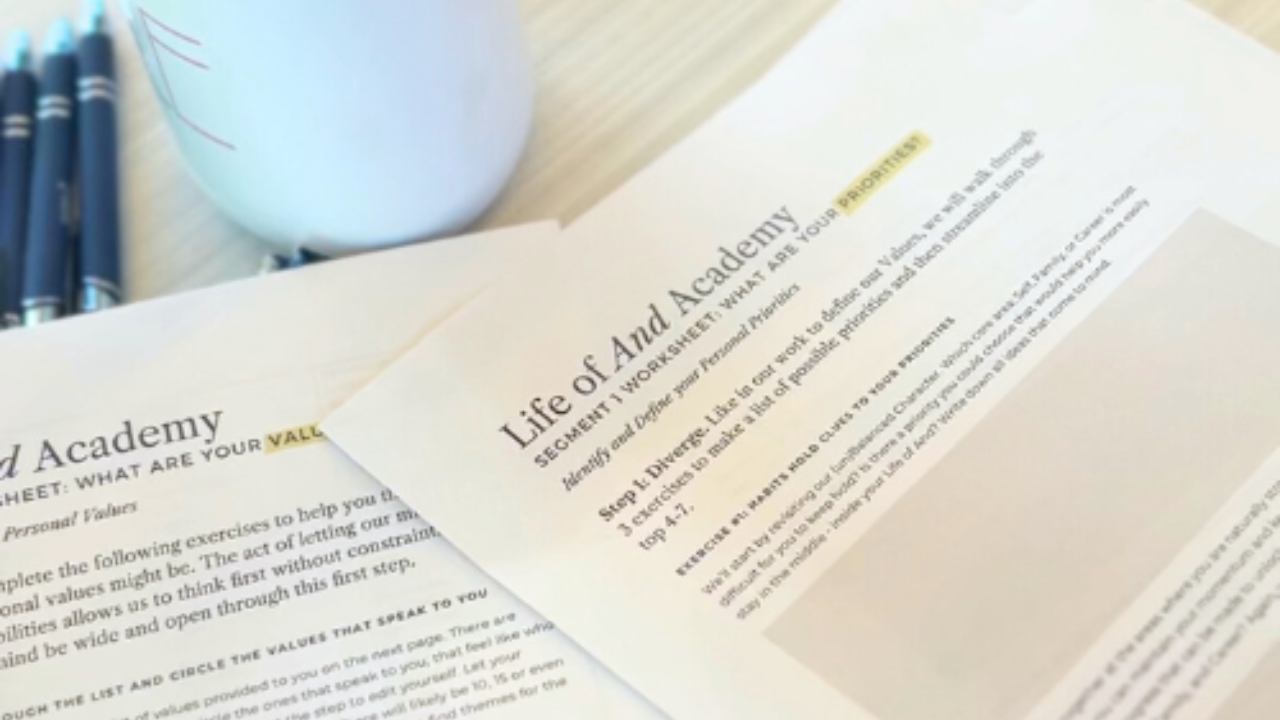
Practical discussion guides and worksheets
-
Access to the Life of And Academy
-
Tools women can apply immediately—at work and at home
We’re also continuing executive mini-retreats and Seat at the Table experiences, because proximity + vulnerability is where real growth happens.
If You’re Feeling Lost, This Is for You
I want to say this directly to you.
If you feel like you’re moving fast but don’t have a clear line of sight…
If your life looks good on paper but feels heavy in your body…
If you’re doing everything “right” and still feel worn down…
You’re not broken.
You’re not failing.
And you’re not alone.
A Life of And doesn’t mean slowing down your ambition.
It means taking the blindfold off so you can move fast with direction.
This work is about boundaries, clarity, and building a life that can actually hold your dreams.
Thank you for being here. For listening. For sharing. For trusting us with your time and attention. Some days, that support is oxygen.
I’m so excited for what we’re building next—and I’d love for you to listen to this episode to hear the full conversation, the nuance, and the heart behind it.
Let’s keep building lives that are big and sustainable.
[00:00:00] Tiffany Sauder: I think if you're in that place of feeling tired and lost and somehow like you're driving a race car blindfolded, and you're just going so fast and you don't know where you're going, I can tell you that you're not doing it wrong, but that there is another way that it doesn't have to be that living a big life means that you have to be so exhausted through it that you can't feel any of it. [00:00:29] Tiffany Sauder: I am Tiffany Sauder, entrepreneur, wife, mom to four girls, and a woman figuring it out just like you. If you're tired of living a life of have to and finally ready to build a life of want to, then you're in the right place. Come on, let's go Build your Life of And. [00:00:53] Tiffany Sauder: We are living in the largest gap in history between the opportunity that women have today to be able to provide for their families, to be able to earn, to be able to work from anywhere, to be able to explore ideas, to start side hustles, to like, I mean, it's incredible. We live in this moment of just incredible, massive opportunity. [00:01:13] Tiffany Sauder: What a gift. And yet beside all of that sort of explosive moment of opportunity, we really have not changed the way that we think about our lives and how they come together and how we serve these amazing things that we've chosen to be oftentimes a wife, a mom, a friend. And so this sort of infrastructure that we have to be able to scale our lives alongside the opportunity, it doesn't exist. [00:01:36] Tiffany Sauder: It's all broken and. In today's world, in 2025 going into 2026, women are earning more. They're leading more. They're contributing more economically than they ever have before. And yet, research shows that we are still carrying most of the emotional and domestic load. And honestly, as a mom and as a woman, I love doing those things. [00:01:59] Tiffany Sauder: I just want to be able to do that at an intensity and at a scale that makes the rest of my life super sustainable. And so. You know this, you're feeling this, this like tension between, I want to earn, I want to achieve, I want to step into all of these things I know I can do and I'm built to do. And yet I feel like sometimes Armstrong, by these responsibilities that I have, that I chose and I want it and I love, and this tension feels like it can just be completely draining. [00:02:28] Tiffany Sauder: So 2025 was really the year that we started to really step into building something big enough to meet that reality. Life of And is now a top podcast. We're in the top 150 out of over 33,000. In the segment that we're in. We have put together life changing retreats, corporate partnerships, tools, built a community of women that are like tired of just brute forcing life and saying like, no, it's gotta be different. [00:02:54] Tiffany Sauder: Like, can it be different? Can I dare to dream? It's different. So today Sam and I are breaking down what happened in 2025. What we're building next and kind of give you a preview of 2026 and I mean, walking into 2026. So excited, so focused like so ready for it to be here. And I would say as clear in our goals as we are in our boundaries. [00:03:15] Tiffany Sauder: And when you build a Life of And you have to be clear in both of those things because building Life of And this project has to work in the context of the rest of the decisions that I've made. We are living this project every single day and excited to use this episode to share it with you so. Okay, I guess thanks for joining me for another episode of The last episode. [00:03:34] Tiffany Sauder: Last episode of 2025 of 2025. I'm your host, Tiffany Sauder. Thanks for joining us. So Sam's back on the podcast with me today. This might be a little longer episode for us because I really want, I think, for us to just walk through some of the things we've learned from 2025, talk about our vision for 2026, so that if some of that resonates with people listening, that you can step into that with us and just thank you. [00:03:58] Tiffany Sauder: For your text messages, for your dms or your support for responding to our newsletters for just like giving us feedback, there are days when it's just hard and you lose your inspiration and you wonder if it matters at all, and your support and feedback keeps me going and reminds me that this is really important even on the days that are hard. [00:04:20] Tiffany Sauder: So we just also wanna thank you for being here with us. [00:04:23] Samantha Johnson: Okay. So we're starting with though, looking back at 2025. Kind of in just reflection what did it, it's been a big year for you, like lots and lots of changes and really big ones too, not like small things. So how would you describe it, if you had one word, how would you describe 2025? [00:04:41] Tiffany Sauder: I would say testing in sort of two definitions of that word. I think testing in the sense of, we tested a lot of things in 2025 as far as like activations of the Life of And. And it's like whenever you're in a moment of trying to figure out how to build something, I have found testing to be just like such an important way of, I don't know what's gonna work, so let's just go try it. [00:05:05] Tiffany Sauder: We tried a lot of things and so from a business perspective, I would say testing and then I would say on the personal side, like testing as well, like it, it felt like. A year where there was never a season where doing Life of And seems like a good idea. Yeah. It was just like, yeah, testing, like testing my commitment to it, testing my vision for it, testing my stamina for it. [00:05:31] Tiffany Sauder: Just like testing and, and so I think just that word sums up last year, it was like, it was just like hard. Mm-hmm. In a lot of ways it felt like. Some really beautiful moments of like, okay, we are onto something. This feels clarifying. I loved this. This is having impact. And then times is like, geez, ow. What do we do? [00:05:50] Tiffany Sauder: Yeah, this is super hard. Yeah, that's what I'd say. Testing. [00:05:54] Samantha Johnson: Yeah, I like that. So looking back at this year, there was a lot that we did do. First of all, we are left Element Three at the beginning of the year, which fun fact found out this week that most people still don't know. I've left Element Three, [00:06:07] Tiffany Sauder: I mean, in January of 2025, I stepped out of the agency completely. [00:06:13] Tiffany Sauder: I mean, from a day-to-day operational perspective, I still own the majority of it, and so there's, there are lots of places and reasons where I'm still involved, but it's really in a strategic advisory capacity. I'm very much sitting in the owner's box, and I'm not functionally in the business really. So yeah, really to shove off and say like, can we make something of this Life of And thing? [00:06:33] Tiffany Sauder: And I mean, Sam, you've been a huge cheerleader in this too. There are times when I'm looking at you like, I don't know, and you're like, no, I think, I think it's good. I'm like, I don't know. I don't know. I don't know. And you're like, no, I think we have to keep going. So in a lot of ways, you've been an early investor in your energy and you have other places where you could have. [00:06:53] Tiffany Sauder: You know, sort of faster opportunity, but you've been in this with me and I really appreciate that a lot. So yeah, I mean, we tested a lot of things and stepped into it full time. Yeah. [00:07:03] Samantha Johnson: We also switched, um, the podcast was called Scared Confident at the beginning of the year, and we made that switch in, what was it, April? [00:07:10] Tiffany Sauder: Mm-hmm. Yeah. Joined the IBJ Network really as a way to kind of test, like going back, test the strategy of what does it look like to join a network. In our local business community that's a, you know, a very credible brand and so wanted some halo effect of that and then just like, see, can I grow the listeners and grow the impact and. [00:07:28] Tiffany Sauder: So yeah, it's just like in the vein of like, well we gotta test it. Let's see. Let's see what this looks like. So we've learned a lot in that. Still [00:07:34] Samantha Johnson: love the decision Life of And podcast instead of scared, confident. Yeah. I think it feels right. Yeah. It's way [00:07:39] Tiffany Sauder: easier to talk about. It is. Yeah. I find that too. [00:07:42] Tiffany Sauder: Makes sense. It's just makes sense. All very cohesive. I think it would feel even more awkward in December if we hadn't changed it in Yes. April. Yeah. Like it would be feel even more dissonant. Yeah. I think we've gotten clarity on like Life of And is a movement, but it really is a framework. Yes, that you, that you learn the tools inside of that framework and then you apply it inside of your life wherein it's mostly referenced in seasons of change, which is like always for a woman. [00:08:09] Tiffany Sauder: I've graduated college and I'm starting a new job. Like that's a season of change. I am, you know, started a new job and now I'm in a relationship. That's a season of change. I've started a new job. I'm in a relationship and my job requires travel. Now that's a season of change. I am starting to have kids returning from maternity leave. [00:08:25] Tiffany Sauder: My kids are in school now I need to hire a nanny. My kids, you know, are in sports now. It's like it's summertime, they're going back to school. It's the holidays. Like yeah, there is a always something moment of change and when you start to realize, oh, I can develop an experienced muscle that knows how to set me and everybody else around me up for success going into this new season, because we tend to carry our old decisions and behaviors and habits. [00:08:53] Tiffany Sauder: Forward into the new thing that's happened and we were, were surprised when it doesn't work. Mm-hmm. And so I think we got more clarity in that this year around how to talk about it, about how to articulate where its application is and like, yeah. It, it is a framework. You get to put your life decisions into it. [00:09:11] Tiffany Sauder: I'm not trying to direct those outcomes and I, I think we wouldn't have been able to do that as concisely a year ago as I know. Yeah. [00:09:19] Samantha Johnson: Yeah. Alongside the name change of the podcast, we also updated the website and I took over like being able to have full control over it, which was huge. Yeah. And has been like the, one of the better decisions I feel like we made this year where it was like, yeah, now we have full control and we can do whatever we want with it. [00:09:36] Tiffany Sauder: Yeah. So that's given us the toolbox. I think again, in the vein of testing, it's kept it so that the messaging is not three seasons behind what we're learning as we're like playing in the marketplace, though, for sure been a big deal. [00:09:48] Samantha Johnson: Couple more podcast stats. We became a top 3% show this year, which was a shift for us. [00:09:53] Samantha Johnson: Mm-hmm. And exciting. Um, mentioned this in the cold open, but out of 30,000 entrepreneurship podcasts, we broke into the top one 50 on Apple this year, which is very cool. And recorded over, like, we'll be just shy of 52 episodes here at the end of the year. 'cause we take a couple weeks off around the Christmas time. [00:10:11] Samantha Johnson: Mm-hmm. So pretty close to that, [00:10:13] Tiffany Sauder: but we crossed over like 300 episodes this year. Yeah. Which is a lot. So many. Yeah, it's a lot. How many years is it now? Five. Five years? Well, no, April, 2021 is when we started. Yeah. So it'll in April, this coming April will be five years. Yeah. That's a [00:10:26] Samantha Johnson: big [00:10:27] Tiffany Sauder: milestone too. [00:10:27] Tiffany Sauder: Mm-hmm. So do you [00:10:29] Samantha Johnson: have a specific episode that stands out to you from this year? [00:10:33] Tiffany Sauder: I mean, I probably can only remember the ones in the last few months because that's how my brain works. I think the one that we did. With Nicole Kalil on confidence. Yes, that was a great one. She's just a professional and I just think this concept of confidence is such an important one for all of us, but especially for women like we are oftentimes the thing that stands in our way much more than any external real thing. [00:10:59] Tiffany Sauder: And so I think just mastering and understanding of confidence and she talks about it in such a practical and accessible way. So that one is a highlight for me. And we tested. It's like if that was a, I don't know if Tested was a drinking game, you guys would already be struggling, but the live coaching session with Kelly Hiller. [00:11:18] Tiffany Sauder: Yes, that was great. It was a new format of just like, Hey, tell me the problem and let me walk you through some of the tools. And so I think that was exciting to hear that come to life. And her situation was so extreme. She was gonna go find. The airplane for, um, Amelia Earhart. Amelia Earhart, thank you. But it really, the core of it was just like I have to travel a lot for work, and I need to do that in a way that I can feel clear and light and like I'm not burdening everybody that I'm leaving behind. [00:11:47] Tiffany Sauder: And that we're using it like strategically to help the family sort of level up. Instead of it just being like this, oh my gosh, everybody's gonna be mad. I feel guilty, I feel terrible. I'm neither there nor here. And just like all of that mess that can happen. And so I think the issue she was dealing with was like universal for those of us that have to travel for work sometimes. [00:12:04] Tiffany Sauder: Yeah. So that was exciting, I think to hear that come to life. I liked that format a lot. It leans into some of my own, just like interests. I love to like dig into things and I'm a high quick start. So being able to just like do it was fun and energizing for me. So if those are two taps for me and the other one, I would say third one, when I did that episode with Brian Kavicky where I was. [00:12:26] Tiffany Sauder: On the edge of getting our house on the market. We'd purchased our new house. I was in full in the way that I freak out. 'cause all I was like, I don't know what to plan because I'm so unclear. And him helping me understand how to get clear and where to start that was for, it was a huge unlock for me. So those are probably my top three episodes. [00:12:47] Tiffany Sauder: Yeah. In the last six months. 'cause I can't remember the others. Right. Who [00:12:49] Samantha Johnson: knows what happened [00:12:50] Tiffany Sauder: from January. I, I know we should have gone and looked, but we didn't How it is. I hope you'll hang with me because in a few minutes I'm gonna connect the dots between the last 40 years of women's progress in the workplace and the burnout so many of us feel today. [00:13:06] Samantha Johnson: Another thing we took on this year were a couple of corporate partnerships and testing, again that word, but we start doing that. What are some like highlights from that and what does that look like? [00:13:17] Tiffany Sauder: Yeah, so this corporate partnership model is gonna be a key part of our deliverable going into 2026, which I know is kind of straddling, but if you don't make it all the way to the end of the episode here. [00:13:25] Tiffany Sauder: So I had, yeah, several companies that had hired me to come in quarterly and speak to their women really on the Life of And framework toolbox, and applying it like seasonally. You know, we're going into the new year and so it's like, hey, how do you take your goals and move those into clear priorities? How do you get those functionally on your calendar in a way that it's gonna be sustainable? [00:13:45] Tiffany Sauder: How do you plan for your worst week, not your best week? Also, like summer's coming. How do you make sure that you put together your best summer and you're not just sort of suddenly reactive on July 4th and mad that nothing's going well and you have no care Act to school. Another really big season for those of us who have kids in school and then like going into holiday season. [00:14:02] Tiffany Sauder: So these corporate partnerships were me presenting quarterly to a group of women and then helping them kind of. I would say ingest the vocabulary of the Life of And framework into their culture moving from this place of my life is happening to me. [00:14:18] Samantha Johnson: Mm-hmm. To [00:14:19] Tiffany Sauder: I get to choose how life happens and I need to do it where all the things I've said yes to are respected. [00:14:25] Tiffany Sauder: I am a mom, I am a wife. I have a job. Like we can't just. I think sometimes there can be this prevailing narrative of it's just like, say no to the things that aren't serving you. It's like, well, sometimes my 5-year-old is not serving me on a Tuesday afternoon. I know, but I have, you know, I sort of need to stay in it. [00:14:42] Tiffany Sauder: And so how do we build our lives in a way that they're sustainable through every season of life? And we feel like we're a customer of our time and money and not invisible, which is kind of how it can be. So. That was very exciting and it was a very successful pilot in 2025. And so we're gonna be formalizing that going into 2026. [00:15:01] Tiffany Sauder: Really just trying to, working to expand our capacity to be able to serve companies in that way. And if we exit 2026 with, I'm gonna say a hundred corporate partners, like I'm gonna feel really proud of that. [00:15:15] Samantha Johnson: Yeah, [00:15:16] Tiffany Sauder: that would be amazing. [00:15:18] Samantha Johnson: The other awesome thing that we did, which ties into the corporate partnerships, is the executive mini retreats. [00:15:24] Samantha Johnson: So it's bringing in the executive women from those and other places. Mm-hmm. Into a small one day mini retreat. And that was super successful too. Loved that. [00:15:33] Tiffany Sauder: Yeah. It was really very cool. I was super nervous going into it. Mm-hmm. I think, I don't know, you might use the words imposter syndrome, but I was like, okay, I have a, a group of six women that are all. [00:15:44] Tiffany Sauder: CEOs, VPs, high level jobs and big companies who have been to lots of training and lots of leadership things, and they're very well developed human beings. Am I gonna tell them anything that's gonna be helpful? Like, oh geez, I hope so. I've asked for both their time and their money to do that, and it was wildly successful, and so we're gonna be continuing that also into 2026. [00:16:06] Tiffany Sauder: If you're an executive woman who is saying, I know I need this Life of And academy. It was born, the structure was born out of, and I understand this, I'm an executive woman, executive women saying to me like I'm, I mean, to go through it. Mm-hmm. I want to go through it. My calendar doesn't work to be able to go through like an eight to 12 week cohort. [00:16:27] Tiffany Sauder: I want to have the discipline to go through it on my own, sort of asynchronously, but oh my teeth, like, you know, something is always pushing it aside. And so I knew in my own experience, if you slam something on my calendar, I will go to it because that's how it works. My calendar runs my life, and so in a one day experience, we go through about 75 to 80% of the Life of And framework from 8 45 until four 30. [00:16:52] Tiffany Sauder: We meet the evening before so that everyone can get to know each other, and it's a group of six to eight women. No one from the same company so that we can just have wildly vulnerable conversations and everyone in that executive leadership capacity, and most are also serving a, I'll call a domestic role of a wife and a mom as well. [00:17:12] Tiffany Sauder: Mm-hmm. And so I think you find people who have chosen similar abs in life, you can speak really vulnerably because nobody's really that invested, but everybody is rooting for you and wants you to be successful. And it was just like, it was a beautiful thing to be a part of. So we're gonna be continuing those into 2026 and we'll host those in Indianapolis. [00:17:32] Tiffany Sauder: We did have some women fly in for that, so it's pretty accessible to get here. It's pretty inexpensive to stay here and we can create a great, kinda a 24, 36 hour experience for a woman. [00:17:44] Samantha Johnson: Yeah, it was so much fun. [00:17:45] Tiffany Sauder: Mm-hmm. [00:17:46] Samantha Johnson: It was, uh, the other event we did was Seat at the Table. [00:17:50] Tiffany Sauder: Yeah, so this is [00:17:50] Samantha Johnson: the [00:17:50] Tiffany Sauder: last, [00:17:51] Samantha Johnson: if you're like, okay. [00:17:52] Tiffany Sauder: But yeah, this was really about bringing a mix of generational women together in my own lived experience when I was young, I learned so much from sitting closely beside those women who had been there. I think I gained a lot of courage from seeing that this idea of being a working mom was possible. I gained a lot of tips by hearing what they were doing. [00:18:14] Tiffany Sauder: It kinda gave me a way to imprint and normalize, like, what am I gonna be experiencing when I get to that stage? And now that I am in the more experienced category, I have this incredible desire to bring young women along with me, for them to feel like they belong and deserve a Seat at the Table. And it's so powerful when you're a young woman to see someone 10 years in front of you, pull you aside and say very intentionally into your like life. [00:18:43] Tiffany Sauder: You have something special in you and you have a place to lead and your impact on the world is gonna be important. And I had a few people along the way that said that to me. And it was wildly, wildly, like impressed upon me. Yeah. Imprinted on me. The belief that that was true. Mm-hmm. Sort of intrinsically, I wanted to believe that was true. [00:19:03] Tiffany Sauder: And to hear it externally sometimes just sort of, I think propelled me forward. And so Seat at the Table is about bringing either a mentor and a mentee. Or a woman who's, you know, maybe slightly behind you in your career and you invite her to this just beautifully curated event that you helped me put together. [00:19:20] Tiffany Sauder: And, and it was awesome. We oversubscribed it. Our capacity was 24 and I think we had 28 there. [00:19:27] Samantha Johnson: Yeah, [00:19:27] Tiffany Sauder: it's intimate on purpose. And again, I think we did, we did a couple of them in 2025. We're gonna continue to do those in 2026, and it allows women to just connect really on a human level, talk about real things. [00:19:41] Tiffany Sauder: You know, it's like we can propel and compel one another forward. We have to do it in a way where we have what I've said, proximity to people who can help us, and the courage to be vulnerable about what we really need help with. And when those two things are in a situation, proximity and vulnerability, then real progress can happen. [00:20:01] Tiffany Sauder: And so Seat at the Table is really our attempt to create an environment where those two things come together. Mm-hmm. And doing it in a really. I say like a dining experience. So often as women, we are treating and celebrating and expectant of others, and few do that for us. And so we hope that the women who join us in those leave feeling seen and loved and expected and celebrated, and that they made a connection that can help them make progress in their lives. [00:20:30] Tiffany Sauder: So yeah, they're cool. We're gonna keep doing those too. And they're very fun. [00:20:34] Samantha Johnson: Yeah. So those are some of like the key, I'd say moments from 2025. Stay with me because [00:20:41] Tiffany Sauder: in a few minutes I'm gonna walk you through why our mothers didn't face some of the same challenges that we do and why if we have a chance to change it and get it right, why our daughters might be able to skip. [00:20:55] Tiffany Sauder: A lot of the burnout and guilt and overwhelm that we feel [00:20:57] Samantha Johnson: today is choosing to be working rounds. And then you had like personal things going on in the background too. Like you sold your house, bought a house, started renovations on a house, and recently moved in with your in-laws. So there's been like a lot of change. [00:21:11] Samantha Johnson: What are some of your key learnings from 2025? [00:21:15] Tiffany Sauder: I think on the professional side. I can stay in the land of testing into perpetuity because it is very exciting and new. Mm-hmm. And that is where my energy naturally goes is to new ideas. And so as we have set goals for 2026, I mean, and I'm such an external processor, poor Sam, but I am like literally saying to myself over and over like, this is what we're doing and this is what we're scaling, this is what we're doing, this is what we're scaling. [00:21:42] Tiffany Sauder: Like we know now what works. I need to get as much excitement in refining those experiences. Mm-hmm. And getting them to the place where they're just not everything is bespoke because it just takes a, it's massive lift anytime you do something for the first time. And so I think I'm saying it to you all of the time out loud because I'm saying it to myself. [00:22:06] Tiffany Sauder: Yeah. All of the time out loud. That 2025 was a year of testing and 2026 has to be a year of beginning to. To really build depth and like deep pylons into those things that we know work and they won't work forever and we'll continue to refine and learn more, but to not keep casting such a wide net because I can really, my natural tendency to can be to keep doing that. [00:22:31] Tiffany Sauder: So I think that's a key learning really, even from my previous entrepreneurial experiences, just knowing myself better. [00:22:38] Samantha Johnson: Yeah. [00:22:38] Tiffany Sauder: And being like, okay, great. We did the testing thing and now it's time to, to stop testing and to really move into like, what can we scale? I think I also was not very clear coming into 2024 about the boundaries that I needed to define alongside my goals. [00:22:56] Tiffany Sauder: Mm-hmm. When I built Element Three in my twenties and early thirties, it was kind of like do it at all cost, and I almost paid the ultimate price with my marriage and. You know, everything else. And so this time I'm really trying to do it differently. And the reason I stepped down from Element Three in part was to create an opportunity for Kyler, and he's better at leading the business. [00:23:21] Tiffany Sauder: So let's be clear about that. But part of the reason why I stepped aside was because I wanted to be able to be present in a different way. Mm-hmm. For my family in the season, the season of my husband's career, the season that my kids are in right now. We have maybe, what, 16 more months that Aubrey's home before she leaves for college. [00:23:42] Tiffany Sauder: All of my girls will only live at home for seven years because there's such a wide gap. And so there's like all these things that are just really unique to my life. And part of the reason I stepped down from Element Three was I had told myself I wanted a season when my kids were home or I had more flexibility. [00:23:57] Tiffany Sauder: So if I'm not careful. [00:23:59] Samantha Johnson: Mm. [00:24:00] Tiffany Sauder: I can build another thing. [00:24:02] Samantha Johnson: Yeah. That takes it all [00:24:03] Tiffany Sauder: that needs all of my time. Yeah. And, and frankly I love it. Yeah. And I'm the problem when I build that, it's not that, it's like, it's just what I build because I love to be needed. I love to be important, I love to be busy. I love to be popular. [00:24:17] Tiffany Sauder: I, I just like love all of that. [00:24:18] Samantha Johnson: Yeah. [00:24:19] Tiffany Sauder: And while that's cute, it makes a real mess for my family 'cause it's their lives. Also, and so I think one of my key learnings in 2025 is that if that is what I want to do, I have to define boundaries alongside my goals. Mm-hmm. And so what you and I both did this coming into 2026 of what are the goals of the business? [00:24:39] Tiffany Sauder: What are the goals for us individually, and what are the boundaries that have to be respected inside of that? And it's a real practice in believing Yeah. That those things can both exist. That that growth goal can exist right beside that boundary. And it's like practicing believing that starts to force you to a place of solving that keeps both of those things true. [00:25:07] Tiffany Sauder: But it's not my first idea. Yeah. That respects both of those things and so it's uncomfortable not knowing the answer right away. I think we've gotten there. I think we're, you know, I feel really excited about where we're headed and we'll talk about that in a little bit, but that was a key learning. And then I think the other thing I continue to to know is true is that no one will prioritize me if I don't, or no one will prioritize me. [00:25:35] Tiffany Sauder: Yeah. Yeah. Yes. I have to like, yes. And so whenever, you know, we've just been through a massive amount of change and whenever I'm sort of a little like in our personal lives Yep. Where all of our moving and all of this stuff, I'm just like, I kind of wish someone would notice I'm tired or I sort of wish. [00:25:53] Tiffany Sauder: JR wouldn't go on a run so that I can, or I sort of wish somebody else knew how to make dinner or whatever it is. It's like they're not gonna take care of me. That's my job. And so if I'm not feeling taken care of, I'm not doing my job. Mm-hmm. Does that make sense? Yes. It's nobody else's job to fix, and so I think just reminding myself of that, when you get tired, you can force your problems into other people's sandboxes. [00:26:17] Tiffany Sauder: Mm-hmm. You know that I'm kind of in my new, my new temporary normal for the next four to five week or four to five months starting this week. And I was like, I have to get up at five o'clock every morning or the day does not fit. [00:26:30] Samantha Johnson: Mm-hmm. [00:26:31] Tiffany Sauder: If those are the things I want out of my life. [00:26:33] Samantha Johnson: Yeah. And so [00:26:34] Tiffany Sauder: that's a choice I get to make, change what I want out of my life or get up early. [00:26:38] Tiffany Sauder: Like those are my choices. Yeah. And so pick your thing. And so I, I dunno, maybe I won't ramble too long there, but that's like a big thing is just like, it's if, if I'm feeling. Tired or ignored. It's my job to fix that. I wanna take a quick moment to thank my partners at Share Your Genius. For the past four years, they have been an incredible part of my journey behind the microphone. [00:27:04] Tiffany Sauder: Share Your Genius is a content and podcast production agency that helps leaders and brands bring their message to life. So whether you're trying to find your voice, develop a content strategy, or get your leader behind a microphone, they're gonna help you make it simple, strategic and impactful. But the beginning of this episode, I talked about how we're in this moment of peak opportunity and peak exhaustion. [00:27:30] Tiffany Sauder: Burnout. The vocabulary that we use to talk about what it means to live in this moment of opportunity are not things that are very appealing. And so what I wanna talk about next is some of how we got here, and I think it helps us to step back and understand what has happened culturally over the last 40 years, over my lifetime, to really see why this moment has come together and why I believe the time is now for us to not just. [00:27:58] Tiffany Sauder: Talk about how the opportunities for women are different, but also how we talk about the way in which we navigate the environment has to totally change alongside it. Mm-hmm. So let's get into it. Okay. So I am wildly intuitive, which is great, except that I have all these free radicals flying around in my brain that I then sort into like patterns and I place them into different categories. [00:28:24] Tiffany Sauder: My brain then like synthesizes all this stuff and I come up with these like aha moments. That's like where the unbalanced character came from. I was like, oh my word. I've got all of these observations that at some point coalesce themselves into this thing that kind of becomes this like light bulb moment. [00:28:42] Tiffany Sauder: Like, holy crap, that just came outta my fingers. You know these, yeah. Three unbalanced characters. So over the last few months, the intuitive free radicals of thought for Tiffany. Have been trying to step back and look at what have been some of those keystone moments in my own career as I've was born in 1980, I, you know, graduated college in 2002. [00:29:08] Tiffany Sauder: Like what are the things that happened and how are we in this moment where we have such, I would say, an imbalance of the size of opportunity and the toolbox for support as we kind of try to scale our lives into this. And I often will say, I'll get to the, some of the research, but I often will say to women, to my peers, like when we talk about being a working mom, we exchange complaints. [00:29:35] Tiffany Sauder: Like, oh my word. I'm so tired. I'm so exhausted. I'm literally living outta my car. I know there's goldfish crushed everywhere too. Like I'm on my 33rd Chick-fil-A sandwich this week. Like Yeah, I know. Me too. I always feel behind. I'm exhausted. I don't have time for myself. I know. I'm super behind on my Botox too. [00:29:51] Tiffany Sauder: Like it's just this like mm-hmm. This, it kind of exasperated, exhausted. And we just like ping pong complaints back and forth and we say, I know honey, me too. Like I know like totally, but we just sort of sit in the pain together and nobody says, well, I wonder if it can be different. And when we sit down and we think about what could be different, we often think about what opportunity do I have to shut off in my life? [00:30:18] Tiffany Sauder: And so that's kind of the whole premise for this idea of Life of And. So I wanted to go back and I'm scrolling on my computer here 'cause I was. Pulling up different research bodies and kind of talking about, so I wanna take these almost like the last four decades and what did it look like? And for me, it really helped me understand why we're here. [00:30:39] Tiffany Sauder: Why are we in this moment? So in the 1980s, the doors are like opening. It's like the doors are cracking for women going into the workforce. Women are entering the workforce in record numbers, but the home really stays the same in 1988. Okay. I have to give Sarah Blakely credit for it 'cause she's the one who I feel like talks about it on her Instagram feed a lot too. [00:31:01] Tiffany Sauder: But it was not until 1988 that women could get a loan for a business person without a male co-signer in my lifetime that existed. It's crazy when you ask a table of people, what year do you think that this was at? My mom said like 1936 and I was like, yeah, well no, he was 88. So crazy. So this was, think about that women were just able to open a business to buy a business, to like fund an idea. [00:31:31] Tiffany Sauder: In 1988, corporate America was very much like, Hey, you can have a job too. Narrative women were starting to enter the workforce college of enrollment sword, and women were like sitting beside, you know, men in the classroom and all of these things are happening. It was in 89 that this landmark research called The Second Shift was done, and it said even dual career mothers were still performing 70, 80% of the household labor back then. [00:31:57] Tiffany Sauder: And 40 years later, what did the statistics say? It's like 60. Yeah. To 70% of household labor is still done by women. Mm-hmm. So there's an example 45 years later, and we still have not changed the infrastructure for how we're serving these these environments. Childcare ho were very limited back then, culturally stigmatized and like nannies and house cleaners and those kinds of things were like reserved for the ultra wealthy. [00:32:22] Tiffany Sauder: There were no digital tools to reduce domestic load, no grocery deliver, no meal kits. I mean, imagine, you know? Yeah. It was like a do. So the cultural expectation were very much a good mother does everything, which is kind of still where we are today, but women were gaining access to work. They were carrying two full-time, like dual income, started to come forward more aggressively, that kind of thing. [00:32:44] Tiffany Sauder: The nineties were called the aspirational, more like the aspirational decade. So women were stepping into more career ambition. There were more like women stepping into leadership, becoming lawyers, doctors, scientists, MBA, like more advanced degrees were beginning to come more prevalent, and working moms became culturally visible, like soccer moms, career moms, like this was a little bit more present. [00:33:09] Tiffany Sauder: So that's what kinda what that looked like. Is more into leadership, more advanced degrees, 2000, 2010. So this is when I entered the workforce. And this whole like breaking the glass ceiling was the narrative of the day. It was like women were only getting so high into an organization, but getting into real corporate VP roles. [00:33:28] Tiffany Sauder: There were not female leaders of big fortune 500 companies. And I know there's still not a ton today, but there were like none. And so the glass ceiling conversation very much dominated corporate America. Early versions of Like calendars? Yeah. Or attack emails. Those kinds of things were beginning to come forward. [00:33:45] Tiffany Sauder: FMLA compliant, FMLA came out in that season, so technology was becoming to make it a little bit more flexible. But it was still very much You were, I, I mean, I was working at Lily at the time, so the corporate women were putting on suits and hose and shoes and driving into work from nine to six 30. You know, it was, yes. [00:34:07] Tiffany Sauder: Very, very structured. Kids were going to daycare. There was not a lot of digital infrastructure. There was really not any workplace flexibility. The idea of work life integration was like nowhere to be seen. It just was not the way that it was working then. Right. So I think that's interesting. The next decade, 2010. [00:34:27] Tiffany Sauder: Did I miss one? No. Yeah, to 2020. This is where technology really begins to democratize help. That's where we're just coming out of. It's like Uber, Instacart, DoorDash, TaskRabbit, Amazon Prime Laundry pickup. Like yeah. The tools have become available and democratizing all of these things that we are not uniquely qualified to do. [00:34:46] Tiffany Sauder: Yeah, and making it affordable is accessible. Yeah, totally. It's accessible and women have more earning power than ever. And in 2020, obviously this whole inflection point of. Being able to maybe work some remotely or to have a hybrid environment, or at least for there to be a professional choice that you could make to have some space work. [00:35:07] Tiffany Sauder: Flexibility starts to come into play and yet, and I understand COVID, but even taking COVID out of it, like we still have not taken advantage of all of these tools that are existing. And I read this thing that was like. It certainly make it, this made me think of this parallel. It's like if, I don't know when the washing machine was invented, but Yeah. [00:35:28] Tiffany Sauder: A while ago. A while. Yeah, a while ago. It's been a while. Imagine if women of that age were like, no, the more noble thing is to hand wash your clothes. Mm-hmm. We're not gonna use a washing machine, even though clearly it's more efficient, like for some cultural reason, we're not gonna do those things. And I think we're at that moment here with a lot of this stuff where it's like, yeah. [00:35:48] Tiffany Sauder: It's not that sending your laundry out is not financially accessible to most anyone working in a white collar environment like a mm-hmm. A, a, a, a job like this. It's that culturally the stigma is such that people are like, I don't want somebody to fold my underwear. I don't want my friends to find out that I, I don't do my laundry, or my kids need to do my laundry. [00:36:08] Tiffany Sauder: Yes, my kids need to learn how to do their laundry. It's like I'm pretty confident my kids when they graduate college, are gonna be able to afford to send their clothes out. It's like 30 bucks a week and I can teach them to do that or to, to buy Starbucks. Like you get to pick or go to a yoga class or stream, like whatever you wanna do. [00:36:27] Tiffany Sauder: Yes, you get to choose. But that's where I think we are. I think we're in this moment where women, the opportunities for women has continued to increase and we have to take responsibility of women, of changing the cultural narrative in the way we look at one another. When somebody says, I don't do my laundry, and I remember this very vividly with my friends kind of being like, I don't know if I want them to know how much it is that I don't do because I don't have the same complaints they do because I don't do those things. [00:36:58] Tiffany Sauder: Because as JR and I made more money, and as we got more opportunity and as I started to understand the opportunity cost of my time. And being able to get enough rest and getting my workouts in and all of the sanity that that brought me, I realized, man, I can make a lot more money when I'm not doing these things and it costs me not an enormous amount of money to get these things to be paid done. [00:37:19] Tiffany Sauder: So I think we have an opportunity, we have a moment, we have a responsibility, maybe even I'll say as women to say. When every woman gets the courage to say, I wonder what it is that I'm doing that is not serving my family, my goals, my mental health, my peace, my intimacy, my connection. When I'm doing things that are not serving one of those things, what would it look like for me to get rid of that task and to outsource or what we say, own the ordinary, outsource the ordinary. [00:37:48] Tiffany Sauder: Get rid of the things that you're not uniquely qualified to do. Because until we take responsibility for saying the system, I'm working in the system. I don't mean systematic. The framework I'm running my life on does not match the size of the opportunity in front of me. They're not working. There's like this constant friction and it's like if we think about the business setting, your business is $10 million and you're still running on systems that. [00:38:19] Tiffany Sauder: We're serving you when you were $1 million. There's probably a load on top of those systems where it's breaking, it's not mm-hmm. It's not resource, it's not scale to the place to be able to manage the throughput or your people are breaking. Totally. Yeah. Which is what's happening in our families. Yeah. [00:38:35] Tiffany Sauder: Our people are breaking and the cultures of our families are breaking. Mm-hmm. Because we have systems that were still built frameworks inside of the way we operate that were built when it was two of us living in the house. And you've grown 300 x you know, which is like what we've going from two to six people. [00:38:53] Tiffany Sauder: Yeah. 300 x more complex. And so the, the way in which we operate as a family has to grow alongside of that. And so that really is the moment, that sort of disconnect, where the opportunities, your dreams, your vision, your relationships, the number of people that you have to sort of. I say manage, it's like putting four kids to bed takes more time than putting one kid to bed. [00:39:21] Tiffany Sauder: Yeah. There's an order of magnitude, an order of scale that comes as your family grows, as your responsibility grows, as travel comes into your world, when you get put into a leadership role and now your availability is sort of, you know, predicated on when other people are available to, all of those things add complexity. [00:39:40] Tiffany Sauder: And so when I was able to step back and sort of say like, how did we get here? It makes sense to me, but we are not in a place where we can say, wow, I wonder how I would, the resources are here. The technology is here, and AI takes it a step further. It can do your meal planning for you in seven seconds, you know, if you get the prompts right and all that kind of stuff. [00:40:02] Tiffany Sauder: So. I think we have a responsibility as women to change the culture from complaining to solving. I think we as women have the responsibility to change the culture from being reactive to being proactive. I think we as women have the responsibility to change the culture of being supportive and a cheerleader for one another. [00:40:21] Tiffany Sauder: When, when we hear a friend say, I've chosen not to do that anymore. [00:40:25] Samantha Johnson: Mm-hmm. [00:40:25] Tiffany Sauder: Instead of having this sort of jealous judgment pass our eyes and so. It is not someone else who's gonna come and save us in the same way that I said, nobody's gonna come and save tired, Tiffany. It's my job to do that. There's not gonna be another population of people who come and tell working moms, it's okay to do this. [00:40:44] Tiffany Sauder: We have to tell each other it's okay to do this. [00:40:47] Samantha Johnson: Mm-hmm. [00:40:47] Tiffany Sauder: And, and not only it's okay, but it's imperative for you to be able to build. The life that your little girl self dreamed of and that your adult self is now working for. [00:40:58] Samantha Johnson: Mm-hmm. [00:41:01] Tiffany Sauder: I'm gonna be honest, later in this episode, I share something that still makes my voice shake a little. [00:41:06] Tiffany Sauder: You'll hear why. [00:41:10] Samantha Johnson: So as you look at 2026, what does all that have to do with Life of And in 2026? [00:41:15] Tiffany Sauder: Well, I think you can probably hear the passion in my voice. Yes. I'm like, this is so purpose driven for me. Because I have been at that intersection of feeling so lost and like every single thing that I was doing came from a good place. [00:41:30] Tiffany Sauder: It came from a place of wanting to do well for myself and for my family, and for my people. It came from a place of just wanting to do right and to feel like, man, I've never tried so hard to be good at something and been so bad at it. Like, how can this be? Mm-hmm. And so I think I learned that until you get life back in the boundaries. [00:41:48] Tiffany Sauder: You'll never be able to actually deliver on what it is that you dream of. It's impossible to sustain life outside of its boundaries. And you know, as we look forward into scaling this, if you've listened to other episodes, our goal is to reach 10,000 women in 2026, um, with the Life of And framework. And so we're gonna do that predominantly through corporate partnerships. [00:42:12] Tiffany Sauder: And so that is. Having relationships with companies that say, we understand this problem, we agree with this problem, and we wanna put the tools in front of our women to help them live free from exhaustion and guilt and overwhelm, and to feel empowered inside of their own choices, inside of their lives. [00:42:29] Tiffany Sauder: So that looks like a quarterly virtual session. There's two dates a quarter that you can view those live, um, where I'll be teaching or if those dates don't work for you and your few people. Um, it's available on demand for 30 days afterwards. The rich discussion guides to really help you activate around the content personally and also worksheets to help you say, how does this apply to me and my specific life stage. [00:42:55] Tiffany Sauder: And then access to the Life of And Academy, which is a virtual, um, learning experience. I'm sort of framing it like a virtual textbook. It's like, yeah, this digital textbook that becomes a resource that you can double click, triple click into the teachings there. 'cause obviously I can't cover all of it in 60 minutes once a quarter. [00:43:14] Tiffany Sauder: And then we'll share supplemental resources and podcast episodes to help you ingest this into the cultures. And I, and I know that there will be women. We are partnering with employee resource groups. If you have those formally, this kind of becomes programming you can plug into. Or if you don't have those formally and just wanna make this available to your women, then you can access it that way too. [00:43:35] Tiffany Sauder: And we wanna give people a chance to like play in the shallow end of it if they want to. Yep. Where it's, you know, one hour a quarter and, and maybe another half hour in some sort of worksheets, or go into the deep end of it and go all the way through the course. Listen to every minute of teaching on it and engage that way. [00:43:51] Tiffany Sauder: So really for the same price, you can engage in either spectrum because we want people to be incentivized to go as deeply as they want to. So yeah. That's awesome. Yeah, it's kinda the core framework we're looking for a hundred companies to partner with. We've got around 15 that have already said yes going into next year and, uh, another 15 or so that we're still talking to. [00:44:12] Tiffany Sauder: So really excited about the momentum. I think you and I both Sam, are like, okay, this is connecting. We know this is gonna help, and we're really excited walking into next year with it. So pricing is, I don't know, on our website or just, yeah, I'll put a link in show notes. Yeah. If it, we'd love to just have a conversation with you. [00:44:29] Tiffany Sauder: The goal with pricing has been to make it very accessible financially, and we've heard that echoed back to us. [00:44:35] Samantha Johnson: Mm-hmm. [00:44:37] Tiffany Sauder: Lots of times that, that, that we've struck. I think that balance with things of like, Hey. How do we make it really easy for companies to say yes to this? [00:44:45] Samantha Johnson: Yeah. [00:44:46] Tiffany Sauder: So yeah, it's kinda the core. [00:44:48] Tiffany Sauder: The core of what we're scaling. We're gonna still do the executive workshops and still do Seat at the Table, but that's kind of the core of what we're doing. A few kind of, I'd say outlier, VIP experiences for some executive women, but that's the core of what we're doing next year. Yeah. I think before we wrap up this episode, I just wanna speak. [00:45:07] Tiffany Sauder: Directly like at you, the Life of And listener. I think if you're in that place of feeling tired and lost and somehow like you're driving a race car blindfolded, and you're just going so fast and you don't know where you're going, I can tell you that you're not doing it wrong, but that there is another way that it doesn't have to be. [00:45:37] Tiffany Sauder: That living a big life means that you have to be so exhausted through it that you can't feel any of it. And that's really this work of the Life of And is to give you, I don't know, a way to take that blindfold off so that it's not about moving slow because you wanna move fast and so do I. But it is about having a line of sight to exactly where it is that you're going and to knowing exactly how that fits into. [00:46:05] Tiffany Sauder: Who you are becoming and how you're leading the people who are following you, whether that be your team at work or your family at home. And I think I've learned as a leader that you'd never follow someone that didn't have an inspired direction that they were going. And there were seasons in my journey as a leader where I did not have an inspired direction that I was going. [00:46:30] Tiffany Sauder: I was surviving. And I thought there was a noble purpose in that because I was doing, giving everything I had to everybody around me. But there's no inspired direction when that's the way you're existing. So I say this to you as a, as a, I guess, a moment of hope and I come alongside you, not just to cheer you on that it's possible, but also with a tool kit to help you do it differently. [00:47:00] Tiffany Sauder: And it takes a lot of trust to decide to stop what you're doing and to try something different. And if you're at a place where you want to share that trust with us, Sam and I are here to support you every step of the way and of lots of ways to help you through that. And I think I just wanna say a heartfelt thank you for being on this journey with us. [00:47:25] Tiffany Sauder: Um. Oh, it makes me cry. I think in some ways I couldn't have imagined four years ago what it could become. I think I have a lot of, I think humility this year and how much it is really helping people and there's a real peaceful purpose that comes in that. And I think also just like man, sometimes just thing, everything's hard and building things is hard and. [00:47:56] Tiffany Sauder: I never want to make it seem like it's not hard, not because I want you to feel sorry for us, but just that that's what it looks like to do big things, is that sometimes it's hard, and I know we're refined by those moments and seasons, and it makes you anchor into what you are and what you're building and who you're becoming and pushing into greatness. [00:48:21] Tiffany Sauder: And building something is really hard. So I dunno. I just wanna say thank you for being here. Thank you for your encouragement. Thank you for pushing play and listening to this feed for sharing it with your friends for the feedback that you've given us. 'cause it really is some days oxygen. So thank you and we're excited to serve you in 2026. [00:48:43] Tiffany Sauder: We're excited to continue to push ourselves to be better. We've got lots of visions of just how to make it better and. Some of that's for us and some of that's for you. And it's been a great creative and strategic exercise to build this to where it is today and I'm proud of it. And we have lots more to do. [00:49:03] Tiffany Sauder: I also just wanna thank you, the listener, and I wanna thank our partners that have come along on this journey with us in 2025. Share Your Genius. You've been just incredible production partner Brian at Lushin. I mean, we record every month and you are as steady as can be for me. Thank you for sharing your lived and learned wisdom with the audience. [00:49:24] Tiffany Sauder: Uh, in 2025, California Closets for giving just the most delightful treat for our women at Seat at the Table. If you're looking for just a Chef's KISS closet experience, please call them. It's amazing. I'm using them in my new home paying full price. So it's amazing. Join me in that and my, our friends at Laundry Valet, if you're in the Indianapolis area, stop doing your laundry and let Courtney and her team do it. [00:49:54] Tiffany Sauder: They are literally professionals at laundry and you will never have to fold underwear again, and you will thank me. So lots of my friends use them. You can trust her with your cashmere, I promise. So thank you all for supporting this journey. It's been fun. Let's do it. Perfect. That's a wrap. 2025. Later. [00:50:17] Tiffany Sauder: Thanks for listening to the Life of And this is your weekly reminder to keep making bold choices, saying clear yeses and holding space for what matters most. As always, if you like this episode, I'd love for you to drop a review and share it with your friend. It's the fastest way that we can grow the show. [00:50:33] Tiffany Sauder: Thanks for joining us. I'll see you next time. 🎙️ View Transcript