294: The Goal-Setting Advice Every Ambitious Woman Needs to Hear
APPLE PODCASTS | YOUTUBE | SPOTIFY
The Hidden Trap of “Incremental Goals” — And Why Big, Scary Ones Work Better
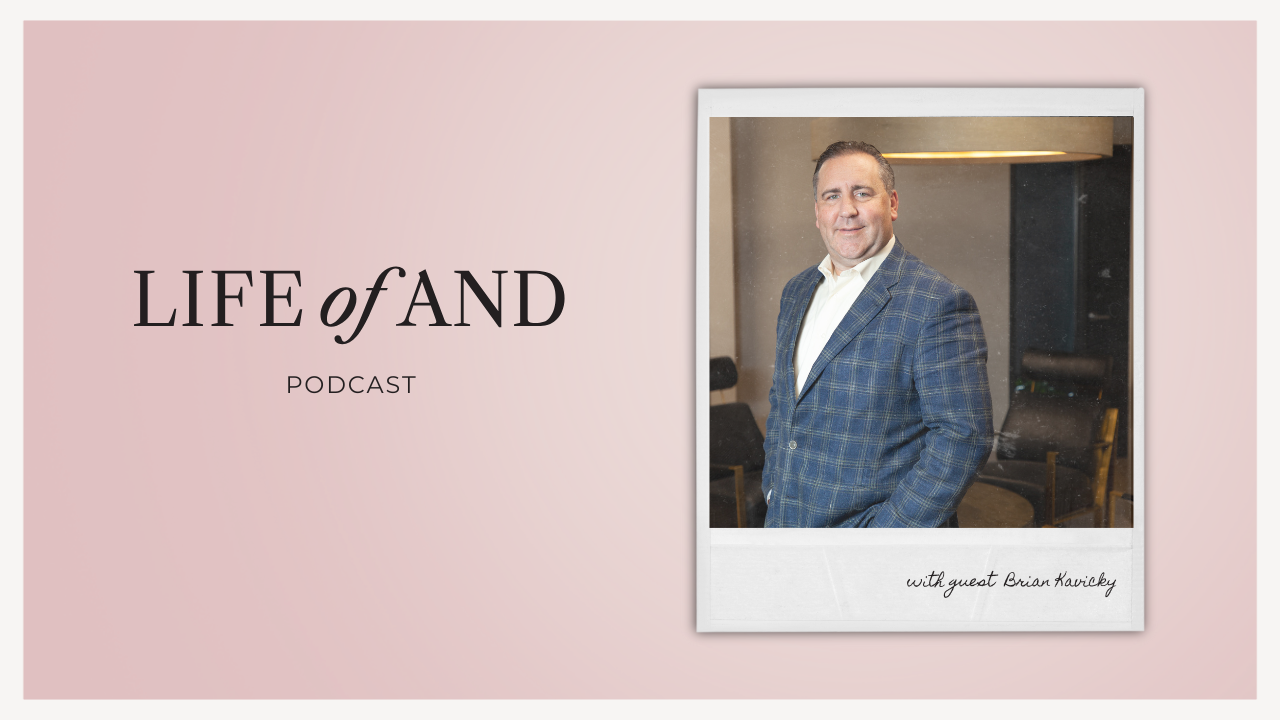
A conversation with my longtime coach, Brian Kavicky
If you’ve ever set a goal that sounded responsible and realistic — and then felt absolutely no energy to chase it — welcome to the club. For years, I lived in the world of incremental goals: 5% more, 10% more, just a little bit better than last year. And you know what? It was exhausting.
In this episode, I sit down with my longtime coach and friend, Brian Kavicky of Lushin, to talk about why bigger goals are often easier to hit, what it looks like to build a true sales culture inside a company, and why sometimes the best thing a founder can do is simply… get out of the way.
And yes — we recorded on a chaotic Friday morning during the holiday scramble, with a kid ready to burst through my door asking where her gloves are. Welcome to my Life of And.
Why Incremental Goals Drain You (And Big Goals Don’t)
Last month, Brian challenged me with something that made me want to roll my eyes and groan out loud:
Stop setting small goals. Set the big, scary ones. The kind you don’t yet know how to reach.
I told him I’d send him my goals by Monday. I sent them the same day because, frankly, I got obsessed.
Here’s what I wrote down:
-
10,000 people going through the Life of And Academy
-
100 executives in my in-person leadership workshop
-
$1M in revenue
The million-dollar piece triggered me — because growing up, I heard over and over that “the first million is the hardest.” But that’s exactly why I wrote it down.
Brian reminded me of something critical:
Massive goals collapse your timeline and force clarity.
You can’t “incremental” your way into a dream life.
But here's the uncomfortable middle part: once you set the big goal, you enter the season where you… don’t know how to get there. And you have to build while you walk.
I’m in that season.
The Hard Part of Big Goals: You’re Guessing at First
My finance brain loves a tidy spreadsheet and a neat little pro forma. But Brian said something that stopped me:
“Your early goals are hypotheses. Not facts. You are making educated guesses.”
Which sounds obvious… until you’re actually building a business.
Right now, I am running experiments — speaking engagements, ERG partnerships, pricing tests, content variations — and I’m getting encouraging signals. But Brian hit me with a truth bomb:
Momentum is not the same as results. Market feedback is not the same as sales.
Ouch.
(But also… yes.)
We talked through how long to test something, what milestones should matter in a 90-day sprint, and how to avoid the trap of being “busy” without moving the needle.
My key takeaway:
My 90-day priorities are my tests. Not a 12-month spreadsheet.
Rebuilding a Sales Culture at Element Three (And Why It Matters)
The second half of our conversation digs into something many founders wrestle with:
How do you get out of being the “chief rainmaker”?
And how do you build a real sales culture inside an organization that resists the word ‘sales’?
When I stepped out of the CEO role in January, I told Brian and Kyler (who now runs the agency) that we had two big problems:
-
We didn’t have predictable sales without me.
-
We had lost our sales culture.
Fast-forward 18 months, and the agency is on track for a record year of new business — nearly $3M — and I’m not involved in the sales engine at all.
Here’s what changed:
1. We stopped leading with “Here’s how great we are.”
Most companies think avoiding “salesy vibes” means avoiding sales altogether.
But ironically, that’s what creates the salesy vibes.
When you walk into a pitch and rattle off your capabilities, awards, proposals, processes… that’s selling in the grossest way.
A true sales culture?
It starts with problem-solving.
The agency shifted its posture from “let us tell you what we do” to:
“Help me deeply understand what’s wrong — and what’s on the line if it doesn’t change.”
And when you do that, trust becomes the sales engine.
2. Everyone participates in finding problems — not pitching solutions.
Writers, designers, project managers — people who didn’t go to business school — learned how to understand client challenges at a deeper level.
When everyone in the company knows:
-
what problem we solve
-
who feels that problem
-
how to begin a meaningful conversation about it
… revenue stops being a silo.
It becomes a team sport.
3. I got out of the way.
This part was humbling.
I’m naturally built to swoop in, fix things, solve problems, and feel important while doing it.
But I knew if I didn’t move out of the room, the next version of the agency would never emerge.
So I stepped back.
Kyler stepped up.
And the team built something better than I could have architected alone.
Brian said it perfectly:
“You traded your ego for the growth of the company.”
Yep. And it was worth it.
What This All Has In Common
This episode surprised me because the themes connected so seamlessly:
-
Setting massive goals
-
Running experiments
-
Letting go of control
-
Building systems instead of heroic habits
-
Choosing long-term growth over short-term ego
Whether you’re building a company, launching a product, or trying to design a life that feels more like want to than have to, the principles are the same.
Big goals clarify.
Experiments teach.
Systems scale.
And letting go makes room for the next version of you (and your business).

[00:00:00] Brian Kavicky: If you were sitting in that meeting where somebody's just going, here's how great we are. Here's how awesome we are. Here's our proposal. Here's all those things. You'd go. Oh this. They were really trying to sell me. They were leading with, here's how amazing we are instead and had accidentally become the yucky salespeople, which were driving people away. [00:00:19] Tiffany Sauder: I'm Tiffany Sauder, entrepreneur, wife, mom to four girls and a woman figuring it out just like you. If you're tired of living a life of have to and finally ready to build a life of want to, then you're in the right place. Come on, let's go Build your Life of And. [00:00:43] Tiffany Sauder: We are recording this on a Friday morning 'cause we're doing it during kind of holiday schedule calendars. I've got a kid in the background that's probably gonna knock on the door saying, mom, where's my gloves? Sort of the mode we're in, we're in. I'm kind of in the middle of. Uh, saucy and, and so we're putting all the things on the calendar where it can fit. [00:01:02] Tiffany Sauder: So Brian, thanks for joining me for this episode. I'm excited to keep rocking through some of the things that I'm trying to unwind in my life, and hopefully use that as an example for others who are trying to figure out how to get through, I guess, what I'm calling today, a saucy season. So welcome back to the podcast. [00:01:18] Tiffany Sauder: I am [00:01:19] Brian Kavicky: happy to be here. [00:01:21] Tiffany Sauder: Well, we've actually had a lot of new people join us on the feed. I've been doing a lot of speaking. Sam and I are in this mode of just like, Hey, how do we get everybody to sort of know what we're doing and understand the Life of And project? So if you are new to the feed, Brian is a monthly guest and I have a partnership with Lushin and I've used him and Lushin for over 10 years. [00:01:43] Tiffany Sauder: I was pregnant with my second, I guess, almost 15 years. She's 14 now. So many years we've been. Doing life together, doing business together. And Brian has been just a critical piece of my personal growth of my business growth, and in particular helping me. I take what was very, I think, an innate sense of selling and turning that into something that I was able to do on purpose, and then also scale that in my organization. [00:02:09] Tiffany Sauder: So it's a little bit about Brian and his organization and how he helps. I wanna cover actually three. Pieces today. One that's personal and two that are just things that we're doing well I think inside of the agency that I stepped outta that CEO role in January that I think others can learn from. So the personal thing I want to talk about is a continuation of our last month's conversation, which is Incremental goals exhaust you. [00:02:37] Tiffany Sauder: 10 x goals, massive goals, things that scare you, that gives you energy. And I wanna continue 'cause I told you in that episode, fine, I'll make mine fine. Here I go and I'll send them to you on Monday. Uh, and I did that, so I wanna talk about that. The second thing I wanna talk about is in the agency, two things. [00:02:56] Tiffany Sauder: The agency business is a service business. It is not a business that necessarily has like massive amounts of like a RR, where you're carrying big contracts. Automatically over into the next year, like you have to keep winning. And we slipped out of a sales culture a couple of years ago, and you've really helped Kyler rebuild that inside of the agency. [00:03:20] Tiffany Sauder: And so I just wanna talk about how you do that, why that's important. And then the second is we will have a record new business year at the agency this year. And I am not involved, and I know a lot of people listening. You know, it's like this founder thing that happens is like, can you ever get yourself out of being the lead horse? [00:03:41] Tiffany Sauder: And it feels like such a risk to move out of that seat and not be that sales linchpin and let a system develop instead. And so I'm just like really proud of the team. And so it didn't know if we could unpack a little bit there, like kind of conceptually, what have they done? Why has that worked so well? [00:03:58] Tiffany Sauder: They'll sell. Almost $3 million of new business, which is just a huge number for us. IN never was able to do that kind of a number on my own. And it's like very cool to see what's being built in my absence. And I talk, I think a lot about how sometimes you have to move aside to let things move to the next level. [00:04:17] Tiffany Sauder: And that's a hundred percent what had to happen here. So can we explore those things? [00:04:22] Brian Kavicky: Yep. [00:04:22] Tiffany Sauder: Okay. Awesome. So let's start with me 'cause that's where I love to start. [00:04:28] Brian Kavicky: That's fair. [00:04:29] Tiffany Sauder: So can you recap a little what we talked about and then maybe just ask me, ask me questions. [00:04:35] Brian Kavicky: So we were talking about everybody entering the goal season, and typically when you enter the goal season, you're looking backwards and you're saying, well, here's what we did this year, so let's add 5%, 10%, and based on this, we can do this. [00:04:49] Brian Kavicky: And what ends up happening is you have this slow dragging incremental growth. And it's all based on what you did, and it doesn't look forward at all of what could you do. So the idea to help your brain figure out what could you do or what should you do? Is to set a much higher goal that you actually cannot figure out how to hit at the start to go. [00:05:13] Brian Kavicky: Ah, I, I have no idea how I would hit that. Shorten the timeframe for how quick you're going to do it in so that you're forced to go. Okay, what are the things that have to happen? What are the things that cannot happen? What do I have to say no to? What do I have to note to say yes to? And all these different priorities become, cover it because you're narrowing your focus as opposed to widening it or just increasing things. [00:05:38] Brian Kavicky: And, and the side effect is you don't have the grind, you don't have the burnout, you don't have the frustration. 'cause there's nothing worse than saying. Well, let's grow by 10% and then doing eight. 'cause you're going, oh, this feels terrible. We didn't even hit this little goal. But if I set a big, massive goal and I fall a little short, well that's pretty cool. [00:05:58] Brian Kavicky: 'cause I mm-hmm. Probably made a lot of progress. [00:06:01] Tiffany Sauder: Okay. So I was a little mad at you, which is where I start. When you challenge me always is like, fine, fine, fine, fine. So that was my internal attitude and maybe external one too. And so I told you I'd send it to you on Monday and I think I sent it to you on Saturday or Sunday. [00:06:16] Brian Kavicky: You sent it the same day. [00:06:17] Tiffany Sauder: Oh, I did. Okay. That night. Yeah. I was like obsessed over it and I was trying to make myself not make it hard. Go with the first thing you thought, and so I wrote down, I want 10,000 people to go through the Life of And Academy and I want 100 executives to attend my. Like mini workshop retreat one day, which is essentially going through the course in real life. [00:06:44] Tiffany Sauder: And then I set a revenue goal, I'm just gonna say, of a million dollars, [00:06:47] Brian Kavicky: which, and that was the most interesting to me. [00:06:49] Tiffany Sauder: Why? Tell me. [00:06:51] Brian Kavicky: Because I remember when we first started working together, you got mad at me then too, because I said, you'll do a million dollars this year. And your reply was, no. My dad said The million dollars is the hardest thing to hit. [00:07:04] Brian Kavicky: It takes forever. But once you hit a million, it's easy. But that's the hardest part. So I was actually glad that you said, well, I'm gonna start with theoretically the hardest part is getting to that million. [00:07:16] Tiffany Sauder: Yeah, so I said a million dollars in revenue. 'cause I have seen it's a velocity threshold and I need to get, there's an opportunity cost to my time both with my kids and you know, my other businesses. [00:07:28] Tiffany Sauder: Like I have to get this to a place where financially it makes sense to me to invest as much time and energy into it as I want to or as I am. And then, yeah, the impact part is I have a lot of ways that I can make money, which is an amazing blessing of my life. I really want to do it through this kind of impact. [00:07:46] Tiffany Sauder: And so having it be a large group of people that I feel like have gone through the course is a big piece of it. 'cause there is a world in this content where you figure out the sales funnel and you get a lot of people to pay for the course, but they haven't actually. Pushed watch on any of it, and I am not interested in that. [00:08:07] Tiffany Sauder: It is not, my heart is not why I'm doing this. I will go do other things with my time if that's what's happening, because that's, it's just not where I'm at right now. So that's why those things together were important to me is I could probably hire somebody. To build that funnel and just spray it into the world. [00:08:24] Tiffany Sauder: But that's different than the impact part I want to have. [00:08:27] Brian Kavicky: Yeah, and that's, that's the, my mission is more important with the than the money. And then the money follows and the money is the least important, which means when we don't worry about it, it tends to be there. [00:08:38] Tiffany Sauder: Okay. So here's where I'm getting a little hung up. [00:08:42] Tiffany Sauder: My background as a financial analyst loves a financial plan that helps me say, okay, well how many units of this product do I think I'm gonna sell? Which means I need to have this many sales motions around those things. I think like that to try to figure out like what's my daily behavior I need to look like and what am I doing in this? [00:09:01] Tiffany Sauder: In between where you've taken this mental leap of saying, okay, great, I'm there. I'm with you. These is my great big goals, but there is this moment where you don't know how to get there. What are the things that I do need to either think, I think I know, or what are the mindsets that I need to have to get myself so that I'm not waking up in May and being like I am still? [00:09:26] Tiffany Sauder: 'cause I wanna get out of testing mode. I've tested a lot of stuff and I am starting to get some theories of victory in my brain, but I'm just kind of trying to figure out, I don't wanna build these massive artifacts like I have it. You know, at like Element Three, we have 20 years of history. It's a totally different point of maturity than where I'm at right now. [00:09:46] Tiffany Sauder: And so what artifacts do I need to have, or what do I need to be looking at to know that I'm either not behind and I've realized that too late or I don't get in such a state of change and experimentation that nothing can really have a chance to be successful. Is my question clear? [00:10:05] Brian Kavicky: Yep. But I don't think you're on the wrong path. [00:10:07] Brian Kavicky: So experimentation is necessary. In fact, the first goals that you set are hypothesis, you know, when you're doing a science experience, it's, what's my hypothesis? I think X can happen. So I'm gonna do this and see if it happens. And if it does, then I know something. If it doesn't, I don't. So you're making educated guesses. [00:10:27] Tiffany Sauder: Mm-hmm. Based [00:10:27] Brian Kavicky: on either history, like in Element Three or nothing. But the first step is acknowledging that it's a, it's a guess. And so you do the experiment and you learn from the experiment and you say, okay, what did I learn? Well, I learned that that wasn't enough to hit my momentum. That was okay, plenty or, and you just start iterating on that. [00:10:50] Brian Kavicky: I think where the experimentation sort of funnel goes wrong. Is people just keep trying and trying things instead of just honoring the numbers they have and going, oh, I gotta do a lot to hit this, because now I have evidence that this is right. And the more that you honor it, the more you actually figure out efficiencies later. [00:11:12] Tiffany Sauder: So I think I know, I think what you're saying, like one of my hypotheses is that there's all of these employee resource groups that already exist because a, a challenge in my world is. Working women are incredibly busy, so putting something additive on their calendar is very difficult to like coordinate all of that. [00:11:30] Tiffany Sauder: And so my observation is a lot of companies already have a motion where women are getting together inside, there's a calendar. You know, that's sort of an expectation on the calendar. They have an opportunity to go to it. So putting this program into like a one year. Easy to implement quarterly live presentation with supplemental materials alongside. [00:11:52] Tiffany Sauder: So it's like, Hey, you really are ingesting this. It's not just like you showed up and got a little encouragement in the pat on the butt. Like this is literally about leveling up professional women so that I've had maybe six conversations and they've gone really well. I told Sam I wouldn't have [00:12:08] Brian Kavicky: 30 [00:12:09] Tiffany Sauder: of these. [00:12:10] Brian Kavicky: Well, [00:12:11] Tiffany Sauder: what does [00:12:11] Brian Kavicky: really well mean? [00:12:12] Tiffany Sauder: What? [00:12:13] Brian Kavicky: What does really well mean? [00:12:15] Tiffany Sauder: I would say my assumptions are being validated, so my assumptions were that there's this underlying feeling that the time is not being used as productively as it could be. The organizers have like tap their network of cool people who can speak to this group, and now it's like kind of a chore and that my price point. [00:12:42] Tiffany Sauder: Is a pretty easy choice. I've had a couple of people say, oh, I thought it was gonna be more, which was my goal. I wanted the financial piece of it to be like, oh, that, yeah, this is easy, no problem. And more like, do you want this? Let's make the financial part a no brainer, because I don't want that to be the sticking point. [00:12:59] Tiffany Sauder: So that has been the really well, and I would say half of them moved. Where I would say they said like, this is my next step and I will be back to you a couple people like, thanks. I'll show this to other people internally, but there wasn't as much of a clear next step, so I'd say 50% move to the next step. [00:13:20] Brian Kavicky: So I would say right now you have no data. And so unless those next steps convert into something that says, this is how many conversations it took to get to this. Transaction to occur. Mm-hmm. You're still at zero data, which is gonna make it hard. Um, well, how do you, [00:13:39] Tiffany Sauder: how can you say it's zero data? I do. [00:13:41] Tiffany Sauder: How [00:13:41] Brian Kavicky: much money? How much money has come on? How many signups have you gotten? Zero. So you're, you're at a hundred percent of nothing right now and, and, and, and this, you're so encouraging. This is a very real thing just for everybody to know. This is a very real thing. Do not confuse momentum and direction with results. [00:14:00] Brian Kavicky: Just because I feel like something is going well, uh, doesn't mean that it is. It means that I might have momentum, I might have all these things, but there are so many things that we go, wow, this is a great idea. Apple made the iPad in the Newton and people were like, this is awesome. And it died 'cause nobody bought it. [00:14:20] Brian Kavicky: Uh, and then later when they made it an iPad at the right time, it was perfect. So, [00:14:25] Tiffany Sauder: but is market feedback and momentum are those precursors to results? [00:14:31] Brian Kavicky: They, they can be, but you don't have any datas to say that they are right now. You don't know the correlation between, I got positive feedback and I got transactions, so we don't even know. [00:14:42] Brian Kavicky: If positive feedback is a positive thing or negative, it might be a bad, right, but in [00:14:46] Tiffany Sauder: two weeks I could know that whether these, you know, worded [00:14:49] Brian Kavicky: or not. Right now you have no data and so this is the point where you go, I either have to accelerate things to see if I can get more data or I have to diversify my approach to see, well, if this doesn't convert the way that I need to, where else would I go? [00:15:05] Brian Kavicky: What else would I do? [00:15:06] Tiffany Sauder: How long would you, because I've probably. I mean, I had those six conversations this week, so I feel like I'm early. To me, I would say I'm early. I would wanna stay in this test for probably a month. Is that too long? [00:15:23] Brian Kavicky: No, but what are you gonna do if the test is successful? [00:15:26] Tiffany Sauder: If the test is successful? [00:15:28] Brian Kavicky: Yeah. What's phase two? [00:15:29] Tiffany Sauder: Phase two is that we. Develop the like client service motion for that product so that they're supported and I go back out into the market to another 30 companies and see if I can, if the conversion metrics hold similarly to like the first class that we brought on, thats probably what I would do. [00:15:57] Tiffany Sauder: Do [00:15:57] Brian Kavicky: you have those 30 identified? [00:15:59] Tiffany Sauder: Yeah. I have a massive list of people. [00:16:03] Brian Kavicky: Okay, so that's positive. And you, are you ready to execute on the, the servicing platform? If the answer's yes, [00:16:10] Tiffany Sauder: yes. It's pretty built. Mm-hmm. All right. [00:16:13] Brian Kavicky: That, so those are the right two things to do to say if this works, here's my, so you're successful when you know your lever. [00:16:21] Brian Kavicky: So if I know if this occurs, this is the lever I pull. If this occur, this is the lever pull. And then, so that is what happens if this goes well. Do you have the lever of, if I get nothing out of this. What lever are you pulling? [00:16:34] Tiffany Sauder: Well, I probably panic a little bit. The other motion that is working is me speaking in front of groups and I did a talk this week and 70% of the room converted into the course, which was a a really good data point. [00:16:56] Tiffany Sauder: My personal challenge is that I love to do that. And I can do it within an hour and a half drive of my house very freely and easily. But going on the road as a speaker violates some of my own just boundaries and parameters right now of what I need from my family and what my family needs from me. So I've panic a little bit, being like, Hey, if the major motion is gonna be speaking, how do I do that in a way that there's not like just so much saturation right here, but I'm probably. [00:17:27] Tiffany Sauder: I mean, there's a lot of people that live within an hour and a half of my house, so, you know, I could probably spend some time just doing that and it would be fine. So I know that motion is working. I feel like I'm getting much crisper in telling the story and in getting people to be like, oh, I, I understand what you're doing. [00:17:45] Tiffany Sauder: I understand the problem you're fixing, and I'm, I'm getting that repeated back to me. I feel like more effectively than I was four months ago. Yeah, [00:17:55] Brian Kavicky: but even with the speaking, you had 70% of a room of what size. If this became the only thing, how many talks would you have to give with how many people in attendance to get to the number? [00:18:07] Brian Kavicky: If 70% hold true, [00:18:09] Tiffany Sauder: and that's the, that's the second. I think the second thing I would say, okay, if this is the motion that Sam and I need to make really effective and efficient, and this is relationship with speakers bureaus and booking agencies and event companies, it's like a different outbound motion of who I'm. [00:18:25] Tiffany Sauder: Getting to understand what I'm doing, different marketing package, all that kind of stuff. [00:18:28] Brian Kavicky: But the idea of experimentation isn't going away. You have to do this, and you have to have multiple areas that you're experimenting in all at the same time, so that if one doesn't work, you have enough data to say, here's what it takes to shift to this, and then you can make the business decision of, do I go all in or not? [00:18:49] Brian Kavicky: You know, if it's competing with my values and I can't get to the value. Maybe I have to go back to the drawing board and say, well, this is not the product for the market right now. [00:18:58] Tiffany Sauder: I think my takeaway from this is that my priorities become my tests and my pro forma is not necessarily a 12 month pro forma. [00:19:05] Tiffany Sauder: It's more like in the next 90 days, this is the momentum we need to see. These are the sales we need to see, and that will set the velocity and like almost like mini funnel of the next quarter of like, okay, let's test this with the second. Motion of prospects through this or lists or people that are a little bit further out of my center of influence and see how the metrics hold up. [00:19:29] Tiffany Sauder: So that's helpful for me. I wanna like have this neat and tidy spreadsheet with all of these sort of things and it scratches an itch for me to have all that together, but I think it's a waste of time. [00:19:40] Brian Kavicky: You'll need it eventually, but not at this point, [00:19:43] Tiffany Sauder: but probably not in 2026. Yeah. I wanna take a quick moment to thank my partners at Share Your Genius. [00:19:51] Tiffany Sauder: For the past four years, they have been an incredible part of my journey behind the microphone. Share Your Genius is a content and podcast production agency that helps leaders and brands bring their message to life. So whether you're trying to find your voice, develop a content strategy, or get your leader behind a microphone, they're gonna help you make it simple, strategic, and impactful. [00:20:12] Tiffany Sauder: Anything else people need to know about that? [00:20:15] Brian Kavicky: Part of the test is saying when you think you have something, and you ran into this at the agency, is that when you create something and you have an idea. You believe that it's the greatest idea ever, and that is what's called inventor syndrome, where somebody goes, yeah, this is the thing. [00:20:34] Brian Kavicky: Everybody's gonna buy it. It makes total sense. And you go, you enter the world with this mindset of, of course this is going to work, which is what you should do. The danger is, is that you misinterpret market feedback as momentum when you actually don't have it. So just be careful as you like. There's two very different things. [00:20:53] Brian Kavicky: I did a talk, 70% converted, that is market feedback. Mm-hmm. I met with these people. They said, this is a great idea, but they're gonna get back to me. I don't have market feedback yet. Mm-hmm. Because I have no conversions. So be very careful because the product could change, the market could change. All these things could change. [00:21:12] Brian Kavicky: And at this point, you need to be very in tune with what am I learning? Mm-hmm. And where do I have to iterate in order to meet the needs of the marketplace, which you've done. A lot of this is, it's clear that people say this is needed. The next step is, but will they pay for it? [00:21:28] Tiffany Sauder: Mm-hmm. [00:21:29] Brian Kavicky: So just everybody has to have that caution because it's not, what's wrong with the idea. [00:21:34] Brian Kavicky: 'cause the idea is really usually a good idea. It's what the marketplace thinks about the idea, not you. [00:21:40] Tiffany Sauder: And I think, yeah, I've learned a lot on the pricing side. 'cause you know, she loves to be premium. Sort of my first back about the world. I love to buy premium and I love to be premium. And I started to realize like, I have to make this really easy financially because I, and I understand as a owner, I don't wanna put. [00:22:01] Tiffany Sauder: A hundred thousand dollars into some of these programs. Like it just doesn't make sense. I need to use those dollars in other areas. And so I started to realize, oh, it can be a premium experience. It can be a premium product. This can be a premium moment for this audience. I have to figure out how to do it at scale so that I can do that from a quality perspective. [00:22:19] Tiffany Sauder: And so that started to inform the way the product came together. 'cause I don't wanna dilute. I think I'm, I don't know, this is probably narcissist, but I feel like I'm known for that. Like I, we do things at a really high level. Yeah. And I wanna be able to continue to do that. So that forced me to think about how do I make an access point that is lower cost and easy to say yes to, but not dilute the experience. [00:22:42] Tiffany Sauder: So as I kind of put. Some of my own boundaries. And again, I think reacting to some of that market feedback was they just couldn't say yes at a higher price point. So we'll see if they can say yes at this price point. Okay, well we'll keep you updated or we won't, if you guys abor us at all. But it's, I think this is the real stuff is these are the things we're really trying to solve and I care about giving guys like really practical ways to think through. [00:23:10] Tiffany Sauder: When you're exploring, I have so many people come up and say, I wanna try this business. I wanna, I had a young woman say, you know, how do you manage hiring into growth? And all those kinds of things. And so this is the real stuff. So, okay, let's talk. A couple of things I think are going right at Element Three that I don't know, was it 18 months ago? [00:23:30] Tiffany Sauder: Kyler and I, Kyler and I meet with Brian monthly or quarterly. Kyler runs the agency day to day. Brian and his team. Do sales training. They work with our account team. He meets with Kyler in a sales management capacity and like helps us, you know, really is in tune with the agency day to day. It was 18 months ago, we sat across from you at lunch and said, we've got two problems. [00:23:53] Tiffany Sauder: One is we don't have control over our pipeline without Tiffany involved, and two, we've lost this like sales culture that we had. We needed to reestablish and rebuild that so. [00:24:07] Brian Kavicky: Was it? Yeah, it was, it was 18 months ago that that conversation was happening. It's going, it's almost 11 months now, where I got the phone call from you where you finally got angry about it. [00:24:19] Tiffany Sauder: Oh, that's probably right. Yeah. Where I was like, this is, you were frustrated. Yeah, I was frustrated, but I also told Kyla that he, he, he, he hears it. But yeah, I was frustrated. So we had lunch last week and. Uh, Kyler was like, oh my word, the sales culture's totally back. And I wanna talk about what that means and why that's important to an environment that's like winning. [00:24:45] Tiffany Sauder: And right now with the advents of AI coming into our industry, like agencies are struggling and, and. Our business will always be hard, but we are not struggling and I think this is a big piece of that, so I just wanna talk about it. I don't think we always do. It's not a used car salesman. Like we're pushing a bunch of things on people that don't need it. [00:25:08] Tiffany Sauder: So just talk about what is a sales culture? We, everybody's gotta be on board with kind of that ethos and how do you build it? What's it look like and what does it even mean? [00:25:18] Brian Kavicky: I think it's easier to define if you think about what isn't a sales culture. So a sales culture is a company that believes that the reason that they're successful is by the way that they operate. [00:25:30] Brian Kavicky: So they focus on operations, they focus on operational efficiencies, they focus on quality, they focus on all these things. And their thinking is that if I do all these things in, in an agency world, if if we put out great work. Then customers will flock to us. People will stay, we'll have great retention, we'll have great profits. [00:25:51] Brian Kavicky: And what happens is they realize that none of those things like leading through operations is never going to get you where you needed to get to. And so the realization that people face is, oh, well, but we wanna have good quality. We wanna do work, we wanna do those things, but we also need to survive and grow and be better. [00:26:12] Brian Kavicky: And that is. When they make that shift and that decision to say, well, if it can't be operations, what is it they sort of land on? Well, it must be sales. And then what happens is they hit this wall where they go, but we don't want to be that. We don't want to be salespeople. We don't want to focus on sales. [00:26:31] Brian Kavicky: We don't want to have to do all that. There's this, I don't understand and, and the missing piece and what that gap is. Only comes from a misunderstanding of what sales is. People just think, because I think of sales as used cars guy or 'cause I think of sales as a yucky thing. I believe that there's a gap, but doctors sell, hospitals sell. [00:26:55] Brian Kavicky: Like there's all these things out there helping the world that people are like, oh my gosh, I'm so glad that they exist and they don't realize they're in a sales funnel. Because it's not called sales. And so when a company says, Hey, we need to bring this back, it's, it's not, we need to be focused on revenue 'cause they always were. [00:27:14] Brian Kavicky: It's that we need to be focused on a different way of achieving that revenue than through operations. [00:27:20] Tiffany Sauder: Mm-hmm. So let's go back to using the agency as an example. If in a non-sales environment we're focused on things like work quality, which is important, but like, hey. Our future will rest on our enthusiastic and complete and excellent completion of this work. [00:27:40] Tiffany Sauder: If that's not what it is inside of our walls as an example, what are they focused on instead, or in addition to? [00:27:48] Brian Kavicky: So there's a, the, the shift of how do I go from one to the other? And it's, it's a super weird phenomenon, is that when people say we don't want to get there through sales. They end up being the salesy thing that they were trying to avoid. [00:28:04] Brian Kavicky: So what happens is they put pitches together and they tell people, this is what we're going to do. That's amazing. And they say, look at all these great things that we did, and here's how awesome our people are, and all those things. And if you were sitting in that meeting where somebody's just going, here's how great we are. [00:28:21] Brian Kavicky: Here's how awesome we are. Here's our proposal, here's all those things. You'd go, oh, this, they're really trying to sell me. And so that is where you end up. And so the unwinding is to go, well, that is not what you want it to be. What you really want to be is a group of problem solvers. Yeah. And, and paying attention to what is the client's issue and what is the depth of that, and do I really understand what the problem is? [00:28:46] Brian Kavicky: And then do I understand that so well that I'm able to tell them how I'm going to fix that problem in a way that they say, oh my gosh, we will pay you to do that. And they have trust and faith to do it. That's actually what selling is. So the journey was just helping your team realize that at their core, their problem solvers, they weren't leading with the problem they were leading with. [00:29:09] Brian Kavicky: Here's how amazing we are instead and had accidentally become the yucky salespeople, which were driving people away. [00:29:16] Tiffany Sauder: Mm-hmm. Well, even going back to your doctor analogy, my brain was just going through this where it's like, if I was. Like my athlete we're at the orthopedic surgeon sometimes and if he was like going through a catalog of surgeries and like awards and customer feedback on like different things and like kinda like, which surgery would you like Ainsley? [00:29:39] Tiffany Sauder: It would feel so strange versus exactly what you're saying was like, Hey here. What's wrong? What's going on? Let's investigate this. Let me ask a bajillion questions about your exact situation and then tell you what it is. I think we ought to do together. He's going to get to the place where we have some type of a therapy treatment or a surgery or whatever needs to happen, but it's all through the lens of how can I help you versus like what you were just saying. [00:30:04] Tiffany Sauder: Here's the buffet of things I could do, and the off chance that you have some pain and when you start to teach your people and yourself of. When I have an honest pursuit of understanding the situation, the environment, and where that company wants to, needs to, has to get better, then I can activate all the things I know professionally to be able to help you or other people I know. [00:30:27] Tiffany Sauder: And then you start to become a really helpful extension of their problem solving. And so it's, yeah, it's exactly what I'm just like exporting, like it's exactly what you're talking about. And when you have writers and designers and project managers and people who. Are doing things in business but didn't go to school for business like entrepreneurs and finance people. [00:30:48] Tiffany Sauder: The idea of selling, there's like this, this puy reaction to the whole thing. And so recasting that of like, it is about just solving problems and that's how you create this culture where. As the sales, as the founder, you don't feel alone in generating revenue across the organization. A sales person doesn't feel alone in generating revenue. [00:31:11] Tiffany Sauder: Revenue. It becomes a true team sport and you're putting out amazing work. Everybody understands the problem that you're solving, and it's just like the velocity starts to completely change then it being just like one or two people that are worrying about stressing about. Doing all the things so it changes so quickly. [00:31:33] Tiffany Sauder: I think the other piece that can be hard for people to get comfortable with is the accountability part that comes with a sales culture. So like, you know, saying, we want you to reach out to one person in your network every quarter, and just the accountability to do some of those things, I think can be uncomfortable and foreign at the beginning. [00:31:56] Brian Kavicky: But, but that goes back to the bias of, but that sounds like prospecting, and that sounds like a sales thing. Instead of No, we want you to go out there and find people who have problems, who need those problems solve and want to find somebody they trust to solve that. So when you change the bias of what that is, people will do it, but they don't. [00:32:19] Brian Kavicky: So accountability is not real. You don't build structures of accountability. You don't do that. You only do it as a starting point because accountability is helping somebody realize what is important. So nobody held you accountable to take a shower today. You just did it because it was important. You don't have a tracker sheet or anything like that. [00:32:39] Brian Kavicky: So the accountability is just a small step to have people do it anyway, even though they don't really want to, and they, they're like, this is yucky. So that they realize, oh wait, I was misinterpreting what this was. This wasn't what I thought it was gonna be. And this is a much easier, much lighter, much more fun conversation that I should be having. [00:33:00] Brian Kavicky: Mm-hmm. Oh, I'll do this all the time now. So it's really just the uncomfortable of, we're gonna make you do this right now, just so you know. It's not as bad as you think it is. Yeah. And you'll actually love doing it. [00:33:12] Tiffany Sauder: Love it. So how does this tie in? And I don't know if this is a simple answer and I'm sharing the Element Three example of our record new business year, not to brag, but to provide. [00:33:24] Tiffany Sauder: A beacon of hope for those of you who feel like you're in this place where it's like it's all on my shoulders. And people told me so many times, like, so you go, so goes the agency. Like this is not the kind of business you get a new leader for. This is not the kind of business that you can develop a sales motion for. [00:33:41] Tiffany Sauder: Like that is not this kind of business, Tiffany. And we have proven them wrong by, I'd say a lot of discipline and having great people around us. So how does that happen? And I'm. Self-conscious. It's probably not a three minute answer, but where do you start with something like that? And I don't know, what can you share in this medium, Brian, that might give people an idea? [00:34:05] Tiffany Sauder: I don't even know where to tell them to start. I would be like, hire Kyler, [00:34:09] Brian Kavicky: but don't hire Kyler. Well, but remember, what did you hire Kyler for? What? Why? To solve [00:34:13] Tiffany Sauder: different problems that I knew how to solve, [00:34:15] Brian Kavicky: but what problems were they [00:34:17] Tiffany Sauder: to figure out how to scale revenue? I'm like, I always solved it with myself. [00:34:20] Tiffany Sauder: Kyler [00:34:20] Brian Kavicky: was not there to scale revenue when you hired him. [00:34:24] Tiffany Sauder: What did I hire him to do? [00:34:25] Brian Kavicky: Yeah. Initially [00:34:27] Tiffany Sauder: I hired him to give me flexibility. [00:34:33] Brian Kavicky: Yeah. Kyler was the, he knew how to understand data. He knew how to look at things from a different lens than you did. He was the sort of the concrete thing. And he was a problem solver by looking at customer problems through a different lens than you had on the team. [00:34:47] Brian Kavicky: Mm-hmm. And he learned to use that to sell over time and how to position things and how to position solutions to that. And became very good at managing customers and growing customers because of his understanding of, if I deeply understand the problem and I communicate to the customer in this way, they trust me to solve it and give me the revenue to that. [00:35:09] Brian Kavicky: Thus fast forward. Now that he can do that at a customer level, you developed him into a leader that can do that at the company level. At the same time, because the leader at the company level is not only doing that with customers, but he's doing that with the team. And he's saying, here's the problem we're solving. [00:35:28] Brian Kavicky: Here's what we're gonna do to fix it. And he's selling the company grocery through the lens of problems first. Mm-hmm. And so that's where the scaling of Kyler happened. Is that he, he started with, I understand these issues that nobody else understands to, oh, now you can do that on a wide scale. Mm-hmm. [00:35:47] Tiffany Sauder: So I think as it relates to this issue, I'd say some of the things I had to do was just to get out of the way. [00:35:56] Tiffany Sauder: And like really get out of the way. Because every time there was a problem I could solve, I wanted to come in and solve it with me. Made me feel important. It gave me something to do and I would like feel bad that it was hard for him to solve. I was like, I don't know. I can probably just go do it. But I was like, I have to get out of the room because that can't be the answer. [00:36:13] Tiffany Sauder: And. He knows that, but it's hard for him to say that to me. So I just need to go away so that he can solve this and let them spend some money and let them figure this out. And they are very data oriented. So I was able to see very clearly, like exactly what we were talking about, the beginning of me, of them saying, we think this is what can happen. [00:36:36] Tiffany Sauder: These are the interim funnel metrics that we're gonna set for ourselves to see how close or far away we are from some of these. Guesses of impact. So it was very controlled, but nonetheless, it was a bet and an experiment and required a lot of testing and data and clarity. And for me to get outta the way, like I had to, I had to move. [00:36:56] Brian Kavicky: But this whole topic just went full circle of, I know. Back to your experimentation of totally, you made the choice to trade your ego for growth of your company and decided to step out of the way. You use data for your experiment that said, I am doing the right things because I'm seeing evidence that it is working on that which caused you to stay out. [00:37:16] Brian Kavicky: Mm-hmm. And allow the progress to occur. [00:37:19] Tiffany Sauder: Okay. So true. I didn't know that this conversation's going to be so connected, but in fact it is. So yeah. In the season of growth and goal setting, I think there's so many people out there being like, yeah, go for it. But like how actually, like in that. Three inches above the ground where your behavior has to actually do something. [00:37:38] Tiffany Sauder: Like what do you do? So anyway, if you're stuck or you don't know what to do, or you feel like you're hitting your head on your own ceiling of complexity, that is what Brian and his team does. There's a link in show notes. I just have to pimp you out because it's amazing what you've helped me do and help me grow. [00:37:53] Tiffany Sauder: And you've been a huge piece of that. So anyway, if you want some, Ian and the team, please reach out to, to Brian. Brian, thanks for this. I always come into these a little tired and a little confused, and I exit being like, okay, I'm clear now. She's ready to go. So it's 9 0 2 and I just had a two hour meeting get canceled, so I'm gonna go get to work. [00:38:11] Brian Kavicky: All right. Have a great day. [00:38:13] Tiffany Sauder: That's good. You too. Thanks for listening to the Life of And this is your weekly reminder to keep making bold choices, saying clear yeses and holding space for what matters most. As always, if you like this episode, I'd love for you to drop a review and share it with your friend. [00:38:29] Tiffany Sauder: It's the fastest way that we can grow the show. Thanks for joining us. I'll see you next time. 🎙️ View Transcript