293: The Secret to How Busy Working Women Can Build a Life They Won’t Quit On
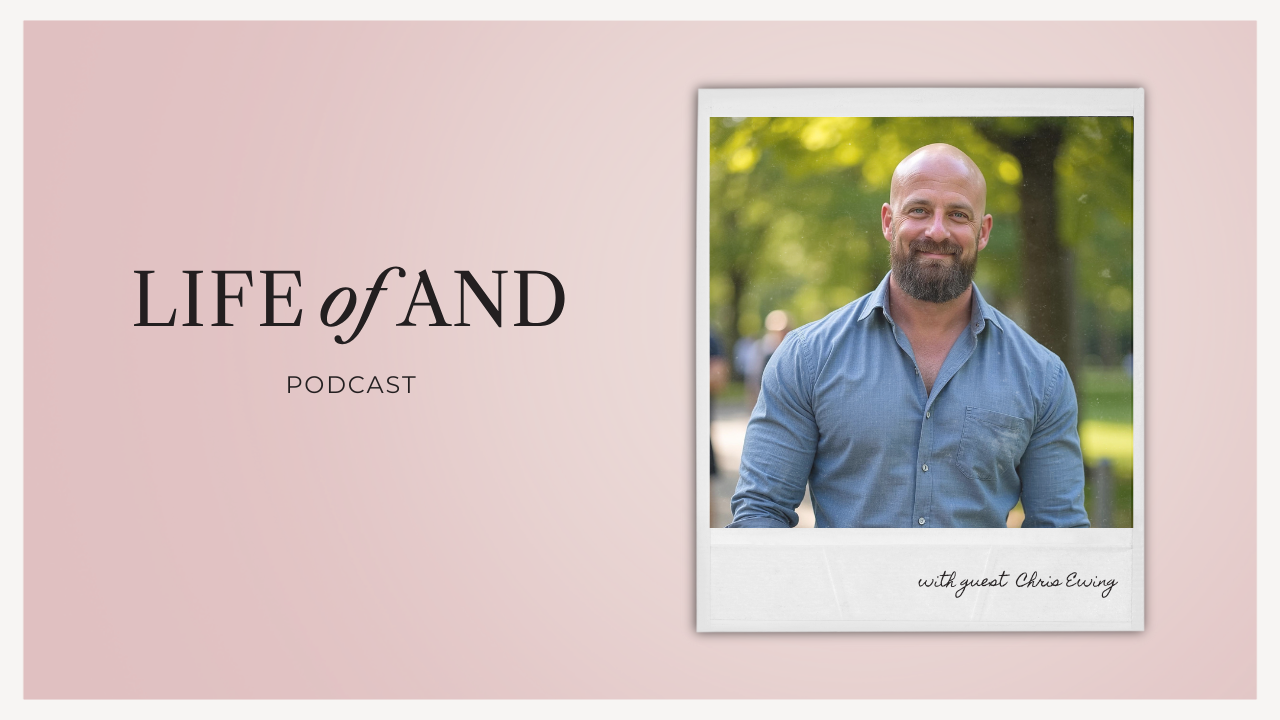
APPLE PODCASTS | YOUTUBE | SPOTIFY
Motivation Is BS: What Really Builds Resilience (Especially for Working Moms)
with Strongman Competitor + Resilience Coach, Chris Ewing
If you’ve ever tried to overhaul your habits while also running a household, a business, a career, or a carpool — you know this truth:
motivation disappears the second life gets loud.
One bad night of sleep, one kid meltdown, one “surprise” school email, one dog accident, and poof — that laser-focused, goal-crushing version of you evaporates.
So when my guest, nationally ranked strongman competitor and resilience coach Chris Ewing, opened our conversation with:
“Motivation is actually bullshit.”
…I knew this episode was going somewhere good.
Because if working moms are anything, it’s this:
elite performers in environments with zero margin for error.
And we don’t need more hype.
We need systems. Vision. Habits. And resilience that actually holds up on a Tuesday afternoon when everything is on fire.
The Real Reason We Quit (and It’s Not What You Think)
Chris said something that stopped me in my tracks:
“Quit happens because we don’t have an established vision. Goals are just mile markers. Vision is what you’re willing to fight for.”
Woof.
Okay, sir. Calm down and also please tell me more.
Because he’s right.
Most working moms have goals.
We want to eat healthier. Move more. Sleep better. Have more patience. Make more money. Grow our careers. Raise great humans.
But vision?
As in — why are these things worth the fight?
That part gets swallowed up by:
-
Laundry
-
Deadlines
-
Kid drop-offs
-
Work Slack pings
-
Dinner
-
Evening activities
-
Homework
-
And trying to maintain emotional stability when everyone in your house has a need at the exact same time
And Chris’s point is:
Without vision, discipline has nothing to anchor to.
Resilience Isn’t “Being Tough.” It’s Advancing Despite Adversity
Chris defines resilience this way:
“Resilience is advancing despite adversity. Not avoiding it. Not waiting for it to disappear. Not wishing for a perfect season.”
This is… extremely working mom energy.
There is no such thing as:
-
a quiet week
-
a predictable day
-
a calm morning
-
a stress-free season
We don’t get to wait for ideal conditions.
We build resilience in the chaos, not outside of it.
And the part that made my brain light up was this:
“Failure is the stimulus that produces success.”
In strength training, the muscle ONLY grows when it reaches failure.
Not when you “do your best.”
Not when you “try really hard.”
Only when you hit the point where you can’t do one more rep.
And Chris’s point is… the same goes for life.
The Vision Exercise Every Mom Needs
Chris and his wife use a vision worksheet in their coaching, and one of the questions I found incredibly powerful is:
“When you are on your deathbed, what will you wish you had created, experienced, or become?”
Not:
-
What do you want next year?
-
What do you want for your kids?
-
What do you want for your career?
But:
What will matter when all the noise is gone?
Because THAT is what helps you say:
-
No to what doesn’t align
-
Yes to what’s required
-
And “not right now” to the good-but-not-essential things that drain you
This exercise also changes the dynamic with your partner.
Chris made this point so clearly:
Your vision and your spouse’s vision are NOT the same mountain. They’re connected — but they are separate.
Once you accept that, communication gets clearer.
Expectations get more realistic.
And resentment starts to melt.
The Habit That Changes Everything: Your Morning Routine
I know, I know.
You’ve heard “morning routine” advice a thousand times.
But Chris reframes it in the simplest, most powerful way:
“If you start your day with chaos, you will end your day with chaos. If you start with calm, you have a fighting chance.”
He’s not talking about an hour-long routine with meditation, journaling, lemon water, and a monastery-level of silence.
He’s talking about 10 minutes of stillness.
Or one calming ritual.
Or one consistent action that reminds your brain:
I am in control of some part of this day.
Because when everything else feels unpredictable, consistency becomes a lifeline.
My Own Confession: The Half-Quesadilla Problem
In full transparency, I put myself on the hot seat in this episode.
After almost a year of working intentionally on my fitness and health, I hit a season where life just exploded:
-
Moving houses
-
Supporting teens with big transitions
-
Massive season in my business
-
My husband's career hitting max intensity
-
No margin, anywhere
And suddenly… the half quesadilla at 7:30 pm started happening.
Not because I was hungry.
Not because I didn’t know better.
But because I was rebelling.
Against discipline.
Against structure.
Against one more thing in my life that needed a plan.
And Chris — annoyingly but accurately — pinpointed exactly why:
It wasn’t a food problem. It was a vision problem.
And a mindset problem.
And a “this season requires more from me than I like” problem.
He reminded me of something I needed to hear:
“Everything is a you problem — but that’s good news. Because it means you have control.”
Ouch.
Also: true.
Why Working Moms Struggle to Prioritize Themselves
Chris said something that I want every mom to read twice:
“Society tells women the good mom dies for her children. Not that the good mom goes to the gym.”
If that doesn’t punch you in the gut, check your pulse.
We are taught:
-
Sacrifice = virtue
-
Exhaustion = proof of love
-
Self-care = selfish
-
Our needs = negotiable
But Chris reframed it:
“Is it more selfish to take care of yourself now, or to force your children to take care of you later?”
Mic. Drop.
The Takeaway: Resilience Isn’t Found. It’s Built.
And it starts with:
-
A vision
-
A simple routine
-
A reason worth pushing for
-
A willingness to fail forward
-
And the clarity to say:
“This matters enough to fight for.”
If you’re feeling stuck, overwhelmed, scattered, or like your discipline has fallen apart piece by piece — this episode is one you need.
🎙️ Listen to the full conversation with Chris Ewing →
You will walk away with:
-
A new way to think about resilience
-
A practical starting point
-
A mindset shift around motivation
-
And possibly… a stronger morning routine
And if you're also sabotaging yourself with evening snacks — don’t worry, friend. You’re not alone.
[00:00:00] Chris Ewing: Motivation's actually bullshit. To be totally honest. It takes one phone call, one text message, stubbing your toe, the dog peeing on the floor. It takes one act to remove all stimulus. Motivation is emotions. Just energy and motion if you have a reason. Then when my body hurts or I'm tired, I think, well, why the hell am I doing this in the first place? [00:00:21] Chris Ewing: I'm doing it because I need to be the strongest version of myself. [00:00:25] Tiffany Sauder: I am Tiffany Sauder, entrepreneur, wife, mom to four girls, and a woman figuring it out just like you. If you're tired of living a life of half to and finally ready to build a life of want to, then you're in the right place. Come on, let's go Build your Life of And. [00:00:48] Tiffany Sauder: Hello everyone and welcome back to another episode of the Life of And Podcast. I am your host, Tiffany Sauder. If you're new to the Life of And podcast, I just wanna say welcome. We have had lots of new people join us over the last few weeks and I'm just so honored that you're here, that you gimme your time as we really chase this whole idea of a Life of And so this is always a place where we dive into what it really takes to build a life where you don't have to choose between ambitions and relationships. [00:01:13] Tiffany Sauder: Your business and your body, and your dreams and your sanity, we'd like live in this and. Um, and today I have a guest who's gonna, I think, help us turn up the volume on one of the most foundational pieces of that puzzle, this idea of resilience. [00:01:26] Chris Ewing: Yes. [00:01:27] Tiffany Sauder: Uh, my guest, Chris Ewing. Chris, welcome. [00:01:29] Chris Ewing: Yep. Yep. I'm excited to be here. [00:01:31] Tiffany Sauder: He's a nationally ranked strong man competitor. I was sort of like imagining when you walked in the door, you might just like. Compulsively lift me off the ground or something. Yeah. [00:01:39] Chris Ewing: Right, right. Everybody thinks I just lift stuff on. Yeah. Flip tables [00:01:42] Tiffany Sauder: and I don't know. So, uh, he competed for 15 years over and has worked for over 20 years with elite athletes, corporate teams, high performers to build habits, mindsets, and strength. [00:01:54] Tiffany Sauder: And I think we can say this idea of habits, mindsets, and strength. Applies to more just our, than just our physical body in life. [00:02:02] Chris Ewing: Oh yeah. Oh yeah. So I [00:02:03] Tiffany Sauder: think we're gonna explore that. Um, he is the co-founder of Odyssey Resilience with your wife. Is that correct? [00:02:08] Chris Ewing: Yes. [00:02:09] Tiffany Sauder: So very cool. Uh, and he helps people like you and me take what's working in the elite performance world and apply it to our real lives. [00:02:17] Tiffany Sauder: Yep. We working moms are elite performers of a different kind. Yes, [00:02:20] Chris Ewing: definitely. Definitely. [00:02:21] Tiffany Sauder: So, uh, in our work, our motherhood and our business, so. Chris, uh, I'm excited to welcome you on. I think we're gonna talk a little theory and then I told you I think I'm gonna put myself in the student's seat and we'll see what happens. [00:02:32] Chris Ewing: Heck yeah, this will be fun. [00:02:33] Tiffany Sauder: So, thanks for joining me. I, I wanna start with like, you know what kind of crazy you must you be to decide to be a strong man competitor? Like, I just, like, that's not why we're here, but I'm just like curious, like that's a very specific outcome in life. [00:02:46] Chris Ewing: It is. And if you take like the whole fitness industry Yeah. [00:02:49] Chris Ewing: It's about half of 1%. Yeah. 'cause it's [00:02:52] Tiffany Sauder: insane. [00:02:52] Chris Ewing: It's pretty awesome. So it's pretty awesome. Yeah. I grew up, um, so my dad was a bomber pilot. Okay. So I moved 13 times before I was in the eighth grade. Wow. Um, I grew up. With the exacerbated version of masculinity, right? Guys walking around in flight suits, flying jets and bombers and maxed out uniforms with navy seals and just like larger than life characters. [00:03:15] Chris Ewing: I think I was seven years old when I watched Rocky four for the first time. And then just right after that I watched, uh, Terminator two and I'm like, [00:03:24] Tiffany Sauder: you were literally like, yeah. [00:03:25] Chris Ewing: Oh, totally indoctrinated. Yeah. Like this is all I want outta life is to be the largest human possible. Right. That's amazing. [00:03:32] Chris Ewing: But the more I trained, and the more I got into that, the more I realized I wasn't chasing the picture of it. I was chasing the version of myself, right? Like what is the strongest version of Christopher Ewing? Mentally, morally, emotionally and physically. And the more I trained, the more I learned about myself, and the more I learned about myself, the harder I was able to train. [00:03:56] Chris Ewing: Mm. And strongman just showed up. I actually got into weightlifting to be a bodybuilder. That's pretty much if you ask anybody in any kind of sport. That's why they started lifting to look like Arnold Schwarzenegger. Mm-hmm. And my favorite was Mike Metzer. I thought he was awesome. So he had the coolest mustache. [00:04:11] Chris Ewing: So, and then I met a guy that did D strong man in power lifting and power lifting, just so we understand, is three lifts, squat, bench, and deadlift. And then strong man is just whatever the hell they decide to put out there. And it's just, it's never the same. It's never what the rules are. You just show up and it's just a total free for all, which is awesome. [00:04:35] Tiffany Sauder: It could be like moving this truck from here to here. It's like, it's like in, it's like objects and, yeah. I've watched a couple of just like crazy things on YouTube before. [00:04:43] Chris Ewing: It's super fun. Yeah. So it used to be called Odd Implement Lifting. Uh, and it's, that's exactly what it's, [00:04:49] Tiffany Sauder: it's been rebranded. [00:04:50] Chris Ewing: Oh yeah. [00:04:50] Chris Ewing: Yeah. So I got into power lifting. 2014 was my first power lifting meet, and I did okay, like, yeah, I got like seventh or eighth place. My second one I got first place and the non-existent division of 2, 253 0.1 pounds. That doesn't exist anymore, but. I won that and then I got into strongman just to see if I could, you know, enjoy the sport. [00:05:18] Chris Ewing: I got, I think it was 12 competitors. I got 11th because the 12th guy didn't show up. So I mean, I got [00:05:25] Tiffany Sauder: annihilated. Oh, dude. Yeah, it [00:05:26] Chris Ewing: was embarrassing. Most of my lifts were zeros, which means I didn't even get one rep. Oh, rep. Yeah. And I left and I thought, this is either gonna defeat me or fuel me. And I loved the sport. [00:05:37] Chris Ewing: Mm-hmm. I thought, what a cool way to just be strong all over. Right. Nothing that shows up will ever beat me because I can lift fucking anything. Mm-hmm. You know? [00:05:46] Tiffany Sauder: Mm-hmm. [00:05:47] Chris Ewing: And I thought the people were cool, you know? [00:05:49] Tiffany Sauder: Well, I think that's actually like nothing. I see can beat me because I can do anything. Like you're talking about it in the physical sense of becoming a competitor with your body physically. [00:06:01] Tiffany Sauder: But I think that we wanna have that mindset in every area of our life. And you said I wanna be strong mentally, morally, physically, and what was the last one? [00:06:09] Chris Ewing: Emotionally. [00:06:09] Tiffany Sauder: Emotionally. So let's use that as a jumping off point to this idea of, you know, I can imagine you practicing. Lifting and mobility and like all of these things to get your body to a place where you're pushing it. [00:06:25] Tiffany Sauder: But I'm assuming at some point you realize my physical ability is not gonna be the thing that keeps me from this. It's gonna be my ability to conquer myself first. [00:06:35] Chris Ewing: Oh yeah. It's like 90% of the battle is everything hurts all the time. [00:06:39] Tiffany Sauder: So what did that practically look like for you? Or how can you teach us how to get that? [00:06:42] Tiffany Sauder: Because. We like to say there's no quit in us, but there is quit in us. [00:06:47] Chris Ewing: I think quit happens because we don't have an established vision. We have goals. Goals are great, but goals are just mile markers up the mountain. Like if I wanted to be a great, strong man, well I've already done that, right? Mm-hmm. I'm not the best by any stretch of the imagination, but I can compete nationally. [00:07:06] Chris Ewing: I can hold my own. I know what I'm doing. I can play the game accordingly. Mm-hmm. So if my goal is to be a great, strong man, I'd be done. Mm-hmm. By turning the keys. But if the vision for myself is so fucking clear that I get emotional, like it moves me, like emotionally to talk about where I'm headed as a person, then it's easy to continue the fight because the fight has a meaning behind it. [00:07:32] Chris Ewing: All. The stress, all the. Frustration. All the pain goes towards something, it's building something. Mm-hmm. Generally speaking, we quit because there's, what do you do after it? Mm-hmm. You know, I see it all the time with families. Couple gets married, we're gonna be great when we have a kid. Mm-hmm. Okay. Well you have a baby and then what? [00:07:51] Chris Ewing: You have 18 years till that little girl or little dude leaves the house and then you're still married. You have another 40 years of marriage. Mm-hmm. We have to have a vision behind that in order to make all of the pain and all of the struggle and all of the good times mean something. [00:08:06] Tiffany Sauder: How do you go about, either in your own, in your work or in your own experience, how do you go about finding that vision, establishing that busy vision? [00:08:16] Tiffany Sauder: 'cause I think in my audience, a lot of times it can be like, I mean that's super sweet and cool Chris, but like I am swallowed up. By the tasks of life. Yeah. You know, I get outta bed in the morning and I've gotta get kids on the bus. As soon as they leave. I gotta get in my car, I gotta do my job, I gotta do my day. [00:08:34] Tiffany Sauder: I gotta come home and feed everybody and go to, you know, practices and yeah, get up and start it all over again. And so for my listener and, and like. When you say this idea of like, have a compelling vision of the future, I mean, we teach that in our businesses all the time. [00:08:48] Chris Ewing: Yeah. [00:08:48] Tiffany Sauder: How do we go about, I dunno, testing in our lives or trying things on, or exploring or understanding like what that means. [00:08:55] Tiffany Sauder: 'cause I, I love the idea of it, but I think I would struggle to probably tell you my own vision. Yeah. I could give you goals. Yeah. As you sort of reframe this, I think I could give you goals pretty quickly, but I don't know. If I could concisely tell you my vision, I could try hard. [00:09:15] Chris Ewing: A lot of times what happens when we talk about vision is we assume that when we reach our vision, we will have space and time available. [00:09:23] Chris Ewing: After vision is when you're laying on your deathbed and you have no time in front of you and all you're doing is looking backwards. What do you want to have achieved? Where do you want to have gone? Who do you want around you? What do you want to remember? What do you want to have created? Then and only then can you reverse engineer and create goals that matter. [00:09:46] Chris Ewing: So what I would say to the mom that says, I'm swallowed up by daily tasks. You know, I got softball, travel this, travel that, a family, dogs, whatever, whatever. That feels overwhelming, but why the hell are you doing it in the first place? Mm-hmm. Right. Like, I have three daughters. They're absolutely fascinating humans, but they're three girls and the emotional volatility is bonkers. [00:10:09] Chris Ewing: What are their [00:10:10] Tiffany Sauder: ages? [00:10:11] Chris Ewing: 18, 14, and 12. [00:10:12] Tiffany Sauder: Okay. Yeah. It [00:10:12] Chris Ewing: is nuts, right? So [00:10:16] Tiffany Sauder: it is wild contrasted with your own childhood interests, like, oh, I know, I know. Yeah, it's intense. [00:10:22] Chris Ewing: Uh, but it's fantastic, right? [00:10:24] Tiffany Sauder: Mm-hmm. [00:10:24] Chris Ewing: But. What are we teaching them as adults? What, what's the whole purpose of having kids is to raise? I view it as to raise good humans, to continue the, the world spinning in a good way, you know, productive Americans, you know, that that brings something to society. [00:10:43] Chris Ewing: If I lay on my deathbed and look back, or when I'm there and I can say, I raised three little girls to be good, productive humans, hell yeah. Mm-hmm. That's awesome. Mm-hmm. So then it gives me purpose behind saying. Hey, listen, come home on time. Mm-hmm. You know, or we don't talk to people like that. We don't wear clothes like that. [00:11:01] Chris Ewing: Mm-hmm. Why you don't see it yet, but I do. Mm-hmm. You know, I'm farther down the road, plus I'm tasked with being your guardian. Mm-hmm. And your guide. [00:11:10] Tiffany Sauder: I love that one of your first three was, we don't wear clothes like that. That is a sure sign. You have girls? Oh [00:11:15] Chris Ewing: yeah. [00:11:16] Tiffany Sauder: I got in a situation with one of my daughters. [00:11:19] Tiffany Sauder: She was going to the gym and I was like, are you wearing that? She's like, yeah, it's hot. I was like, well, you're putting clothes on. [00:11:25] Chris Ewing: Oh yeah, I had a bathing suit situation. I'm like, no, fucking way, man. [00:11:29] Tiffany Sauder: It is a sure sign. You are parenting teenage girls. Yeah. Yeah. So sorry, the detour there, but it's like you got a lot of street cred there. [00:11:37] Chris Ewing: Yeah. There. It's intense. That's [00:11:38] Tiffany Sauder: the way it goes. The way it goes. Um, so do you have, when you work with people, is this part of what you do is a clear articulation of their vision? [00:11:47] Chris Ewing: Yes. So we have actually a vision worksheet. Okay. We put people through, depending on how much self-reflection you've done in the past and how much of an established vision you either know or don't know that you have as how long it takes to, to fill it out. [00:12:04] Chris Ewing: It's about four pages, but sometimes it takes like two months to do. [00:12:08] Tiffany Sauder: So gimme like two or three questions that might be on it or that are on it. [00:12:11] Chris Ewing: So we have a, a picture of a mountain on the front. [00:12:14] Tiffany Sauder: Okay. [00:12:15] Chris Ewing: And on draw here as I'm talking Yeah. Picture of a mountain on the front. There's clouds that hide the top of the mountain. [00:12:22] Chris Ewing: We don't know exactly what the top of the mountain looks like. Mm-hmm. If I said, Hey Tiffany, what does the top of Mount Everest look like? You would probably reference in your brain or use your phone to look up pictures and ideas and a framework to understand what it feels like or looks like. You have no idea what it feels like. [00:12:40] Chris Ewing: You have no idea what the air feels like, the snow feels like, what it looks like to be up there, but you got a pretty good idea of what it looks like. Mm-hmm. So we build our vision based on that concept. It's above the clouds. I'm not there yet, but I would like it to look like this. And then we set mile markers, which are just flags up the mountain. [00:13:02] Chris Ewing: And then we talk about base camp bc. What happens with most people is they set arbitrary goals. So all they do is just spin around a base camp. Everything is just restarting. I gotta have another kid, I gotta have a dog, gotta buy a new house, gotta get a new car, gotta start a new job. We gotta start working out. [00:13:21] Chris Ewing: Mm. Well, if you don't know why you're doing those fucking things, you're just literally putting a flag three feet in front of you, taking three steps and restarting. Mm-hmm. If you don't set a vision top of your mountain, I cannot help you set goals that are one measurable and two repeatable. And if it's not measurable and repeatable, it's not training, it's guessing and guesswork just spins you around a base camp. [00:13:46] Chris Ewing: So one of the questions is. When you're on your deathbed, where would you have liked to have lived? So I use that just from frame of reference of me, from my, my time on the planet traveling so much. Mm-hmm. Just as a child and whatnot. I got to spend three months in Lithuania, which was really cool. My senior year in high school, our senior summer, I was actually a Southern Baptist missionary, which was Wow. [00:14:11] Chris Ewing: Pretty interesting. Yeah. That's a long story for another day. Different podcast episode. Yeah. But I got to see a lot. So looking back at your life on your deathbed, what, what do you want to have seen? Where do you want to go? It'll help you establish why you grind it out at work. It'll help you establish whether or not you have kids, whether or not you have a dog. [00:14:32] Chris Ewing: You know, what kind of house you buy, what kind of car you buy. All those things will start aligning themselves. When we work ourselves backwards, we cannot work ourselves towards up the mountain. It's impossible. Because what ends up happening is when we realign, we move either down or just laterally. [00:14:49] Chris Ewing: Mm-hmm. And we just stay in the same spot. I don't know what it looks like when I head up the mountain. I don't know what it's gonna look like in 10 years or 20 years or 30 years, but I can give myself a framework of where I want to end. So when I'm presented with a new situation or new circumstances, I can say, well, where am I going anyways? [00:15:07] Chris Ewing: Well, what do I want out of this? So then I have a framework of decision making processes. [00:15:13] Tiffany Sauder: So when you go through this visiting exercise, you're married. Mm-hmm. So is it something that you go through as an individual with your spouse? Like how does that work? Because I think my husband and I actually right now are at a place where we probably have a little more clarity on our individual mountains than our shared one. [00:15:31] Tiffany Sauder: And that's creating some complication for us. And just like reconciling some of like when and how and all this kind of stuff. So how, how do you coach people through that? Because my mountain is connected to his. Yeah, but they're not the same mountain necessarily, or do you see them as the same? [00:15:48] Chris Ewing: Oh, they're not the same at all. [00:15:49] Chris Ewing: Okay. So I'm [00:15:50] Tiffany Sauder: kind of glad you said that or we might have to stand. [00:15:53] Chris Ewing: Yeah, yeah, I get it. Because we're [00:15:53] Tiffany Sauder: different people. You and it's, I have to plan my mountain in the context of his, but they're not the same mountain. So how do you do that? Yeah. You and your wife are in the same business, which is both helpful and probably hard, but anyways, how do you coach people? [00:16:06] Tiffany Sauder: Tell me your opinion on this. [00:16:08] Chris Ewing: So Kiley and I are very different. So we're very similar, but very different. So we use a, [00:16:14] Tiffany Sauder: we're very similar, but very different. Feels like a cop out. What does that mean? [00:16:17] Chris Ewing: Um, Kiley's [00:16:18] Tiffany Sauder: not here. We need to know who she is. [00:16:20] Chris Ewing: Yeah, we like the same movies. We finish each other's sentences. [00:16:22] Chris Ewing: As cliche as that is, like, I'll make a joke and she'll finish it. Uh, we both type to like to talk mountains of shit, which is like my favorite. We're hard on each other, but we're not, you know, we hold each other accountable. We establish goals together. She operates completely different than me when it comes to like. [00:16:37] Chris Ewing: We use a assessment tool called AP Index, and one of the meters on there, or standalone attributes is called emotional resonance. Okay. Uh, my emotional resonance score, one out of 10 is a nine. [00:16:49] Tiffany Sauder: Okay. [00:16:50] Chris Ewing: Kiley's is a one. So, [00:16:52] Tiffany Sauder: so what is emotional resonance? I don't know how long [00:16:55] Chris Ewing: emotions hang out in your system. [00:16:56] Chris Ewing: Oh, before you make decisions. [00:16:58] Tiffany Sauder: Okay. [00:16:58] Chris Ewing: So when we talk about the strong man and the chief people officer for McGuire, spon. People look at that and say, well, he is not gonna have any emotions and she's gonna have a ton uhhuh. It's the exact opposite. So when we watch the movie, interstellar Uhhuh, have you seen that one? [00:17:14] Chris Ewing: No. I, but [00:17:15] Tiffany Sauder: I'm terrible at consuming pop culture. But that's fine. It's a different story. [00:17:18] Chris Ewing: I, I ugly cry. [00:17:19] Tiffany Sauder: Okay. Like [00:17:20] Chris Ewing: I weep in that movie. That movie is so well done and she laughs at me. She sees it, she understands it. She goes, I get there are emotions, but. That's a movie and we live in real life. [00:17:33] Tiffany Sauder: Uhhuh, [00:17:34] Chris Ewing: uh, me. [00:17:35] Chris Ewing: Oh, I'm all in, man. You're So, I'm here [00:17:36] Tiffany Sauder: for it. [00:17:37] Chris Ewing: I'm standing next to Matthew McConaughey. You know, like we're hugging each other and crying it out. Understanding how the person operates independently mm-hmm. Gives you an understanding of their filter. You speak to me based on your filter of how you hear things. [00:17:51] Chris Ewing: So when you say things like, we'll take insults, for example. Mm-hmm. The insult that you tend to use to hurt somebody's feelings the most is the one that will hurt you the most. Not them. So if somebody said, Hey Chris, you're a bad person, I'd be hurt, right? A lot of people would be like, that is the dumbest insult I've ever heard, but that would mean a lot to me, right? [00:18:14] Chris Ewing: So if we understand each other's filters, we can understand how we hear things, and then we can communicate cleaner. So back to long road around here, the vision worksheet. If I give the vision worksheet. To a husband and wife or a group of C-suite, like a team, and they fill it all out together. There's gonna be a more socially adapted person that wants to make people happy in group consensus than standalone. [00:18:45] Chris Ewing: So Kiley is very high in what's called influence. I'm about baseline. I'm not gonna lead the flag up the mountain. She will 100% take charge in every situation. Which is fine, right? I'm okay with that. Our personalities match. If I give you and your husband the same sheet, one of the two of y'all will say, oh, that's fine, or, okay, we'll we'll just do that and you'll snub your own goals or your own vision, [00:19:10] Tiffany Sauder: meaning I will, I will turn my answers over to whatever his are. [00:19:14] Chris Ewing: Generally speaking, I, this sounds weird. The man does. Yeah. Man, man, man. Folds. Okay. He goes, well that sounds good. Uhhuh. You know, we we're really shitty at organizing emotions [00:19:23] Tiffany Sauder: Uhhuh, and then [00:19:24] Chris Ewing: processing them into words and actions. [00:19:26] Tiffany Sauder: Yeah. It's the process them them into words part that, [00:19:29] Chris Ewing: oh, we're really bad. [00:19:30] Chris Ewing: Yeah, [00:19:30] Tiffany Sauder: we can, we're just [00:19:30] Chris Ewing: not trained for it. Uhhuh. Right. And we operate differently. Mm-hmm. So if I give it to a couple, which we've done quite a bit, it has to be separate. And then they fill it out to completion on their own, and we talk to them individually, and then we bring 'em together. The best analogy for this, have you ever shot a handgun? [00:19:47] Chris Ewing: Yeah. If you're a millimeter off when you're shooting, yeah, it's, you're four feet off at the target or more uhhuh? Generally speaking, most couples are about a millimeter off. Do I wanna move or do I want to stay in Carmel? One wants to move. One wants to stay in caramel. It's not a big deal right now 'cause you live in fucking Carmel Uhhuh. [00:20:06] Chris Ewing: Well, what happens 10 years from now when the kids are gone, or 20 years from now or when you retire, that's huge. Mm-hmm. It's miles apart. Mm-hmm. Right. So getting them to organize their thoughts and feelings and emotions and vision and goals independently, we can then bring 'em together and say, okay, where, where can we give and have some give and take? [00:20:25] Chris Ewing: Mm-hmm. Where can we understand each other? Yeah. [00:20:28] Tiffany Sauder: So this whole idea of resilience starts with having a clear understanding and like you said, like now I'm making a tie to, and you're adorable. Like an emotional connection to the vision is important Yeah. For your emotional residents. [00:20:40] Chris Ewing: Yeah. Your wife [00:20:41] Tiffany Sauder: may not say it in the same way where she's like, yeah, I need to have a good understanding of that. [00:20:45] Tiffany Sauder: Her's [00:20:45] Chris Ewing: all logic driven. Yeah. [00:20:46] Tiffany Sauder: And you're like, I need to cry. I need to be willing to fight and weep. Yeah. And bleed for this. I, [00:20:51] Chris Ewing: yes. I wanna battle for this. Yeah. I want to go to war for my vision. Mm-hmm. Right. She just wants to have logic If it makes sense, if A plus B equals C, then yeah, she's all in. Let's still do it. [00:21:02] Chris Ewing: Yeah. [00:21:02] Tiffany Sauder: Yeah. So what I, I guess, what other ways can we train resilience in our life? And then maybe we flip the script on my own observation of failure of resilience in my life and see if you. Walk me through that, but maybe let's start with some theory, or we can go the other way. You tell me how you wanna do it. [00:21:21] Chris Ewing: Let's just start with the definition of resilience. Okay. Okay. I, I love words, but I think they're bastardized really easy. Mm-hmm. Because people just use 'em in different ways. Resilience is advancing despite adversity, meaning we will always be presented with adversity. The concept that at one point in time we'll be doing everything right and there will never be anything wrong in our way. [00:21:43] Chris Ewing: No adversity at all is a total fallacy. That's one of the reasons why relationships fail, businesses fail communication fails, is we assume that if we do everything right, everything will be perfect. Well, perfect doesn't exist. It's subjective, and that's just not how it works. Mm-hmm. So training resilience is more of an understanding of why I'm doing this and being okay with the fact that you're gonna stub your toe on some stuff. [00:22:16] Chris Ewing: You will fall over and hit your nose. What do you do with that? And the coolest part is we have to understand just like training, if I don't fail, I don't grow. The only variable inside of strength training that makes any sense and convinces the body to grow is failure. So I don't get bigger biceps or a bigger log press or whatever by just wanting it or kind of training it. [00:22:42] Chris Ewing: I have to push myself to the point that I actually fail. And then get shorter reps out, or what we call pump reps. So instead of a full range of motion, it's partial. So what that does is tells the body, Hey listen, he's gonna continue to lift. You better grow, or you're gonna get hurt. So then the body goes, okay, takes the fuel that you give it and forces that muscle group to grow. [00:23:03] Chris Ewing: It's the stimulus of failure that produces success. [00:23:07] Tiffany Sauder: The stimulus of failure that produces success. Yeah. [00:23:10] Chris Ewing: And we, what do we do? We shy away from failure. [00:23:12] Tiffany Sauder: Totally. The stimulus of failure. Say it again, reduces, reduces success. So that's the definition of resilience and how we get there. I feel like also point to this idea of just like habit forming as a way to develop resilience. [00:23:28] Tiffany Sauder: And I don't know, I'm projecting this, but like taking off the weight of micro decision making in every movement so that you have just these behaviors where you've programmed yourself to be aligned with all the things that get you to your vision. Yes. And filling in the gaps. But is that. [00:23:45] Chris Ewing: I couldn't have said it better myself. [00:23:46] Chris Ewing: So let's [00:23:46] Tiffany Sauder: talk about these places where you, if somebody says, look, having strong habits is not an easy thing for me. Discipline, I'm talking personally is I have to fight like crazy to get discipline in my life. It is not natural to my making, but I see the fruit of it when I get there. Yeah. So when, if someone's listening saying, okay, I get this idea of sustainable, healthy habits, where should I start? [00:24:12] Tiffany Sauder: Do you have like these are the three to five places that you really wanna master resilience in your physical health to help you in your other places of your life. Where do we start? [00:24:22] Chris Ewing: Morning routine. Hands down. You gotta start your day with some kind of peace and structure. So the reason why the military, other than just because they like to build cohesive units, the reason why they make you make your bed in the morning. [00:24:36] Chris Ewing: Is because you're gonna be presented with a bunch of unknown variables all day long, and you're basically gonna get the shit beat outta you. But no matter what life throws at you, you're gonna come back to structure and you're gonna wake up to structure and you're gonna create this habit of understanding that I am in control of at least one of these variables. [00:24:55] Chris Ewing: Awesome. It's empowering. If I'm in control of one of them, I can make it two cool. And I can make it three, and I can make it 10, and I can make it 20. And then you end up building the structure in your brain and soul and body that says, I'm actually in control of more than I'm out of control of. It's about 80 20. [00:25:15] Chris Ewing: We're really in control of about 80 of our 80% of our life, 20% of the variables that on the high end it's 20% that throw us for a loop. You know, it's like the dog peeing on your shoe before you leave. You should have just let the dog out earlier, like it's under your control. You just chose not to do it. [00:25:32] Chris Ewing: Right. You didn't build a habit to create those, those actions, but yeah, morning routine. Myself, I wake up in the morning five 30 or six, and I make French breast coffee the same way every time. It takes 10 minutes. My wife's cup goes on the right, my cup goes on the left. She gets the same creamer. I get whole milk, make it the same way every day because I wake up to structure. [00:25:58] Chris Ewing: It allows me to sit calmly for one hour. I either read or we talk or I stare out the window if she needs to sleep in or whatever. And the dogs are taken care of and we start with quiet. There's no phones for the first hour and there's no phones for the hour before we go to bed. Is the structure is super, super important, but starting with the morning establishes the baseline for your brain. [00:26:23] Chris Ewing: If you start with chaos, you will end with chaos. If you start with calm. You will end with gone. You at least have a better shot, you know? [00:26:31] Tiffany Sauder: So you sit there for an hour? [00:26:33] Chris Ewing: Mm-hmm. Yeah. [00:26:34] Tiffany Sauder: Incredible. [00:26:35] Chris Ewing: Yeah, every morning. It's awesome. [00:26:37] Tiffany Sauder: So have you taught pieces of this to your girls? I. [00:26:43] Chris Ewing: They're still pretty young, but yeah. [00:26:44] Chris Ewing: Yeah, I know. I'm just, [00:26:45] Tiffany Sauder: and it doesn't, if it know's a totally fine answer too, my kids are usually sleeping till the last second possible and peeling out of the driveway and yelling at each other for something. I also have all girls, so, ah, [00:26:56] Chris Ewing: yeah. So yeah, know this Yahoo. [00:26:58] Tiffany Sauder: Know this world. Just curious. [00:27:00] Chris Ewing: I'm in a little bit different situation, so I was married for 10 years, almost 10 years. [00:27:05] Chris Ewing: My kids live in Kentucky, so Oh, [00:27:06] Tiffany Sauder: okay. So they're not in your all, they're not in your daily space. So, well, [00:27:10] Chris Ewing: in the summers when they come up, it's established routines at dad's house. Okay. So you wake up in the morning, you make your bed. Mm-hmm. You do that first. Like I, I don't even wanna talk about it. My youngest is real good. [00:27:19] Chris Ewing: She'll wake up and make the coffee with me, and she'll just sit next to me on the couch. And they love that because it's dad time. Right. It's pre-established time that will always exist. And therefore they wake up and it's calm. Right. I don't care if they go back to bed, it's fine. It's generally the summer, you know? [00:27:36] Chris Ewing: Yeah, right. But even in the mornings they call me before they go to school, ask 'em on breakfast, they're having, how did you sleep? When are you going to bed? Mm-hmm. What are we consuming during the day? Just establish those patterns. [00:27:47] Tiffany Sauder: Mm-hmm. Mm-hmm. It's cool. I wanna take a quick moment to thank my partners at Share Your Genius. [00:27:54] Tiffany Sauder: For the past four years, they have been an incredible part of my journey behind the microphone. Share Your Genius is a content and podcast production agency that helps leaders and brands bring their message to life. So whether you're trying to find your voice, develop a content strategy, or get your leader behind a microphone, they're gonna help you make it simple, strategic, and impactful. [00:28:15] Tiffany Sauder: I have four kids that I'm to varying degrees sort of helping get out of the house, and my oldest is a swimmer so she can drive herself, but she has practice. She has leave the house at five 40 day four days a week. And so my point is, it's like kind of from the time my feet hit the floor, there's some type of stimulation. [00:28:33] Tiffany Sauder: I usually get up at five 30. I'm, I make her, it's a bagel. It's not like breakfast, breakfast, but you know, it's toaster bagel. It's good. Yeah. I pour some orange juice. I, but waiting for, it's like not waking up to a dark house is, yeah. You know, a thoughtful thing for a 16-year-old, it's one of the things that she cares about a lot, but. [00:28:51] Tiffany Sauder: I think just having that like time with no stimulus, I think that that could be a very valuable thing to add into my life. [00:28:58] Chris Ewing: Yeah, I mean, you can do it in like 10 minute chunks too, [00:29:01] Tiffany Sauder: right? Mm-hmm. Yeah. It's probably an hour in my life right now, but some season it will look like that. [00:29:05] Chris Ewing: Exactly. That's that's it right there. [00:29:07] Chris Ewing: At some season. This is, everything's here for a season or a reason. Yeah, right. So like same thing with friendships. Sometimes you'll have somebody in your life that's just absolutely super valuable. And then they become not so super valuable and then actually an anchor. And that was a reason or a season, you know? [00:29:25] Chris Ewing: And if you understand your vision, those things make sense. You know, if you understand your vision, waking up 10 minutes earlier to have 10 minutes of peace in the morning starts to make sense. If you're doing it just for an arbitrary reason of waking up early and having coffee, you might do that once or twice, but. [00:29:41] Chris Ewing: Motivation is fleeting. Motivation is actually bullshit to be totally honest. [00:29:45] Tiffany Sauder: Tell us more about that and then we'll go into my example. [00:29:48] Chris Ewing: Yeah, so if motivation is, as long as the David Goggins video you watched on YouTube lives in your head, that's it. It takes one phone call, one text message, stubbing your toe, the dog peeing on the floor. [00:30:00] Chris Ewing: It takes one act to remove all stimulus. Motivation is emotions. It's just energy and motion. If you have a reason, then when my body hurts or I'm tired, or I just don't want to train, I think, well, why the hell am I doing this in the first place? I'm doing it because I need to be the strongest version of myself. [00:30:24] Chris Ewing: Okay, well get outta bed, you know, strongest version of myself, the man I'm building, the 10 year man, as Matthew McConaughey would say, I can't build that 10 year man laying in bed. So. If I need to sleep in this morning, 'cause I stayed up too late last night. Awesome. Don't do that again. You know, there's, there's a reason this is happening and the reason why I'm getting outta bed, so, [00:30:47] Tiffany Sauder: okay. [00:30:48] Tiffany Sauder: I'm wondering if your answer to my problem is that I don't have a strong enough vision, but I, I'll tell it to you and then we'll see. Yeah, I do that. [00:30:56] Chris Ewing: Yeah. Heck yeah. [00:30:56] Tiffany Sauder: Okay. So when Chris came in, I was like, I've read about you and this resilience and health and all this like just strength. In different ways in our life. [00:31:05] Tiffany Sauder: And so I told you I'm working with a trainer virtually, and yesterday we had a coaching call and I had this observation, so I've been working with her for almost a year. I am 45. And so it was just like, Hey, I'm navigating a lot of changes in my body. I need to be more intentional about what I'm doing. [00:31:23] Tiffany Sauder: You get to this place where like the things you did in your thirties don't just sort of work. Yeah. You know, magically like they did before. And so I, so I stepped into this, so I'm in. Overall it's been a great experience for both of us. I've learned a ton from her. I feel a lot more disciplined and just my workouts. [00:31:41] Tiffany Sauder: I feel like I have much better understanding of my, like what nutritionally, what my body needs. I was undereating and spent like six months going through a reverse diet and all the things, right. I [00:31:51] Chris Ewing: like your trainer already. [00:31:52] Tiffany Sauder: She's amazing. She's really scientific and I was scared to go through all of that as a woman to be like, you want me to eat more? [00:31:59] Tiffany Sauder: Oh yeah. Every week for six months slightly. So all of that's great. So I entered this season in the last couple of months where life. Is just insane. So we're moving and so we're packing up our house. We've been in for 10 years. I'm supporting my girls as their, one of 'em is gonna need to move schools and just like, it's just been a big, you know, teenagers who have teenage girls, their home is their sanctuary. [00:32:26] Tiffany Sauder: And even though our new home is a better house than the house we're in, this is the house where we have all these memories and, but that's been a lot. There's just been a lot professionally that has been required. My husband is in. A all max season in his career. And so it's just been like no extra. [00:32:42] Chris Ewing: Yeah. [00:32:43] Tiffany Sauder: And so I have not been eating as well as I sort of was right my four, five months ago self, as far as like hitting, sticking the landing on my protein goals, not eating absent mindedly in the evening, just in like not starting my day with. 40 grams of protein at the jump, but kinda like wait until 11 to eat. [00:33:03] Tiffany Sauder: Like just the things that like these old patterns are starting to creep back into my life. And my trainer was saying, Hey, you need to get back on, like having your protein prepped and your food prepped. And I was like, no, I have all that. I have all of that stuff in my fridge still. I still have access to all of the same things. [00:33:22] Tiffany Sauder: I'm just not doing it. I told her I think it's because. You can ask me questions and help me diagnose. I think it's like there is no place right now for like a creative release or adventure or like any kind of like outta the ordinary experience. I'm just like executing like my life depends on it every minute of my life right now, and I am kind of pissed about it. [00:33:52] Tiffany Sauder: And so the way I am like acting out is by like. Eating a stupid half of quesadilla at 7:30 PM which is not going to make me 400 pounds, but it is not in keeping with my mountaintop goal. And so I'm like, I don't know where it's coming from. Maybe I don't know what to replace it with. That is more productive. [00:34:17] Tiffany Sauder: But I was telling her, I'm like, even as a kid, there's like this creative rebel that lives inside of me and when she has nowhere to go. She sabotages, goal-oriented Tiffany with all kinds of bad ideas. Bad ideas, like eating half. It's like I know not to do that. I know that that's not aligned. It's not the half a quesadilla, but you get the point. [00:34:38] Chris Ewing: Yeah. [00:34:39] Tiffany Sauder: So I'm like, I can see it, but I don't know what to do. Instead, it's just, unless it's just like, well just stop. [00:34:45] Chris Ewing: Do you feel like when you follow too much of a rigid structure, you're not in control, you're being controlled? [00:34:52] Tiffany Sauder: There have been seasons like that for sure, where I felt like, oh man, I just can't handle this right now. [00:35:00] Tiffany Sauder: I, I was telling my trainer, I was like, when I was really on top of it all, I felt like I had a business relationship with food. You know? It was like, Hey, I get understand the goal of this is to fuel my body, and now like in this season, I feel like I need to have like an entertainment relationship with food. [00:35:17] Chris Ewing: Yeah. [00:35:17] Tiffany Sauder: Does that make sense? Mm-hmm. When I say it out loud. Yeah. Yeah. [00:35:20] Chris Ewing: You're in control of entertainment though. You get to choose it, [00:35:23] Tiffany Sauder: right? Yeah. It's a, so it's like that's an [00:35:25] Chris Ewing: influence factor. [00:35:26] Tiffany Sauder: So tell me what that means. [00:35:27] Chris Ewing: Uh, you're probably very high in, in your eye, your influence on that scale. Yes, I am. [00:35:32] Chris Ewing: Very [00:35:32] Tiffany Sauder: high eye, [00:35:32] Chris Ewing: meaning you can do what other people tell you for a little while, but if it ain't your plan and your idea, yes. It's not gonna last very well. That's a [00:35:39] Tiffany Sauder: hundred percent me. Yeah. Yes. [00:35:41] Chris Ewing: Have you ever built your own nutrition plan? [00:35:44] Tiffany Sauder: I would say she's very collaborative with me in it. I mean, collaborative, I don't know anything. [00:35:49] Tiffany Sauder: And she knows a lot. So you don't wanna be so collaborative with somebody who doesn't know anything. Yeah. But she's good about saying as we look forward in the next three weeks, six weeks, like what's coming and do you wanna push? Do you wanna like not, do you wanna just not track right now? [00:36:05] Chris Ewing: What do you tell yourself when you look at your routine, like your diet program? [00:36:10] Chris Ewing: What's the first thing that comes to your head? Like, do you look at it and go shit? Or, oh, I gotta eat all this today, or, oh, I'm failing 'cause I'm not eating my protein. I didn't eat it yesterday. Or is it exciting? [00:36:22] Tiffany Sauder: I would say I have more of a like, performative relationship with it, where it's like, not like if I didn't eat my protein, I'm a bad person. [00:36:30] Tiffany Sauder: But it's like, uh, I think right now it's like one more thing to plan. [00:36:34] Chris Ewing: Mm-hmm. That's it right there. I think [00:36:36] Tiffany Sauder: that's it. [00:36:37] Chris Ewing: Yeah. Yeah. You're overloaded. That's it. It's [00:36:41] Tiffany Sauder: one more thing to plan. [00:36:43] Chris Ewing: Yeah. And I, you probably don't like to be told what to do either. [00:36:46] Tiffany Sauder: That is true, but once I trust them and believe they really know. [00:36:50] Tiffany Sauder: Yeah. I will take guidance from. I'm like, she knows a lot more and like I feel way better in my body. [00:36:57] Chris Ewing: Just look at the way you framed that sentence though. Tell me If I understand them and I believe in them, I will take guidance from 'em. Yeah, [00:37:05] Tiffany Sauder: it's true. [00:37:05] Chris Ewing: I'm not gonna be led by 'em. No, no, no. I'm still in charge here. [00:37:09] Chris Ewing: This is my house, you know? Uh, is [00:37:11] Tiffany Sauder: that like a character flaw or is that just who I am? This is who, and I just have to know it. [00:37:15] Chris Ewing: That's Kiley. I mean all day long. This just your wife? Yeah. I can't tell her what to do. Her mom once told me to go tell her what to do 'cause she ticked her mom off and I just laughed at her like you and I both know. [00:37:27] Chris Ewing: If I go in there and tell her to do that, she's gonna do it just spite us both. So you just have to reframe it. It has to be your idea. You have to have a clear vision and a clear understanding of how you're controlling the outcome. If you're just using her as a guide, tell yourself that those internal talk tracks are super important. [00:37:44] Chris Ewing: They, uh, [00:37:45] Tiffany Sauder: so it doesn't have to change, I just have to know it, or it sh or I should work on. [00:37:50] Chris Ewing: Yeah, you have to reorganize how you're telling yourself what you're doing. So if you're saying, here's another fucking thing to follow, and here's another meal I have to eat that I don't necessarily like, I'm not entertained at all. [00:38:04] Chris Ewing: This is boring. Well, Jesus, that's only gonna last like two weeks before you're just off eating donuts, you know? But if you're like, isn't this fucking cool that I have the ability, the cash flow, and the possibility of hiring a trainer to help me do these things so I can perform in my maximum capacity? [00:38:22] Chris Ewing: Awesome. I get to do these things. This is open and available to me because of my hard work. And my hard work is gonna be amplified now because I get to dump into this person that's guiding me. Mm-hmm. She's your Sherpa. Mm-hmm. Sherpa's aren't in the front. Right. I mean they are for an extent, but like they're carrying all the luggage. [00:38:43] Chris Ewing: All you're doing is performing. It just sounds like a, a mindset, like a framework idea. [00:38:48] Tiffany Sauder: I do think it's a mindset problem. It's not an actual, and I think that's why I was kind of annoyed 'cause she was like, well, you need to have like more protein on hand so you can take it in the car. I was like, oh no. I have all that. [00:39:01] Tiffany Sauder: I have tactically administered the practice of accessibility. Yeah. I just am not doing it. Which makes it a me problem. [00:39:09] Chris Ewing: Well, yeah. I mean, everything's a me problem. Yeah. To be totally honest, it's all personal responsibility. So, 'cause if you take anything that's going wrong, you just whittle it down and it's, that's probably my fault. [00:39:19] Chris Ewing: Mm-hmm. You know, like, 'cause we're getting in our own way. You have all of the means, all the capability, all of the open opportunity. You're just not following through on it. If you're not following through on it. [00:39:29] Tiffany Sauder: Why don't we follow through on our commitments to ourselves? I mean, every woman that you talk to who's working and has a gaggle of kids is like, I intend to prioritize myself. [00:39:40] Tiffany Sauder: I intend to make healthy choices. I intend to budget our money like we want to. [00:39:46] Chris Ewing: Yeah. Society's not gonna tell you that the good woman goes to the gym. The good woman dies for her child. [00:39:54] Tiffany Sauder: Yeah, that's the thing. Amen for the people. Louder in the back. More people. People in the back. Yeah. [00:40:00] Chris Ewing: We've been told for a very long time that it's selfish to take care of yourself, and you have to ask yourself the question, is it more selfish to take care of myself now or to force my children to take care of me later? [00:40:11] Chris Ewing: You're gonna ask your kids to take care of a, an old head that's falling apart and pooping and peeing on themselves because you decided not to go to the gym three hours a week. Absolutely unacceptable. And what are you teaching your child? Personal responsibilities is paramount. Nobody's gonna do this for me. [00:40:27] Chris Ewing: We have the phrase written on the wall. Nobody's coming to save you. Nobody. You're looking for a white knight look in the mirror. You know, because that's the only one that exists. But I do think we don't follow through because we don't see the ROI in it. We're told that it doesn't exist. [00:40:44] Tiffany Sauder: I think this v, there's this vision thing is really sticking out for me right now, and I think there's some work I need to do in other areas of my life. [00:40:51] Tiffany Sauder: On the health one, it's actually pretty clear for me. Somebody told me once that how old you think you're going to live has a huge bearing on how long you actually live. Yeah. Because you start to plan accordingly. Like what you're saying, I've picked 102 years old. Oh yeah. That's how old I want to be. I tell my kids that all the time when I, they come downstairs and I'm working out. [00:41:11] Tiffany Sauder: My five-year-old in particular is like, mom, can you, you know, whatever. I'm like, I, so I can live to be 102. I had her at 40, so I feel like if she's 62, she's gonna be fine. [00:41:20] Chris Ewing: Hell yeah. [00:41:20] Tiffany Sauder: But that's me managing my 30 minutes against my mountain top vision. Like what you were just saying, on one aspect of my life, I think there's other aspects of my life. [00:41:31] Tiffany Sauder: It's not clearly defined and articulated like that, so I don't have as. Passionate of a filter to do exactly what you're saying. [00:41:39] Chris Ewing: So one thing we gotta understand about the human brain is it doesn't understand the difference between reality and what you tell it. So if I say, I'm gonna walk into this room and go on this podcast and she's gonna absolutely eat my lunch, she's gonna be absolutely horrible to me. [00:41:52] Chris Ewing: It's gonna be an awful podcast. She's gonna rip me up and down. My brain is gonna try to verify that and validate it as fast as possible because our body operates as a defense me mechanism only. It's trying to avoid potential pain and injury at all costs. That's why when you drop a book inside of a silent classroom, everybody jumps. [00:42:14] Chris Ewing: 'cause your limbic system takes over. Nobody was planning on jumping and not everybody planned on looking towards the noise. Your body did that innately to protect itself. So if we start saying, I'm gonna live to 102, your brain's gonna go, okay, cool. Yeah. Like how do we verify that? How do we validate it? [00:42:32] Chris Ewing: If you say, today's gonna be amazing. How do I validate that? And the opposite is true. So I think the vision is very important because the vision helps establish talk tracks. Well, this is why I'm doing this, you know? Yes, it hurts to work out. Yes, I'm in pain. Yes, working out or eating correctly or whatever might cause a speed bump in my social life. [00:42:53] Chris Ewing: But is it important? Well, yeah, because this is where I'm going, you know? If nobody's gonna save me, meaning at no point in time in my life will anybody step in and change the variables for me, I'm in control of all of it. All comes back to me. [00:43:09] Tiffany Sauder: Chris, if somebody's listening to this wondering if they should come work with you and your wife at Odyssey, what might be some things that they're seeing in their life or saying to themselves, either in their inner voice or outside that would give them an indication that calling you is maybe a good next step. [00:43:27] Chris Ewing: When you look in the mirror and you go, Hmm, I got more. This isn't it? I got more than this. Physically, mentally, emotionally, and morally I'm better than this. I just don't know how to do it. You know? We work with everybody from professional athletes down to, I've got a couple 72-year-old ladies, like we work with everybody. [00:43:45] Tiffany Sauder: Not everybody, though you told me at the beginning. We don't work with everybody. [00:43:47] Chris Ewing: We can work with people that want to be better. Okay. That's the caveat. Alright. That's the caveat. So. We have an intake form. If you answer on how willing are you to change one to 10, if it's anything below a seven, we don't take you because six and below is generally because somebody else is telling you or you feel socially obligated to be part of x and y. [00:44:12] Chris Ewing: I don't give a shit about your social obligation 'cause you're assuming that with that social obligation, they will eventually, at some point in time, show up and change those variables for you or save you. Ain't gonna happen. [00:44:24] Tiffany Sauder: So what does it practically look like to work with you or your wife? What does it look, is it like a monthly coaching call? [00:44:29] Tiffany Sauder: Like what does it look like? [00:44:30] Chris Ewing: So it depends on what you wanna do. Okay. If we're talking about just vision coaching, we usually do weekly, 30 minute calls. 'cause I want, I need a lot of touch points. Um, and then we do that for two or three months. Depend on how fast you're progressing, and then we'll establish some solid goals. [00:44:45] Chris Ewing: Then we'll move it to biweekly, and then most of the time, just monthly. Okay. And then, uh, we just keep a check on where you're going, why you're doing it. We work with a lot of salespeople to establish, uh, structure and their schedules, so time blocking, understanding what we're doing with our business development time, how can we create patterns. [00:45:05] Chris Ewing: That establish more communication, cleaner communication, more structure with our time, getting more out of our time, basically. It just depends on what you wanna do with it. [00:45:14] Tiffany Sauder: Well, I think this is super helpful. One of the things I talk about inside the Life of And is that in our households there's like kind of three roles that are played. [00:45:23] Tiffany Sauder: The CEO, the COO, and the CFO. And the CEO is about establishing, I mean, in a business it's about establishing culture and strategy. And that's really what this visioning exercise is doing. It's establishing what, who am I becoming and what am I putting into the world and the Life of And is really about training you to be a better COO in your life. [00:45:44] Tiffany Sauder: How do you operate towards the ands that you want? And it's not really a framework for helping you know what you want. There's a lot of people who do that and like you. And I think this conversation has brought forward to me. And you know how like. Life teaches you things show up in patterns. My husband asked me a question last night, and I am an Enneagram three and all of the things that come with that, and I was feeling very frustrated and like just not as successful as I wanted to. [00:46:14] Tiffany Sauder: And he said, well, that all depends on how you are defining success. And I was like, that's fair. And I think this visioning exercise is about getting clear on how are you defining success because. It looks different. Different seasons in life. Yeah, looks different in different stages. So anyways, thank you for joining me, Chris. [00:46:32] Tiffany Sauder: We'll put information in show notes, but if somebody wants to reach out to you and, and explore working with you guys, what's the best way for them to connect? [00:46:39] Chris Ewing: You can call me so you [00:46:41] Tiffany Sauder: can like give your phone number on here. [00:46:43] Chris Ewing: Yeah, that's fine. Uh, or [00:46:45] Tiffany Sauder: go to a website. [00:46:46] Chris Ewing: You can go to my website. So Odyssey Resilience, maybe [00:46:48] Tiffany Sauder: that's better. [00:46:49] Chris Ewing: www.odysseyresilience.org. Okay. My phone number's on there, uh, [00:46:54] Tiffany Sauder: we'll put on the podcast can find, but we'll put the link in. Show notes too. Yeah, yeah. Or [00:46:58] Chris Ewing: [email protected]. [00:46:59] Tiffany Sauder: odysseyresilience.org. Yep. [email protected]. Excellent. Yeah. Well, thank you for joining me. I really appreciate it. [00:47:06] Tiffany Sauder: It's given me some. I think very timely food for thought, so thanks so much. Yeah, this is great. Thank you. Awesome. Thanks for listening to the Life of And this is your weekly reminder to keep making bold choices, saying clear yeses and holding space for what matters most. As always, if you like this episode, I'd love for you to drop a review and share it with your friend. [00:47:26] Tiffany Sauder: It's the fastest way that we can grow the show. Thanks for joining us. I'll see you next time.🎙️ View Transcript